Beyond Prediction: Integrating Traditional Machine Learning with Agentic Reasoning to Build Adaptive AI Systems

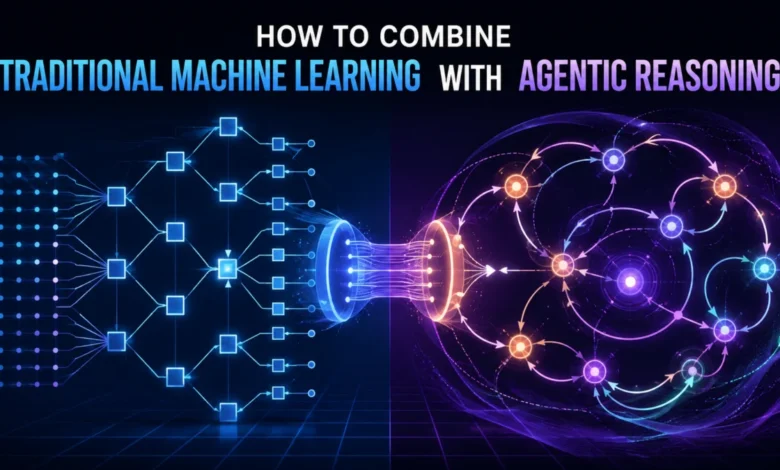
The rapid evolution of artificial intelligence has long been defined by the prowess of supervised machine learning models, which excel at mapping precise inputs to specific, probability-based outputs. However, as enterprises shift from experimental AI to operationalizing machine intelligence in complex, high-stakes environments, the limitations of static models have become increasingly apparent. A new architectural paradigm is emerging: the integration of traditional, specialized machine learning (ML) models with agentic reasoning engines. This hybrid approach aims to bridge the gap between static pattern recognition and dynamic, goal-oriented automation, representing a fundamental shift in how organizations deploy AI.
The Evolution of Predictive Architecture
To understand the necessity of this shift, one must examine the trajectory of machine learning over the past decade. Since the mid-2010s, the industry has focused heavily on "narrow AI"—systems designed to perform singular, optimized tasks. Whether it is a random forest model predicting credit defaults or a deep learning classifier identifying anomalies in industrial sensor data, these systems operate on the assumption of a closed, deterministic environment.
According to data from recent industry benchmarks, while traditional ML models have reached high levels of accuracy—often exceeding 95% in controlled environments—their utility drops significantly when faced with "open-world" scenarios. These are environments where information is incomplete, requirements evolve mid-process, and outcomes depend on a sequence of iterative actions rather than a single classification. In the current enterprise landscape, approximately 70% of AI-driven business processes require multi-step workflows, yet most traditional models are confined to the "prediction" phase, leaving the "orchestration" phase to brittle, manually scripted rule-based systems.
The Anatomy of the Limitation
The limitations of traditional machine learning are not failures of the technology itself, but rather a byproduct of its design. A supervised learning model is fundamentally a mathematical function: $f(x) = y$. It is stateless and reactive.
- Information Asymmetry: Traditional models are limited to the features provided at the moment of inference. If a system requires external context—such as real-time market data or historical document verification—a static model cannot reach out to fetch that information.
- Sequential Inflexibility: Business operations are rarely linear. A loan application, for instance, requires verification, flagging for risk, and human-in-the-loop validation. A traditional classifier cannot "decide" to pause its logic to perform a background check.
- The Action Gap: Machine learning models identify states; they do not typically perform actions. Once a model identifies a potential security breach, the transition from that identification to the act of isolating the server or notifying the network team remains a significant friction point in automated systems.
The Rise of Agentic Reasoning
Agentic reasoning, powered by Large Language Models (LLMs) acting as a cognitive "orchestrator," provides the missing layer of agency. Unlike traditional models, an agentic system is designed to maintain state, plan future steps, and iterate based on environmental feedback.
The shift toward agentic systems gained significant momentum following the introduction of transformer architectures and their subsequent application in tool-use frameworks. In an agentic setup, the LLM does not perform the heavy lifting of statistical prediction. Instead, it acts as a reasoning engine, parsing the user’s intent and determining which specialized tools—including traditional ML models, search APIs, or database queries—should be invoked.
This architecture introduces four core capabilities:
- Decomposition: Breaking down a high-level goal, such as "Audit this insurance claim," into granular, actionable sub-tasks.
- Tool-Use: The ability to interface with external APIs or software tools to retrieve or manipulate data.
- Reflection: The capability to analyze the output of a tool, determine if it satisfies the goal, and pivot if necessary.
- Contextual Memory: Maintaining a "thought trace" that allows the system to remember previous interactions within the same session.
The Hybrid Synergy: A New Operational Model
The most sophisticated AI architectures currently being deployed in sectors like finance, healthcare, and logistics are "hybrid systems." In these systems, the traditional ML model is treated as a "specialized expert" while the agent acts as the "manager."
Consider the deployment of a diagnostic system in a clinical setting. A high-performance, convolutional neural network (CNN) remains the industry gold standard for analyzing radiology imagery to identify tumors. This model is fast, audited, and precise. However, the CNN cannot synthesize the patient’s clinical history, compare it to recent lab results, and generate a recommended treatment plan for a physician.
In a hybrid model, the agent receives the diagnostic probability from the CNN. It then queries the electronic health record (EHR) system for patient history, cross-references clinical guidelines using a RAG (Retrieval-Augmented Generation) system, and synthesizes a concise report for the medical team. The CNN provides the data, while the agent provides the workflow.
Impact and Implications for Enterprise
The move toward agentic integration carries significant implications for the future of AI ROI. Companies that previously struggled to scale AI because their models were "too narrow" are finding that wrapping these models in an agentic layer allows for a much broader application.
Economic Efficiency: By utilizing agents, organizations can repurpose existing, highly-trained ML models for new use cases without needing to retrain them. This extends the lifecycle and utility of high-value predictive assets.
Operational Resilience: Agentic systems are inherently more robust than rigid, rule-based systems. Because they can adapt to unexpected inputs, they are less likely to fail when faced with edge cases that were not explicitly programmed into the system’s logic.
Strategic Compliance: One of the primary concerns with AI is interpretability. Agentic systems provide a "chain-of-thought" log. Because the agent must reason through its actions, it creates a trail of evidence that explains why it invoked a specific model or retrieved a certain piece of data, providing a higher degree of auditability than black-box models alone.
Conclusion
The dichotomy between "traditional ML" and "agentic reasoning" is increasingly viewed as a false choice. The most resilient and effective AI systems are those that acknowledge the strengths of both: the statistical certainty of specialized models and the strategic flexibility of reasoning agents. As organizations continue to integrate these systems, the focus will likely move away from the pursuit of a single, all-encompassing "super-model" toward the creation of intelligent ecosystems where models, data, and reasoning engines work in concert. The future of AI is not merely in building smarter models, but in building smarter, more capable systems.