Android Studio Embraces Multi-Agent Ecosystem with New Bring Your Own Agent Feature

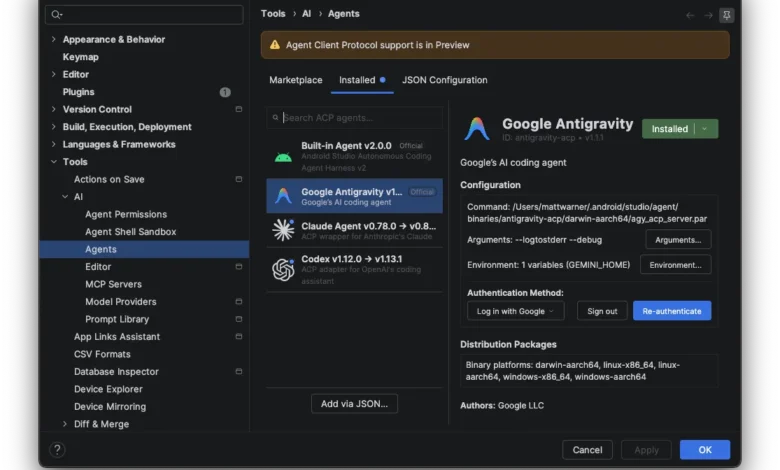
The landscape of software development is undergoing a seismic shift, driven largely by the rapid maturation of artificial intelligence. Engineering teams across industries increasingly rely on AI-powered tools as essential multipliers for productivity, transitioning from basic code-completion utilities to specialized coding agents, custom enterprise frameworks, and fully autonomous workflows. Recognizing this evolution, Google has announced a major architectural expansion for Android Studio, moving beyond proprietary limitations to embrace a flexible, open ecosystem. Beginning with the latest preview releases, Android Studio is introducing support for a diverse range of third-party coding assistants through a new capability known as Bring Your Own Agent (BYOA).
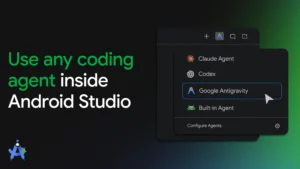
This strategic update follows last year’s foundational shift that opened Android Studio to any remote AI model. By allowing developers to integrate their preferred coding agents directly into the Integrated Development Environment (IDE)—including Anthropic’s Claude Agent, OpenAI’s Codex, and Google’s proprietary Antigravity—the platform aims to combine specialized external intelligence with Android Studio’s robust, AI-optimized infrastructure and tool support. The initiative underscores a broader industry movement toward developer autonomy, ensuring that software engineers are not locked into a single ecosystem but are instead empowered to build Android applications using the workflows and models that best suit their specific needs and technical preferences.
The Evolution of IDE Intelligence and the BYOA Framework
For years, integrated development environments operated as closed silos where assistance was restricted to features built directly by the platform vendor. However, the explosive demand for specialized coding intelligence has rendered monolithic approaches obsolete. Developers often prefer different models for different tasks—some favoring one architecture for complex logical reasoning, and another for rapid boilerplate generation or UI layout structuring.
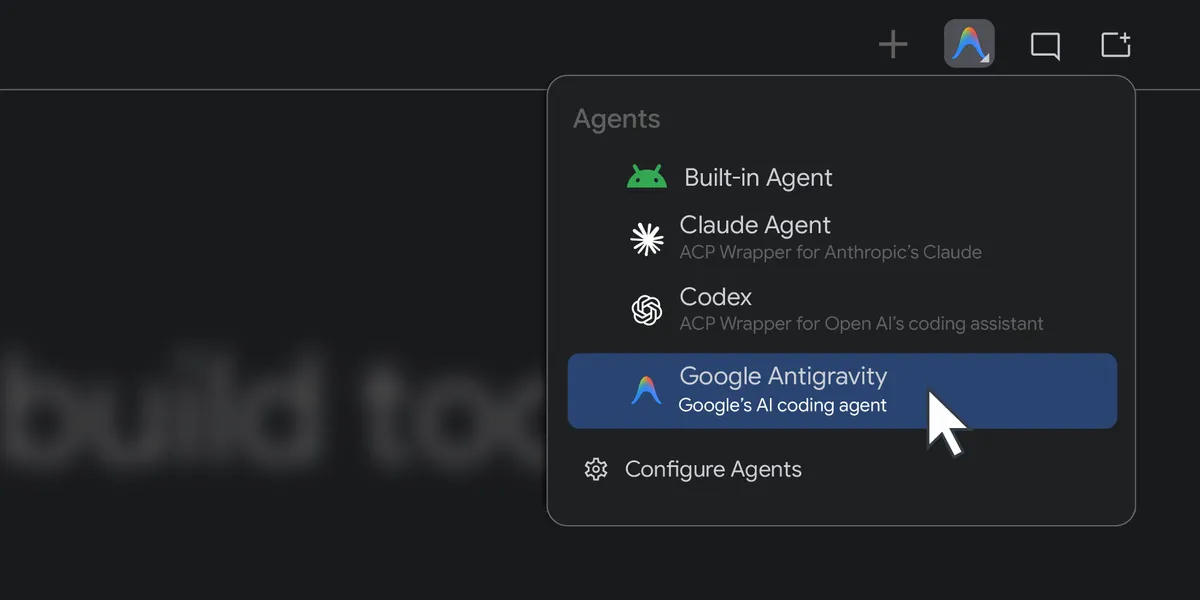
The introduction of the Bring Your Own Agent (BYOA) feature within the Android Studio Canary channel addresses this fragmentation directly. Rather than forcing developers to switch between external browser windows, command-line interfaces, and the IDE, BYOA embeds preferred agents right into the native workspace. This integration pairs external agent intelligence with IDE-native contextual awareness, making automated workflows significantly faster, more accurate, and more cost-effective.
According to platform architects, these autonomous agents are no longer confined to simple autocomplete functions. Modern coding agents are capable of planning and executing comprehensive technical workflows directly within a developer’s local environment. This unlocks sophisticated use cases such as multi-file refactoring, end-to-end feature implementation, automated test generation, and deep debugging sessions that span across complex architectural layers. Furthermore, agents operating within Android Studio gain direct access to specialized Android skills and the official Android Knowledge Base. This ensures that regardless of the underlying model provider, the generated code adheres strictly to the latest platform best practices, security standards, and deprecation schedules.
Navigating Options: Google Antigravity and Gemini Integration
While the BYOA initiative champions choice, Google continues to support and refine its native offerings for developers who prefer an integrated Google-centric stack. Developers who have historically relied on Gemini directly within Android Studio will find that the native experience remains fully supported, though it has been strategically streamlined.
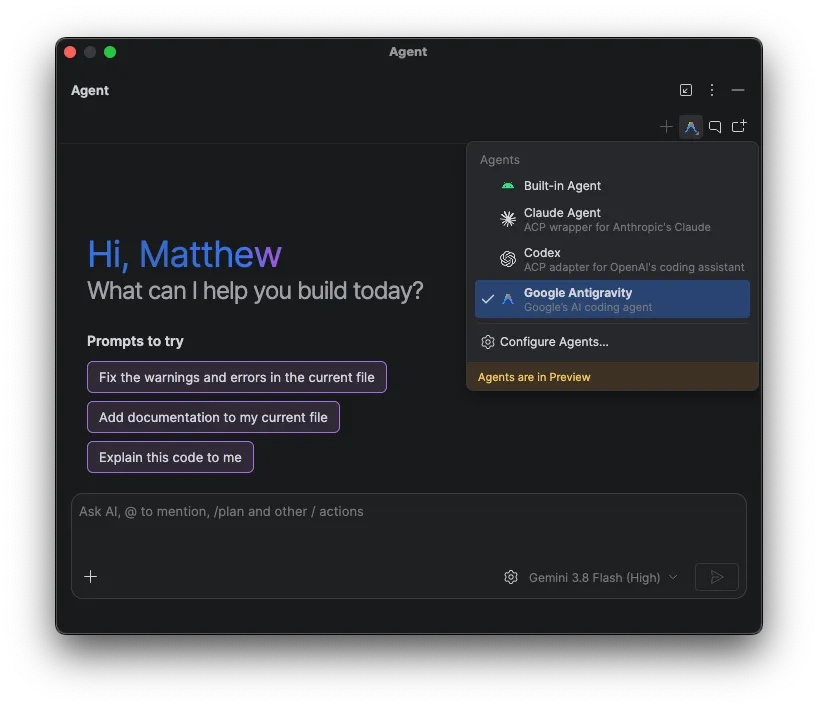
For the optimal Gemini experience within the new framework, Google recommends selecting the Google Antigravity agent. This specialized agent grants developers access to cutting-edge models, including Gemini Flash 3.8, alongside substantially increased AI usage quotas. Flexibility is a core tenet of this release: developers can authenticate the Google Antigravity agent using active Google AI Pro or Ultra plans to seamlessly transfer their subscription benefits directly into the Android Studio environment. Alternatively, enterprise and independent developers can utilize pay-per-token rates configured via a standard Gemini API key.
Enterprise adoption has also been a primary consideration in the rollout. Organizations operating under the Gemini Enterprise framework retain the flexibility to deploy either the traditional built-in agent or the new Antigravity agent. Crucially, enterprise environments continue to benefit from the rigorous data security, privacy controls, and compliance standards guaranteed by Google Cloud infrastructure, mitigating intellectual property concerns that often accompany third-party AI tool adoption.
Background, Chronology, and Industry Implications
The pivot toward open agentic development did not happen in a vacuum. Over the past twenty-four months, the software engineering sector has observed a massive surge in developer productivity tools, accompanied by intense competition among foundation model providers. As generative models transitioned from conversational novelties to autonomous agents capable of writing, testing, and deploying code, IDEs faced mounting pressure to evolve.
The timeline of Android Studio’s AI integration highlights a deliberate, phased transition toward openness:
- Late 2024 to Early 2025: Initial integration of basic conversational AI assistants and localized code generation tools focused primarily on boilerplate reduction.
- Mid 2025: The introduction of remote model support, breaking open the IDE architecture to external API endpoints.
- Late 2025: The release of advanced benchmarking frameworks, such as Android Bench, designed to evaluate long-horizon task execution for coding agents on mobile platforms.
- Current Release (2026): The formal unveiling of the Bring Your Own Agent (BYOA) preview in Android Studio Canary channels, pairing external powerhouses like Claude Agent and Codex with native Android infrastructure.
This chronological progression reflects a calculated strategy: build a secure, high-performance foundation, test agent reliability rigorously through benchmarks, and finally open the ecosystem to external market leaders.
Industry analysts note that the implications of this shift are profound. By lowering the barrier to entry for multi-agent workflows, Google is positioning Android Studio not merely as a text editor for Android applications, but as an agnostic control center for AI-driven software engineering. For development teams, this means reduced context-switching, optimized compute costs through flexible plan utilization, and the ability to leverage best-in-class models without abandoning established toolchains.
Getting Started and Future Outlook
The Bring Your Own Agent feature is currently rolling out in preview phases, starting with the canary release of Android Studio Rabbit 2. The initial rollout natively supports widely adopted industry agents, including Google Antigravity, Anthropic’s Claude Agent, and OpenAI’s Codex. Both consumer and enterprise subscription tiers are supported, subject to the specific terms and conditions of the respective agent providers.
To begin utilizing BYOA, developers can navigate to the updated agent configuration settings within the Android Studio Canary build, select their preferred provider, and authenticate using either their enterprise credentials, API keys, or qualifying consumer AI plans.
As the developer tooling community continues to experiment with these capabilities, Google has emphasized that user feedback will play a critical role in shaping the final stable release. Engineers encountering bugs, performance bottlenecks, or unexpected agent behavior are encouraged to submit detailed reports through the official Android Studio issue tracker. With the convergence of autonomous agent workflows and native IDE intelligence, the future of mobile app development is rapidly transforming into a collaborative partnership between human architects and diverse, multi-model artificial intelligence systems.
Related posts: