Android Dev Summit Unveils Next-Generation AI Agent Integrations and Performance Tooling for Mobile Developers

The annual Android Dev Summit convened this week to outline a sweeping transformation in how modern mobile applications are built, optimized, and deployed. Google’s Android engineering teams detailed a new ecosystem of developer tools designed to bridge traditional integrated development environments (IDEs) with autonomous artificial intelligence agents. Centered around the newly stable Bring Your Own Agent (BYOA) architecture, the announcements establish a framework where developers can pair Android Studio or the Android Command Line Interface (CLI) with over 40 Agent Client Protocol (ACP) compatible coding agents, marking a significant evolution in AI-assisted software engineering.
The announcements come at a pivotal juncture for the mobile development industry. As application codebases grow in complexity—spanning multi-platform targets, complex declarative UI frameworks like Jetpack Compose, and advanced spatial computing environments—engineering teams face mounting pressure to accelerate deployment cycles without compromising performance or security. Industry metrics indicate that developers spend upwards of 35% of their working hours on boilerplate generation, debugging, and cross-platform UI translation. By deeply integrating large language models and autonomous agents directly into the compilation and diagnostic toolchains, Google aims to reduce these overheads substantially.
A Cornerstone for AI Collaboration: Bring Your Own Agent and Android Studio Rabbit 2
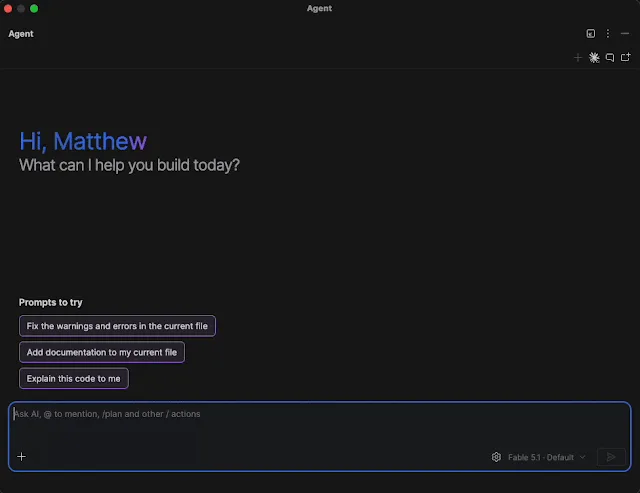
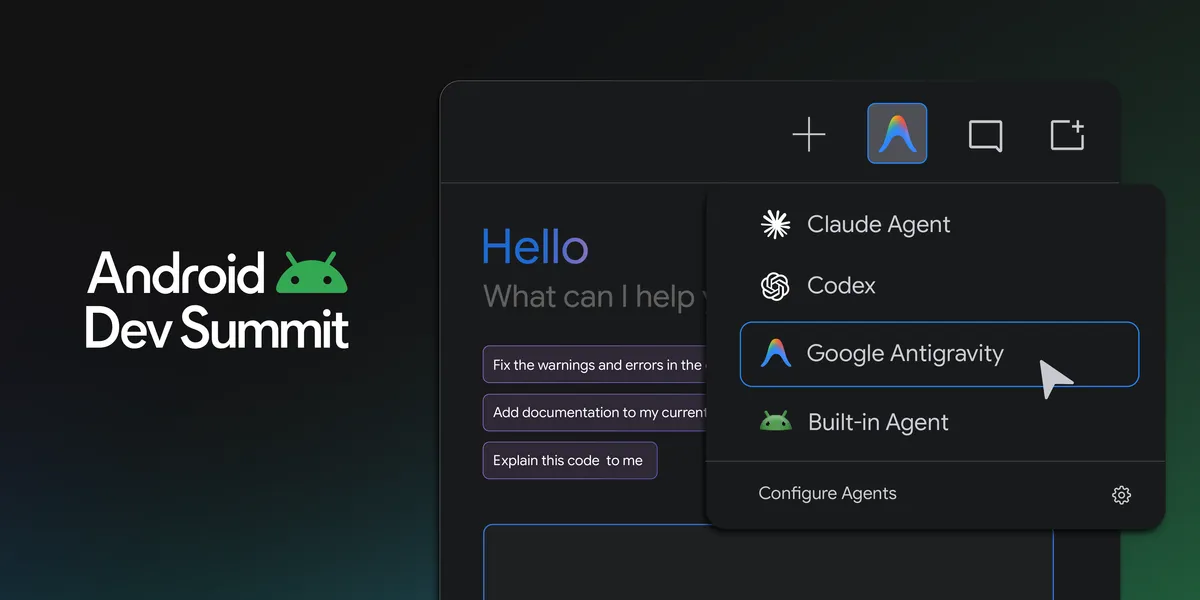
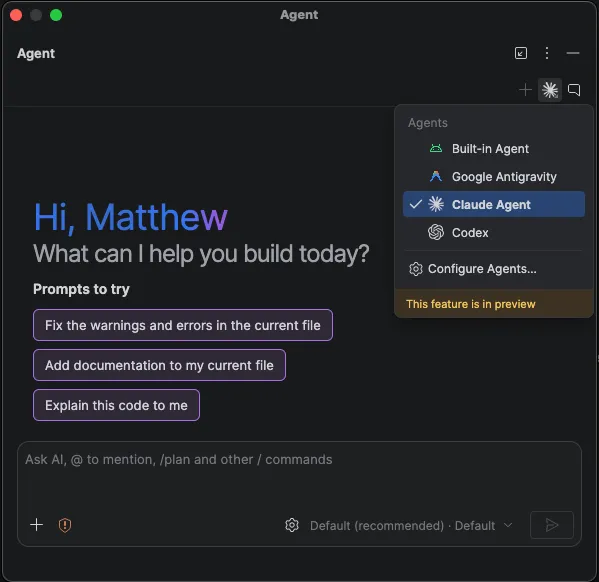
The centerpiece of the developer tooling updates is the stabilization of Bring Your Own Agent (BYOA) within Android Studio Rabbit 2. Rather than locking development teams into a proprietary assistant, the open Agent Client Protocol (ACP) allows professional developers to select from a marketplace of more than 40 coding agents, including specialized models from various providers. Configuration is streamlined through the IDE settings, enabling developers to switch models dynamically based on task requirements.
Crucially, these external agents are granted contextual awareness of the Android project environment. Unlike standalone chat interfaces that operate in a vacuum, agents integrated via BYOA possess deep visibility into project structure, symbol resolution, Compose Preview rendering, Logcat debugging outputs, and the Android Emulator. This contextual depth minimizes hallucinations and ensures that generated code adheres to idiomatic standards. Furthermore, the integration supports Google Antigravity, offering immediate access to the latest Gemini models and associated infrastructural capabilities upon release.
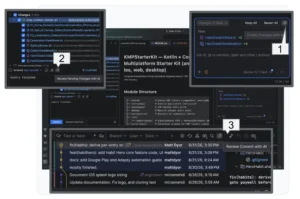
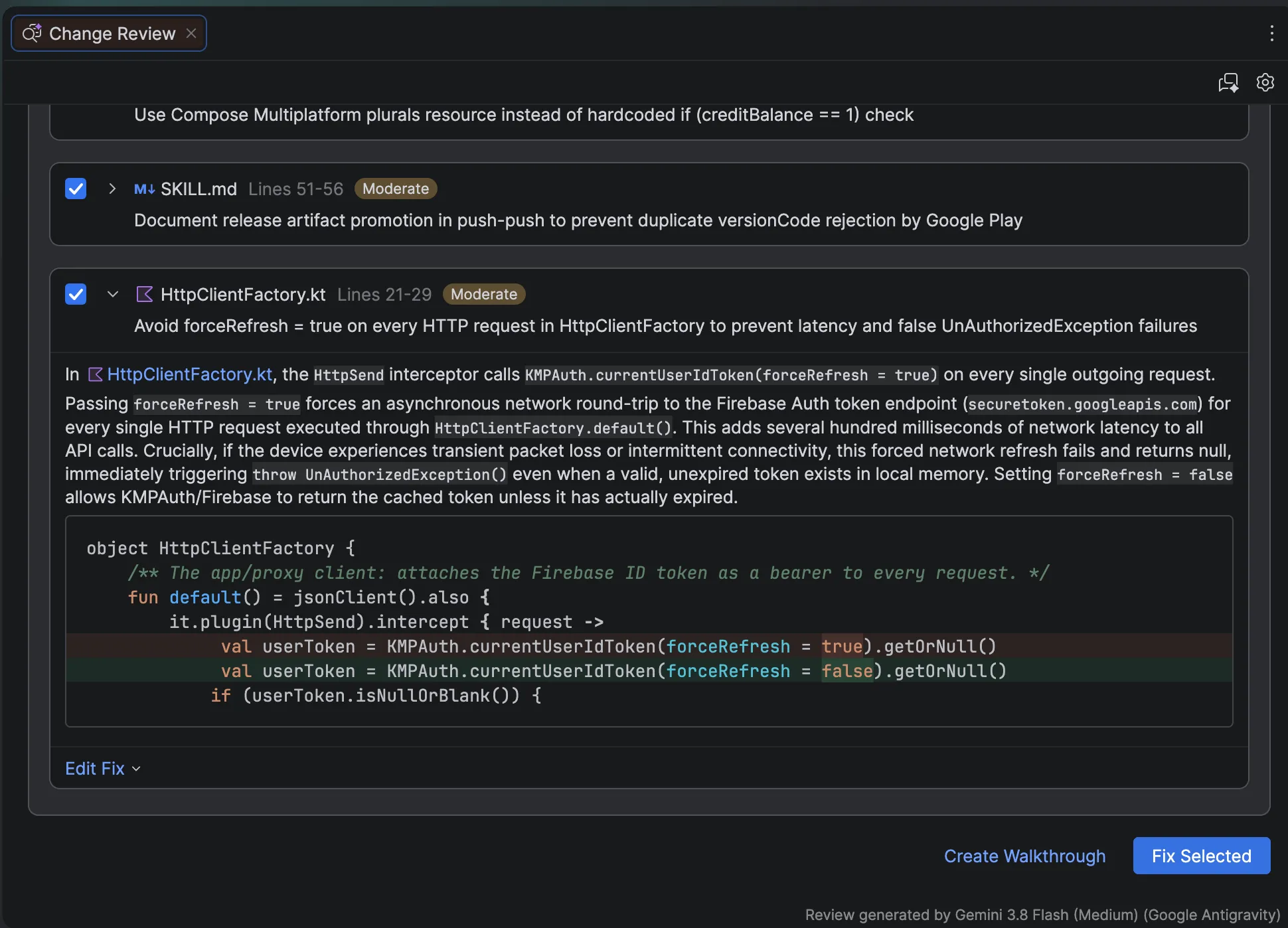
Addressing the friction inherent in reviewing large-scale AI-generated code modifications, Android Studio now incorporates an agentic code review workflow. Initiated from pending Git changes or via the /review command within the agent tool window, the system automatically compiles a comprehensive report identifying potential logical or structural issues. Developers can request interactive, AI-guided walkthroughs to demystify extensive code refactoring, allowing the agent to diagnose and remediate errors autonomously.
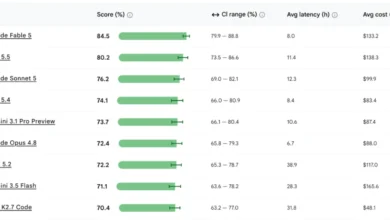
To assist teams in navigating the expanding landscape of large language models, Google also highlighted Android Bench 2.0. Functioning as an empirical LLM leaderboard, Android Bench evaluates how various models and agent harnesses manage long-running, real-world engineering tasks—such as migrating legacy UI layouts or architecting applications from design mockups. Solutions are graded not merely on whether they compile successfully, but on actual runtime functionality, resource consumption, and computational cost.
Expanding Autonomous Capabilities with the Android CLI
Complementing the graphical interface of Android Studio, the Android Command Line Interface (CLI) received major updates designed to facilitate headless development and continuous integration (CI) pipelines. Launched earlier this year, the CLI functions as a tool-first interface equipped with official Android skills, permitting agents to build, run, and test applications autonomously without incurring excessive token costs on trial-and-error procedures.
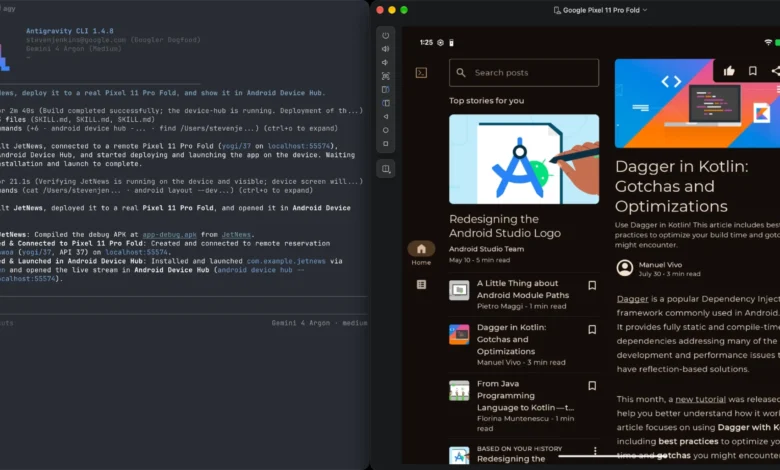
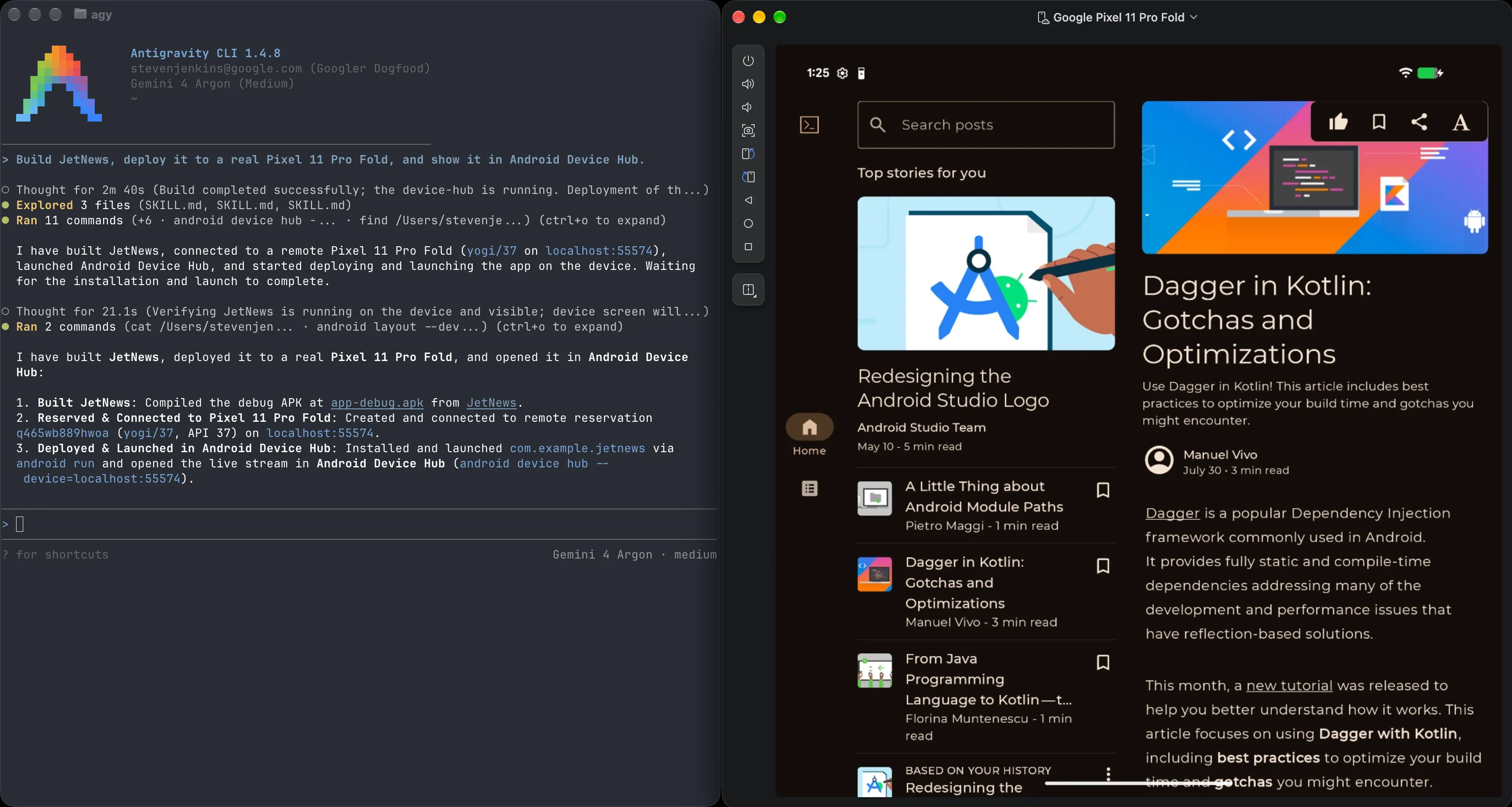
Among the most notable additions is support for remote physical device streaming. Through the android device remote command, developers and autonomous agents can provision and connect to real hardware devices hosted within a secure Google device lab. This capability bridges the historical gap between emulated environments and physical hardware constraints, allowing remote testing workflows to run seamlessly over standard ADB protocols. Additionally, the android device hub provides a lightweight management interface for local and remote devices alike.
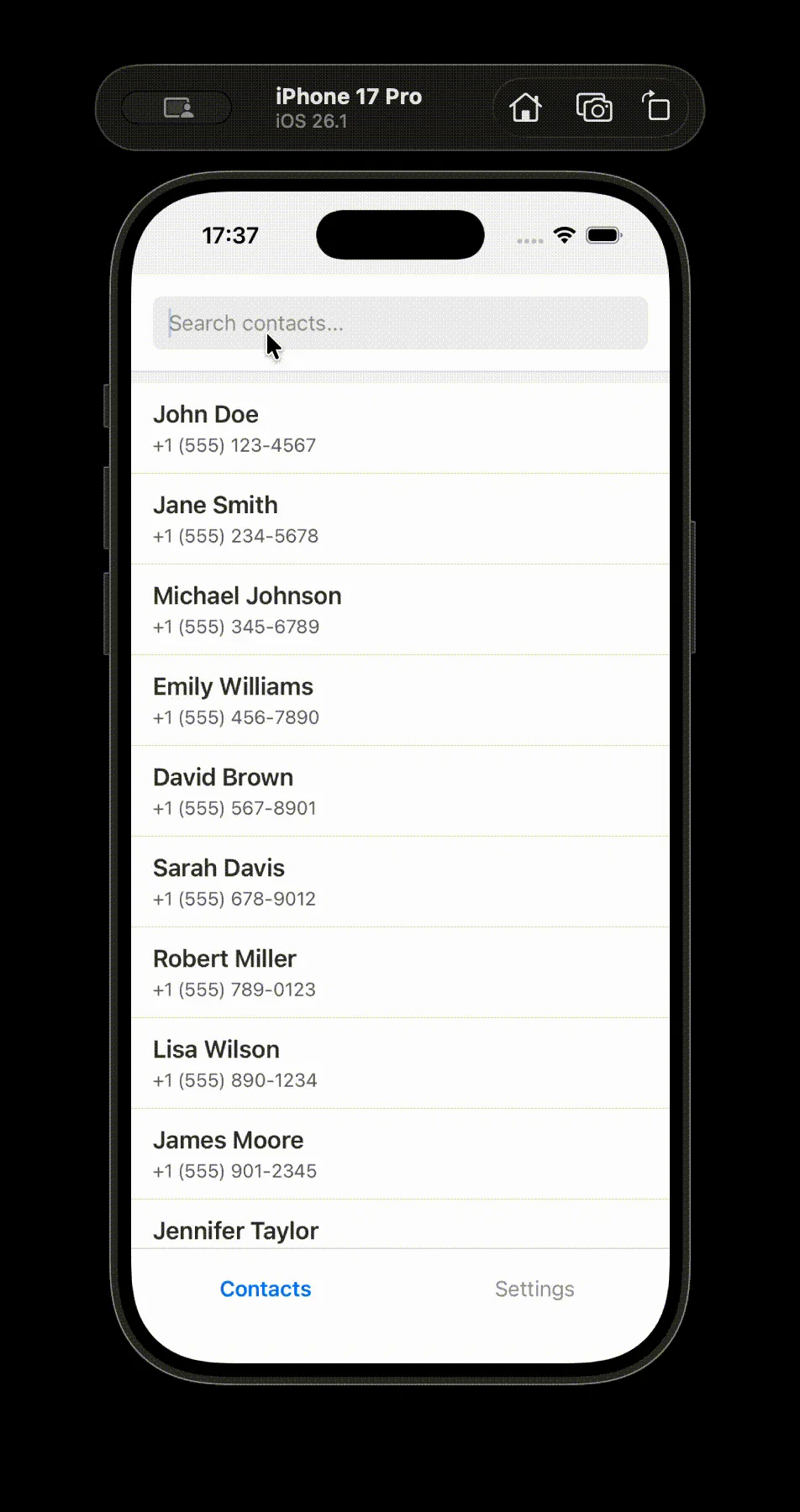
To enhance agent autonomy during user interface development, the new android preview command enables the rendering of Jetpack Compose layouts directly from the terminal. By eliminating the necessity of running a full emulator or graphical IDE for visual verification, agents can inspect and iterate on UI layouts across varying screen sizes up to 77% faster while consuming significantly fewer tokens.
Official agent plugins have similarly been introduced for prominent coding environments, including Claude Code, OpenAI’s Codex, and Google Antigravity. These plugins equip external agents with pre-packaged instructions and tools to initialize Android projects, manage virtual devices, inspect live layouts, execute user journeys, and query the official Android Knowledge Base.
Modernizing Legacy Systems: XML to Compose Migration and Android XR
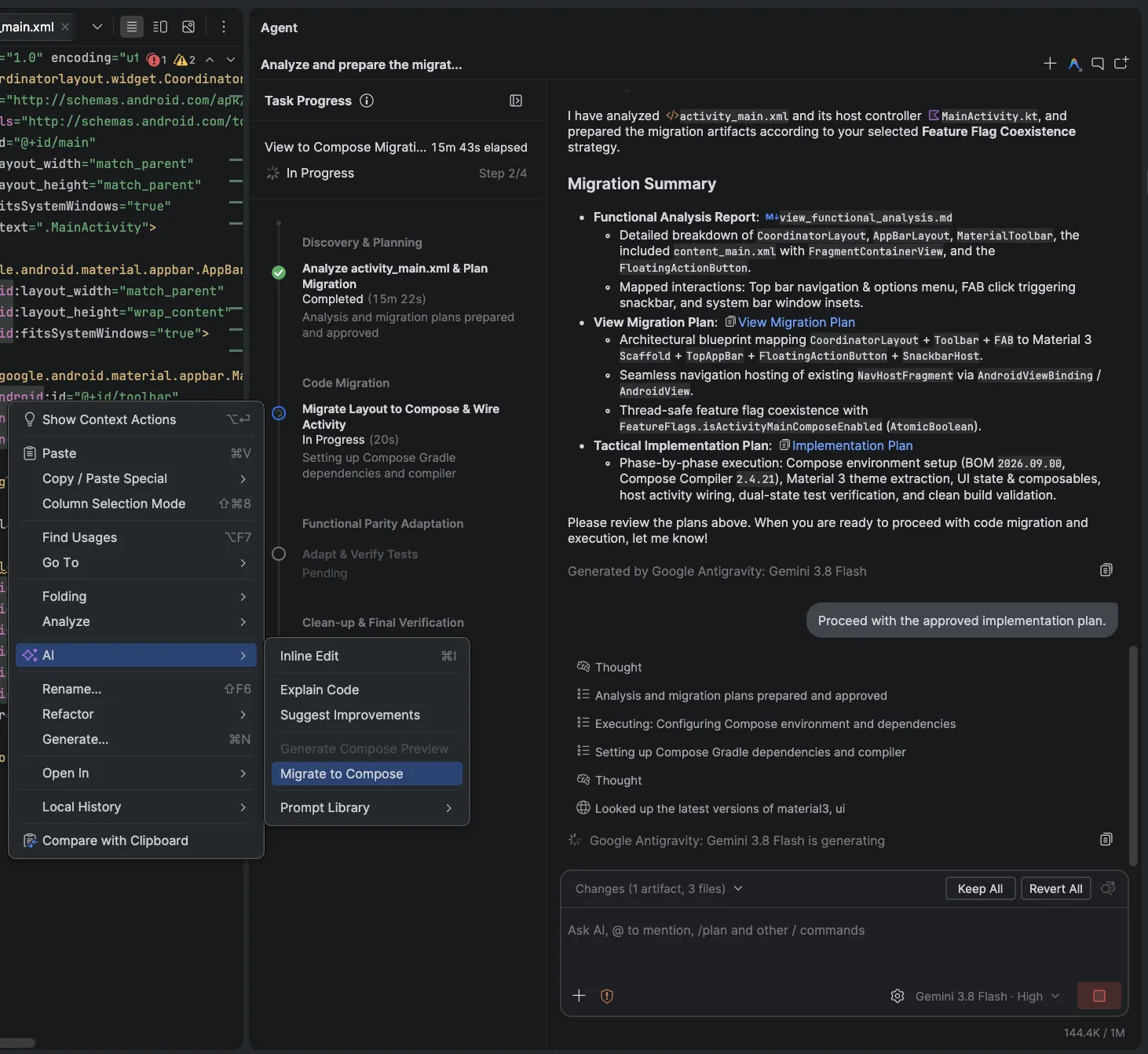
Modernizing legacy applications has historically represented a major drain on engineering resources, particularly when transitioning from traditional XML views to Jetpack Compose. To mitigate this, Android Studio Canary introduces an automated Migration Assistant. By selecting an XML layout and invoking the AI migration routine, developers prompt the agent to analyze the layout, draft a migration strategy, and systematically convert view-binding logic into idiomatic Compose code. A persistent progress timeline tracks execution steps, enabling developers to pause and resume complex refactoring tasks safely.
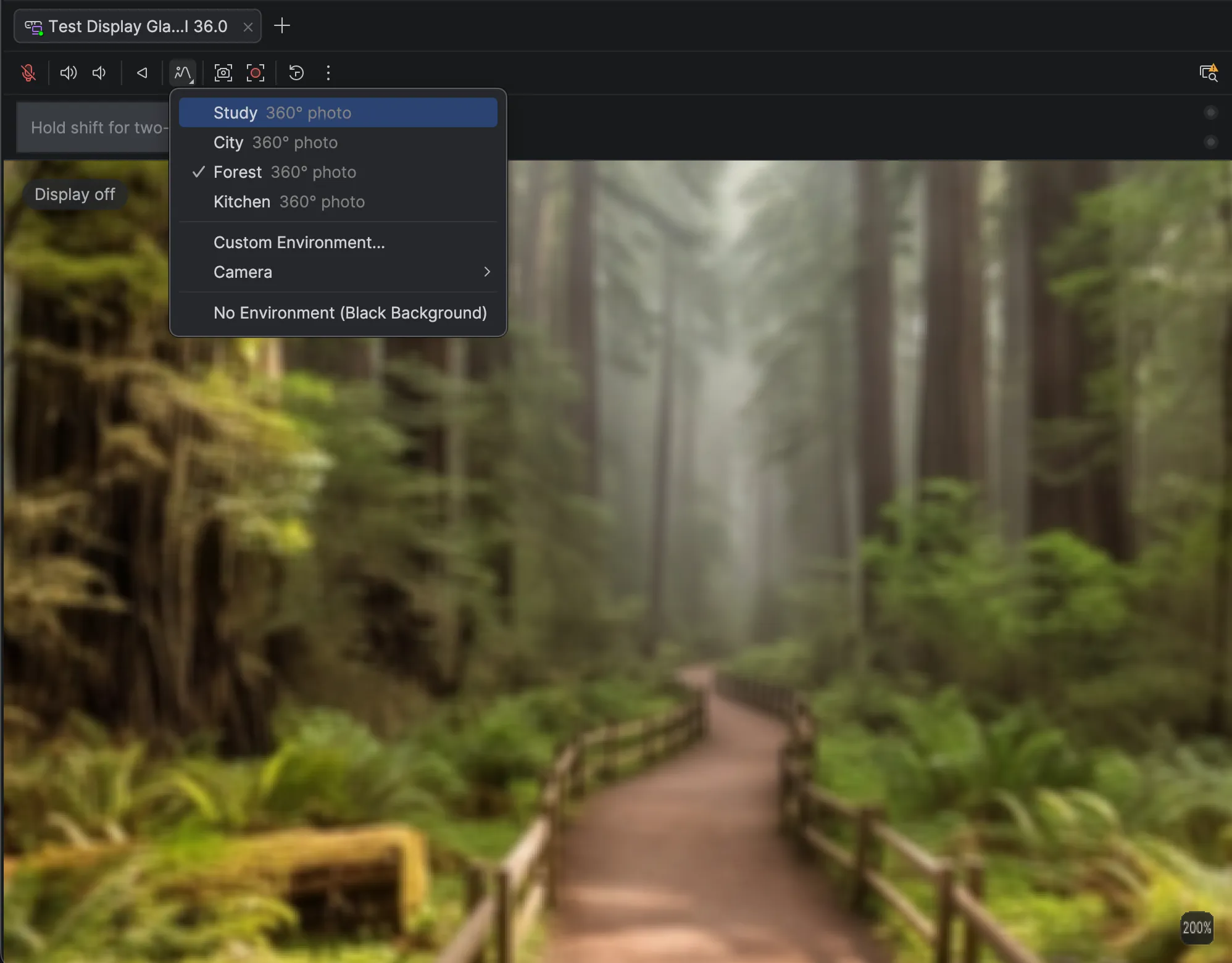
Concurrently, the Android XR emulator suite has reached stability. Developers targeting spatial computing environments—such as XR glasses, audio wearables, and display devices—can now configure custom 360-degree testing environments or integrate live feeds from connected physical cameras. Enhanced Pairing Wizard capabilities and newly integrated hardware LED indicators for microphone and camera states provide a comprehensive simulation environment for intelligent eyewear development.
Performance Optimization, Memory Leak Detection, and R8 Enhancements
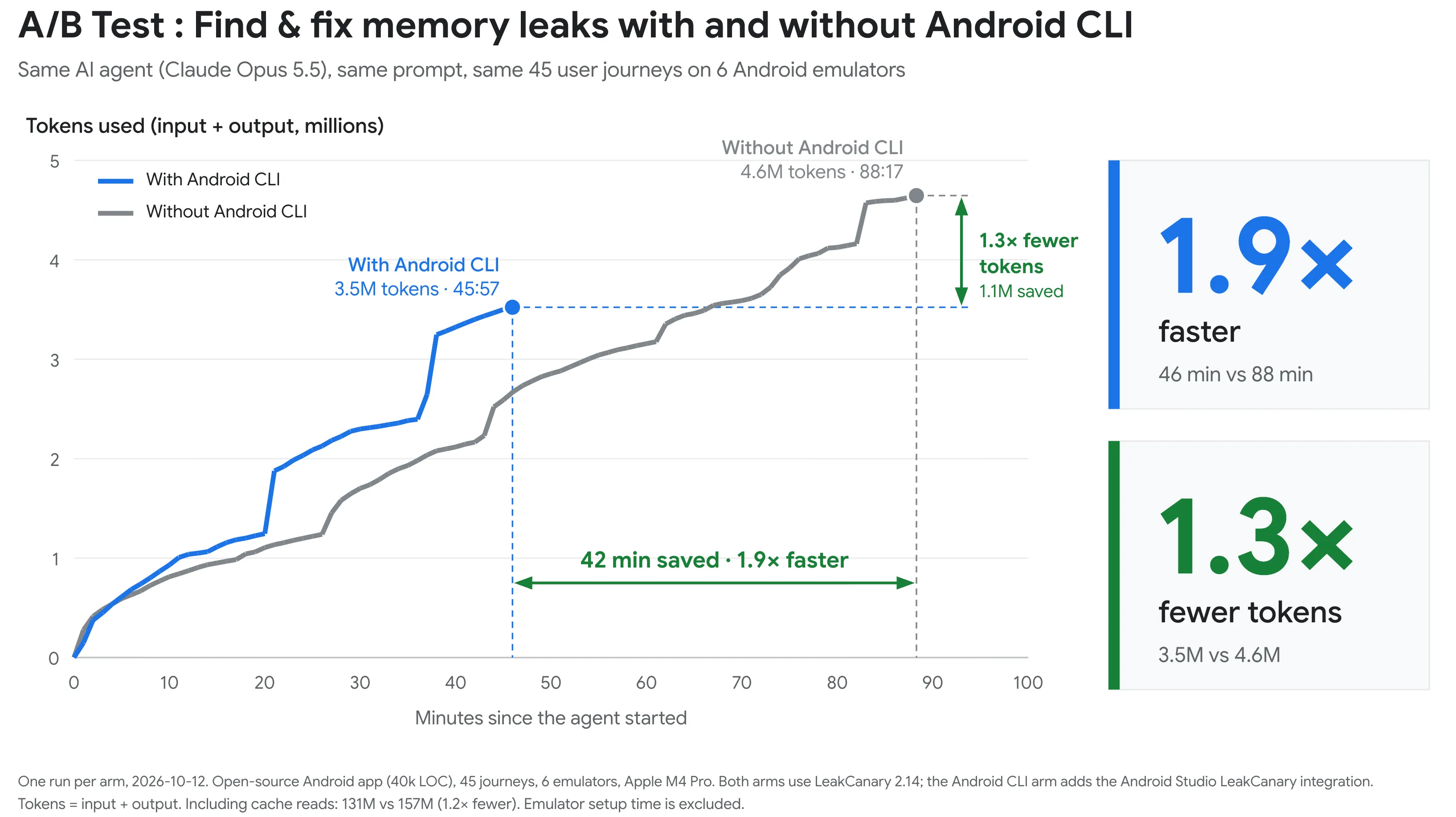
Performance analysis has transitioned into an agentic paradigm with direct integrations into profiling tooling. Memory management, a historically difficult domain prone to subtle regressions and Out-of-Memory (OOM) crashes, has been enhanced via a direct integration of LeakCanary into the Android CLI through the android profiler leakcanary subcommand. By analyzing heap dumps locally on the host machine rather than on the target device, memory analysis overhead is minimized. Empirical testing demonstrates that capable models execute leak-detection workflows nearly twice as fast while utilizing up to 25% fewer tokens.
Within Android Studio, the Profiler incorporates a "Fix with AI" function, allowing developers to inspect heap traces, receive automated diagnostic insights, and apply corrective code modifications instantaneously. Parallel capabilities are supported by the Android Performance Analyzer (APA), which powers system trace extraction across both the IDE and the CLI. Paired with androidx.tracing 2.0, developers and agents can trace asynchronous operations, coroutine flows, and source-level performance bottlenecks with granular precision.
Furthermore, production stability metrics have been unified under the android signals command, bringing Firebase Crashlytics and Android Vitals data directly into terminal workflows and agent contexts. Developers can investigate crashes, ANRs, and memory anomalies without context switching. Complementing these diagnostic improvements, advanced R8 code-shrinking rules and Jetpack Compose 1.13 recomposition tracing allow teams to isolate exact state writes driving UI redraws, minimizing binary sizes and runtime overhead.
Declarative Builds and Enterprise Policy Compliance
Looking toward future build paradigms, Google introduced an early preview of Lightbuild, a declarative build system designed explicitly for human developers and autonomous agents alike. By replacing complex Gradle script logic with a strict, schema-validated YAML configuration, Lightbuild ensures deterministic, pre-resolved dependency management and rapid project synchronization across local and CI environments.
To preempt deployment hurdles, new security and compliance skills have been integrated into the agent ecosystem. The play-policy-insights skill audits application code, manifests, and data safety declarations against Google Play policies prior to submission, while specialized modules like android-intent-security and android-permissions-security perform project-aware vulnerability assessments.
Industry Implications and Future Outlook
The comprehensive rollout of agent-first tooling at the Android Dev Summit signals a maturation of AI software engineering methodologies. By moving beyond simple code-completion utilities toward deep IDE and CLI integrations equipped with contextual domain knowledge, Google is attempting to establish a standardized blueprint for AI-assisted mobile development.
Industry analysts note that while these tools promise substantial gains in developer velocity and application performance, their long-term efficacy will depend on the stability of autonomous agent harnesses and the rigorousness of underlying LLM evaluations like Android Bench. As engineering teams increasingly adopt hybrid workflows combining human architectural oversight with autonomous agent execution, the line between traditional coding and agent orchestration will continue to blur, setting a new benchmark for enterprise mobile application development.
Related posts: