4 Mahasiswa Bikin AI Bantu Tunanetra Belajar Matematika, Juara SFT 2026

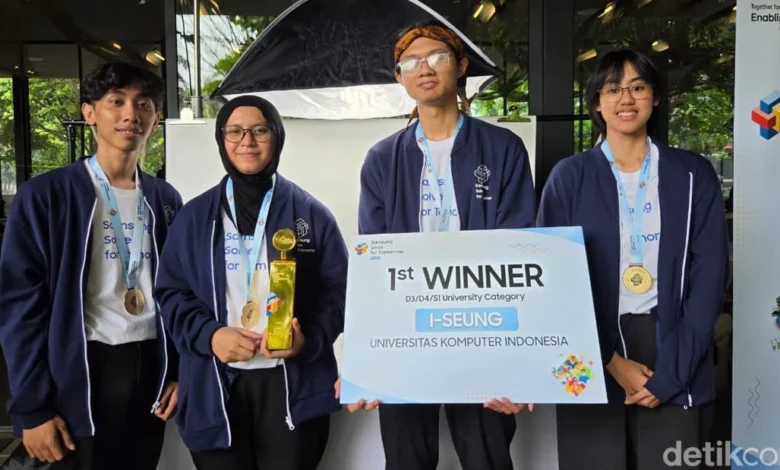
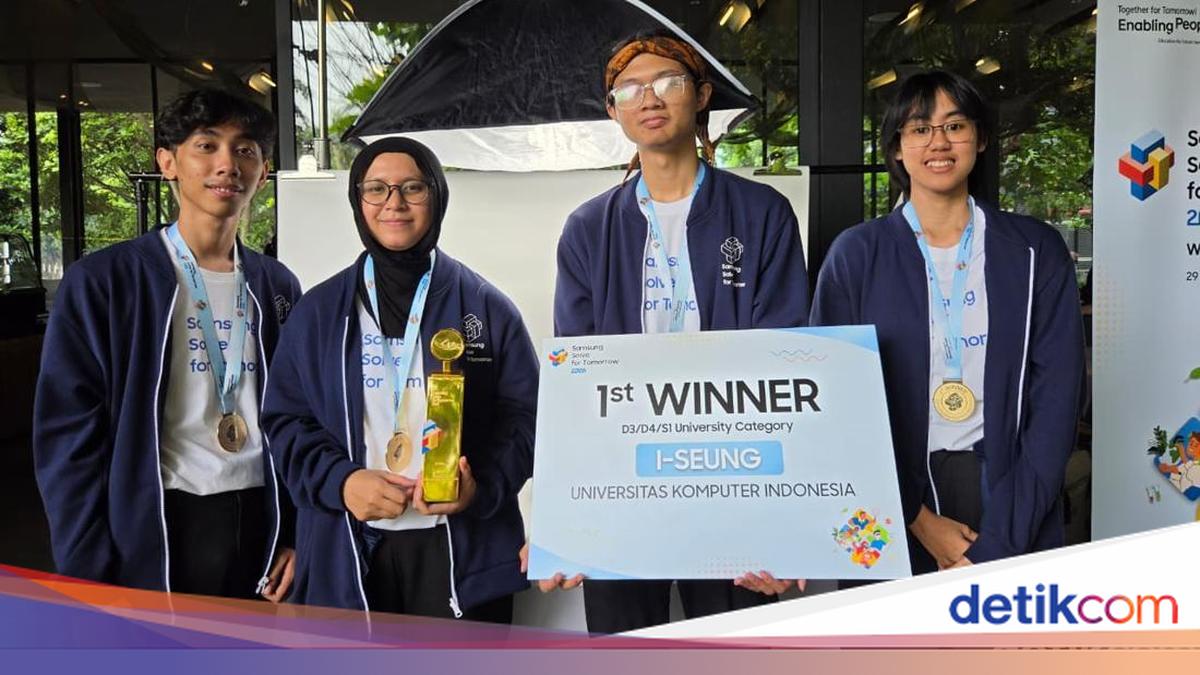
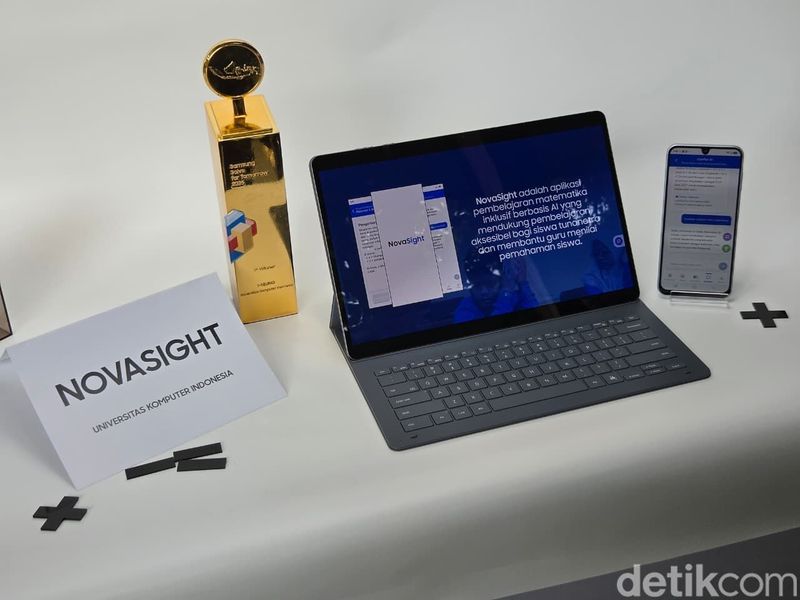
Four students from Universitas Komputer Indonesia (Unikom) have achieved a significant milestone in educational technology by developing NovaSight, an artificial intelligence-driven application designed to assist visually impaired students in mastering mathematics. This innovation secured them the top prize in the university category (D3/D4/S1) of the Samsung Solve for Tomorrow (SFT) 2026 competition, which concluded in Jakarta on Thursday, October 29, 2026. The I-SEUNG team, composed of Ratuayu Nurfajar, Regia Qolbu Rivita Atmowidjaja, Mohamad Zaki Zakiran, and Damar Fikri Haikal, under the guidance of lecturer Dian Dharmayanti, has demonstrated that sophisticated AI integration can bridge the gap in inclusive education.
The Genesis of NovaSight
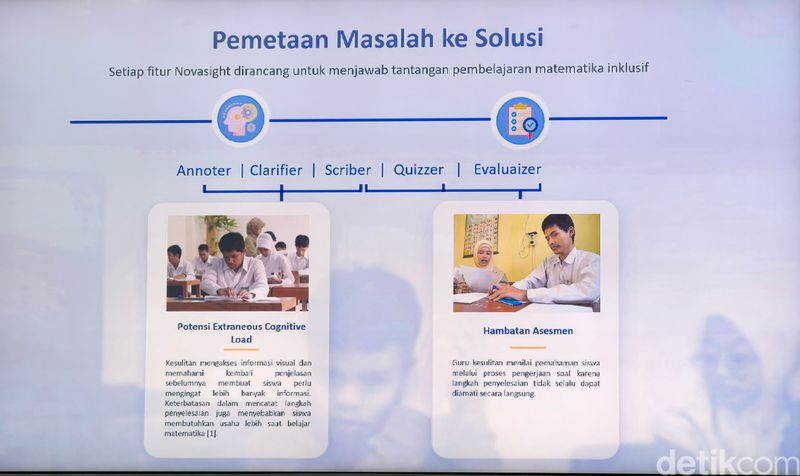
The conceptualization of NovaSight was not an overnight endeavor but the result of rigorous field research and empathetic engagement. The team conducted extensive interviews and observational studies at the SLB Negeri A Citeureup, a special needs school in Cimahi, West Java. Their findings highlighted a critical pedagogical gap: visually impaired students faced immense obstacles when attempting to interpret complex visual data such as geometric graphs, algebraic diagrams, and the sequential steps required for solving higher-order mathematical equations.
According to data cited by the team from the Ministry of Primary and Secondary Education (Kemendikdasmen), there are 4,229 students with visual impairments currently enrolled in special education schools across Indonesia. Despite the presence of these students in the national education system, the availability of specialized tools that facilitate independent mathematical learning remains critically low. Recognizing this, the I-SEUNG team set out to create a digital ecosystem that could translate visual mathematical concepts into tactile or auditory feedback.
Technological Architecture and Functionality
NovaSight is built on a sophisticated technical foundation, utilizing the Flutter framework for cross-platform compatibility, Azure OpenAI for generative intelligence, and seamless integration with screen-reading technologies like TalkBack. The application distinguishes itself through five specialized AI modules:
- Annoter: This core feature converts intricate mathematical graphics and diagrams into descriptive, high-fidelity text that can be processed and read aloud by screen-reading software.
- Scriber: Addressing the need for tactile input, this module allows students to input mathematical steps via a specialized keyboard layout optimized for users with visual impairments.
- Clarifier: Acting as an intelligent tutor, this feature provides real-time responses to student queries regarding lesson content, essentially offering on-demand pedagogical support.
- Quizzer: A tool for educators, this module streamlines the creation of mathematical problems and the generation of corresponding answer keys.
- Evaluaizer: This feature offers an analytical layer, reviewing a student’s input steps to identify specific logical errors, thereby providing constructive feedback that mimics a one-on-one tutoring session.
The development process was iterative and challenging. The team initially designed a proprietary keyboard interface, only to discover during field testing that the students struggled with the layout. By pivoting to align their design with the Web Content Accessibility Guidelines (WCAG), the team ensured that the final interface was both intuitive and compliant with international standards for digital accessibility.
Proof of Concept and Pilot Testing
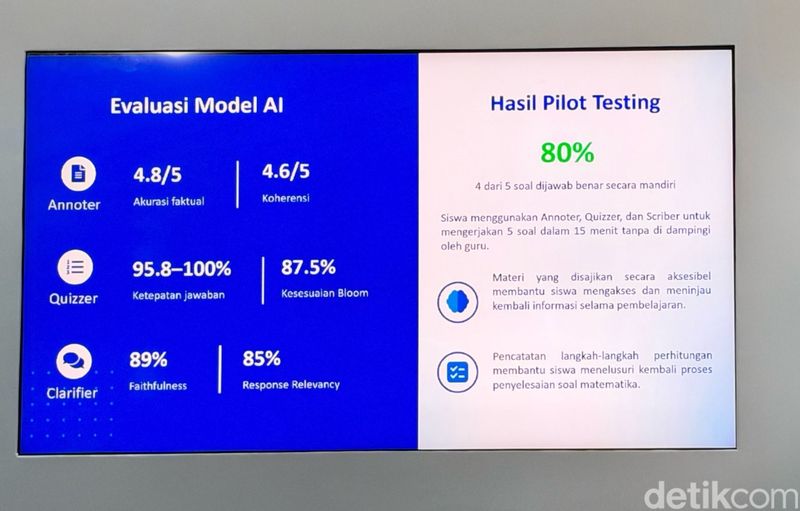
After four months of intensive development, the team conducted a pilot study to assess the efficacy of NovaSight. The results were compelling: a participating student successfully solved four out of five mathematical problems within a 15-minute timeframe without any direct teacher intervention.
Irman, an eleventh-grade student at SLB Negeri A Citeureup, noted that the application significantly reduced his reliance on constant teacher supervision. His testimony underscores the broader goal of the project: to empower students with the autonomy to navigate academic challenges independently. Similarly, Bayu, a mathematics teacher involved in the pilot testing, observed that the application addressed a long-standing void in the availability of pedagogical tools for students with visual impairments.
The Samsung Solve for Tomorrow (SFT) Context
The victory at the Samsung Solve for Tomorrow 2026 competition is significant, as SFT is a global initiative aimed at fostering innovation among youth to solve pressing societal issues. The I-SEUNG team’s journey to the podium was nearly derailed by a near-miss during the registration phase. Having initially discovered the opportunity via social media, the team delayed their application process. A last-minute extension of the registration deadline provided them with a second chance, which they successfully capitalized on.
The win provides not only prestige but also serves as a platform for future development. As of October 2026, NovaSight remains in its beta phase. The team is currently in discussions regarding the next steps for scaling the application, with an immediate focus on expanding its deployment across West Java before considering a national rollout.
Implications for Inclusive Education
The development of NovaSight carries significant implications for the future of inclusive education in Indonesia. While many assistive technologies currently focus on basic text-to-speech or simple navigation, NovaSight tackles the more complex domain of STEM (Science, Technology, Engineering, and Mathematics). By enabling visually impaired students to engage with graphical data and multi-step calculations, the application promotes higher educational attainment and potential career paths in technical fields that have traditionally been inaccessible to them.
However, the team remains grounded, acknowledging that the current pilot study is a small sample size. To ensure long-term viability, they recognize the need for further rigorous testing across diverse student populations and different school environments. The transition from a competition prototype to a widely available public tool will require significant technical refinement, sustainable funding, and potential partnerships with educational institutions and accessibility advocates.
The Road Ahead
The success of the I-SEUNG team is a testament to the potential of student-led innovation in addressing the digital divide. By leveraging generative AI not for mere convenience but for fundamental accessibility, these students have highlighted a practical pathway for creating an equitable learning environment.
As the team looks toward the future, they are actively seeking support—both in terms of investment and collaborative partnerships—to transition from a successful prototype to a robust, user-friendly platform. Their work serves as a reminder that the most impactful technological solutions are often those that address the specific, everyday barriers faced by marginalized communities. For the students of Unikom, the SFT 2026 title is merely the beginning of their endeavor to foster a more inclusive academic landscape, ensuring that for students like Irman, the study of mathematics is no longer a source of frustration, but a gateway to independence and achievement.
The broader educational community will be watching the evolution of NovaSight closely. Should it prove successful in larger-scale deployments, it could serve as a model for future assistive technologies globally, proving that with the right combination of empathy and technical ingenuity, the digital divide can be significantly narrowed. The commitment shown by the I-SEUNG team reflects a growing trend among Indonesian youth to prioritize social impact alongside technical proficiency, a shift that is likely to yield further advancements in the national tech ecosystem in the coming years.