Android Ecosystem Security Enters a New Era with the Stable Release of AndroidX Security State Version 1.1.0 and Security State Provider Version 1.0.0

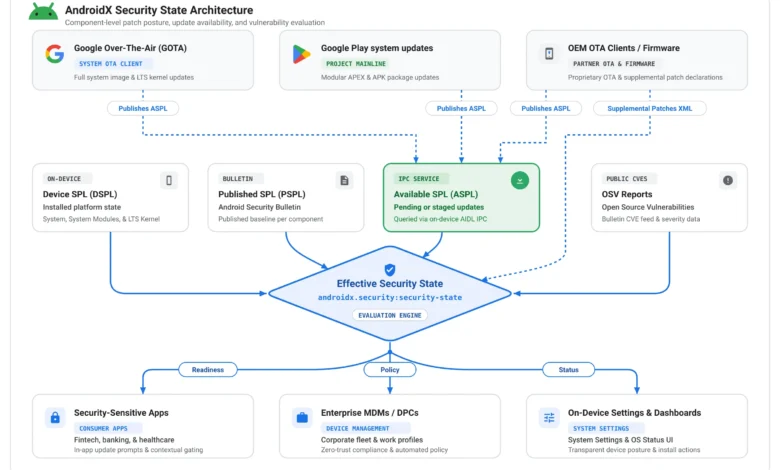
Google has officially announced the stable release of the AndroidX Security State version 1.1.0 and the Security State Provider version 1.0.0 libraries, marking a significant milestone in mobile device security and transparency. Designed to empower developers, enterprise partners, and Original Equipment Manufacturers (OEMs), these newly minted tools provide a centralized mechanism to evaluate and verify the comprehensive security posture of Android devices down to the individual component level. This launch addresses long-standing challenges in the mobile security landscape, shifting the industry away from coarse, monolithic metrics toward granular, context-aware protection models.
The release comes at a critical time for the mobile ecosystem. As smartphones and tablets increasingly handle high-value financial transactions, sensitive healthcare records, and enterprise-grade data communications, the traditional methods of assessing device safety have proven insufficient. Historically, developers and Mobile Device Management (MDM) solutions relied heavily on a single Security Patch Level (SPL) string to determine whether a device was adequately protected against emerging cyber threats. However, the rapid evolution of Android into a modular operating system—facilitated by mechanisms like Google Play system updates—means that individual components are updated independently. Consequently, a monolithic SPL no longer reflects the true, real-time security posture of a complex, multi-layered mobile device.
To resolve this visibility gap, the newly released AndroidX Security State libraries introduce APIs that track three distinct patch levels across various system components: the Device Security Patch Level (DSPL), the Pending Security Patch Level (PSPL), and the Available Security Patch Level (ASPL). By decoupling these metrics, the libraries enable applications and enterprise systems to evaluate not only what patches are currently active on a device, but also what updates are staged, pending installation, or readily available over-the-air.
The integration of these libraries transforms how security-critical applications interact with user devices. Rather than enforcing an absolute, all-or-nothing approach to device access—which often locks out users unnecessarily and creates friction—applications can now make nuanced, risk-managed decisions. For instance, financial technology and banking applications can programmatically query the device state before authorizing high-value transfers or credential enrollments. If the system detects that a critical security update is pending installation, the application can gently prompt the user to complete the update process before proceeding with sensitive workflows. Similarly, enterprise mobility management solutions can verify whether high-risk vulnerabilities, such as specific Common Vulnerabilities and Exposures (CVEs) impacting Bluetooth or Near Field Communication (NFC) subsystems, have been fully remediated before granting access to corporate networks or proprietary resources.
Behind this architectural shift is a deep integration with modern vulnerability intelligence, notably the Open Source Vulnerabilities (OSV) database and official Android Security Bulletins. By synthesizing bulletin-level data with local device metrics, the Security State libraries look far beyond a basic date string. Instead of simply asking whether a generic threat is blocked, the system computes an effective, granular security state. This capability provides enterprise administrators and device manufacturers with precise diagnostic insights, allowing them to pinpoint exact vulnerabilities, track remediation compliance across a fleet of heterogeneous devices, and audit security postures with unprecedented accuracy.

Standardizing update availability across diverse hardware ecosystems has historically been a formidable challenge. In the past, update availability information was frequently siloed within proprietary OEM update clients, making it inaccessible to third-party applications and enterprise management suites. The companion Security State Provider library addresses this fragmentation head-on by establishing a standardized Android Inter-Process Communication (IPC) mechanism. This framework allows update clients—whether provided by a device manufacturer or delivered via Google Play services—to report update availability through a unified, standard API. As a result, client applications can query ASPL details seamlessly, regardless of the underlying hardware vendor or distribution channel.
Industry analysts and enterprise security experts have widely anticipated the arrival of these libraries, noting that supply chain security and endpoint visibility are paramount in modern mobile environments. As cyber threats grow increasingly sophisticated, threat actors frequently target component-level vulnerabilities rather than operating system kernels as a whole. Providing developers with programmatic access to component protection statuses bridges the gap between high-level security declarations and low-level operational realities.
For Original Equipment Manufacturers and Over-The-Air client developers, adopting the androidx.security.state.provider library offers a clear pathway to interoperability. By exposing update data through standardized interfaces, OEMs ensure that their devices integrate smoothly into enterprise security frameworks and consumer safety applications. This standardization fosters a collaborative security ecosystem where hardware vendors, software developers, and platform providers share a common language of trust.
The deployment of these tools also signals a broader maturation of the Android development lifecycle. Google’s ongoing commitment to modularizing security updates has dramatically accelerated vulnerability remediation timelines across the global device fleet. However, accelerating patch delivery is only half the battle; ensuring that applications and enterprise systems are consciously aware of these updates is equally crucial. By bridging this information gap, AndroidX Security State version 1.1.0 and Security State Provider version 1.0.0 complete the feedback loop between patch deployment and application-level enforcement.
Getting started with the new libraries is designed to be straightforward for development teams already familiar with the AndroidX ecosystem. Google has made the stable releases available through standard Maven repositories, accompanied by comprehensive reference documentation and integration guides. Furthermore, the development team has established dedicated communication channels on the public Android Issue Tracker, inviting developers and enterprise administrators to submit feedback, report implementation hurdles, and suggest future enhancements.
As organizations worldwide continue to navigate hybrid work models, bring-your-own-device (BYOD) policies, and escalating mobile threat vectors, the demand for transparent, verifiable endpoint security has never been higher. The stable rollout of the AndroidX Security State libraries provides a robust, scalable foundation to meet these challenges. By moving beyond rigid patch level strings toward intelligent, component-level evaluation, Android continues to strengthen the security posture of billions of devices worldwide, safeguarding both enterprise infrastructure and everyday consumers alike.
Related posts: