Amazon S3 Tables Now Support Managed Migration of Apache Hive Tables to Apache Iceberg

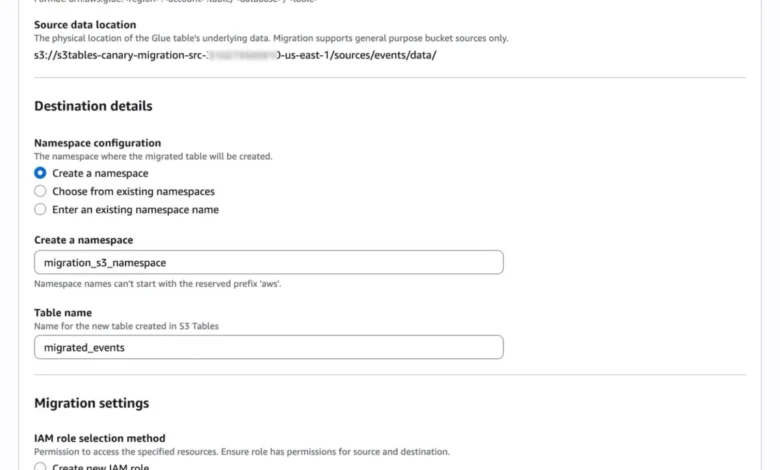
The modernization of data infrastructure has reached a significant milestone as Amazon Web Services (AWS) introduces a streamlined, managed pathway for organizations to transition from legacy Apache Hive tables to the modern Apache Iceberg format. This advancement, integrated directly into Amazon S3 Tables, eliminates the historically arduous, manual processes that have long burdened data engineers. By automating the migration workflow—including data validation, schema conversion, and file optimization—AWS is enabling enterprises to transition to a more performant, scalable, and flexible table format while maintaining the continuity of their production analytical workloads.
The Evolution of Data Lake Architecture
To understand the gravity of this development, one must consider the historical context of big data storage. For over a decade, Apache Hive has served as the backbone of data lakes, organizing petabytes of information in a structure that was revolutionary for its time. However, as analytical requirements have grown, the limitations of Hive—specifically regarding ACID (Atomicity, Consistency, Isolation, Durability) transactions, schema evolution, and performance at scale—have become increasingly apparent.

Apache Iceberg emerged as the industry response to these challenges. Designed as an open table format for huge analytical datasets, Iceberg allows for complex operations such as time-travel queries, hidden partitioning, and schema evolution without breaking existing pipelines. Despite these advantages, the barrier to adoption has been the sheer operational complexity of migration. Historically, moving a production Hive dataset to Iceberg involved weeks of engineering overhead: custom scripts were required to handle data type conversions, build rollback mechanisms, and ensure zero data loss. Many organizations found this "migration debt" too high to justify, effectively stalling their modernization efforts.
Chronology and Technical Methodology
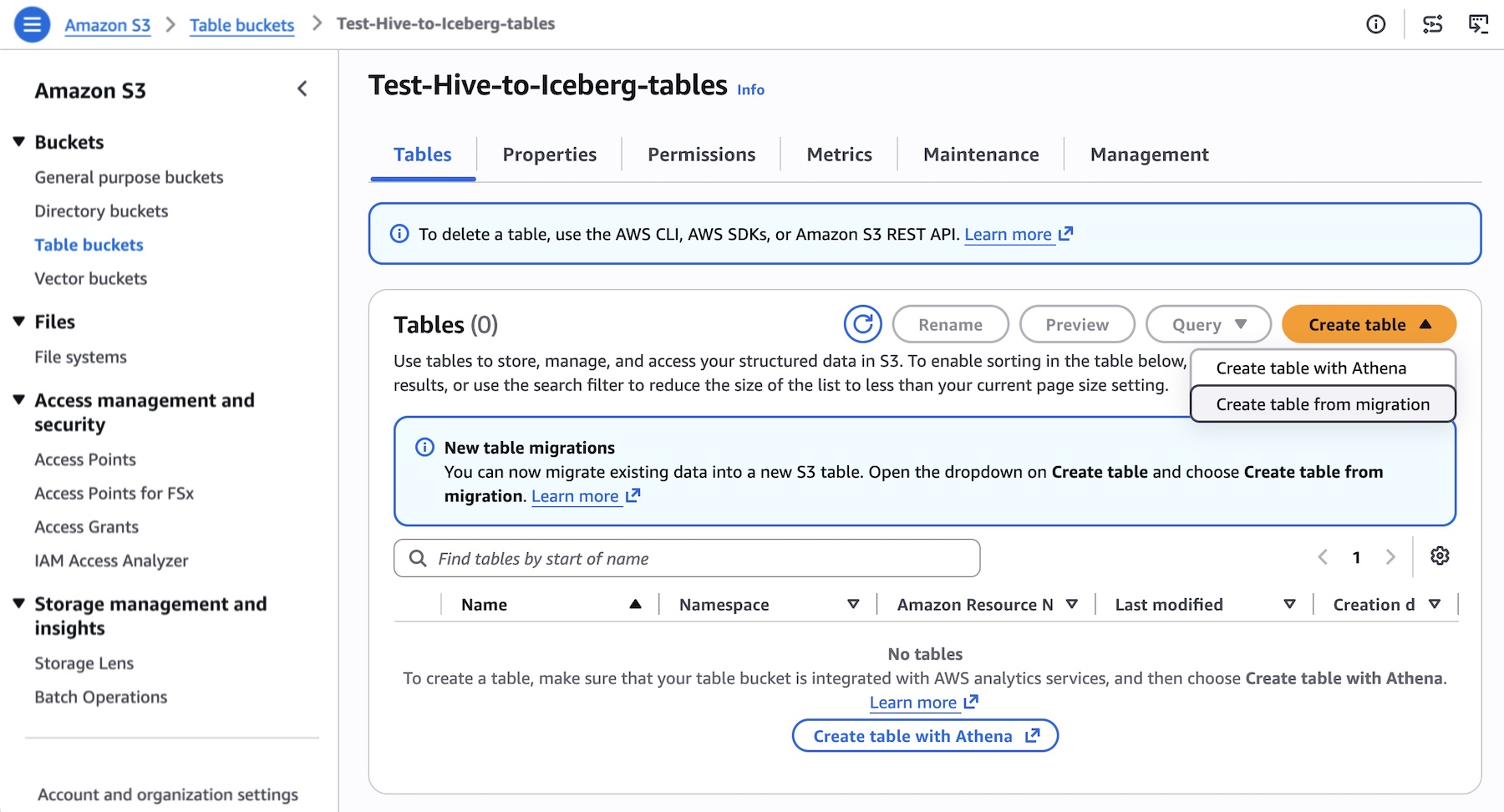
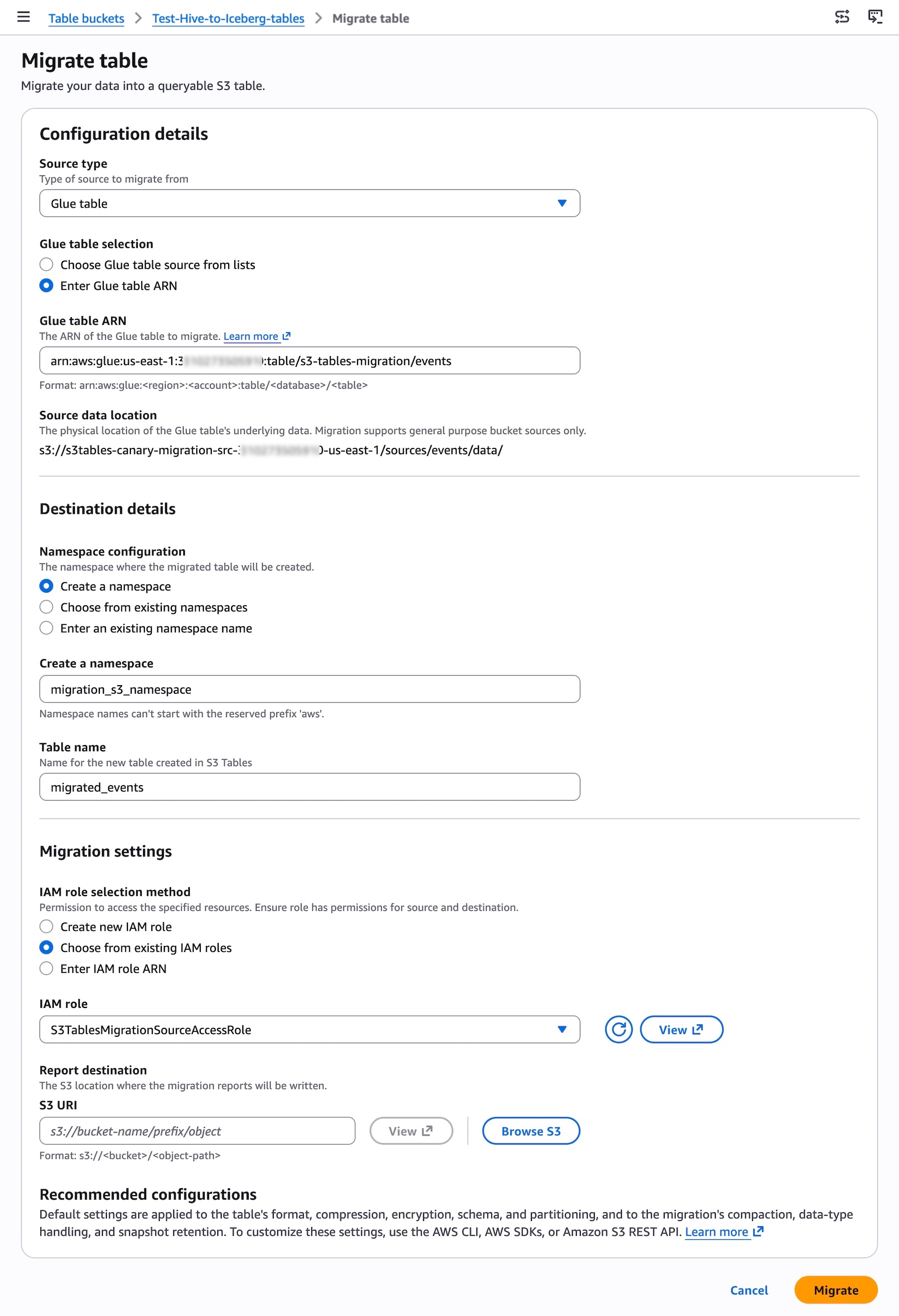
The new managed migration capability within Amazon S3 Tables represents a paradigm shift in how data platforms are upgraded. The process is now API-driven and follows a strictly defined, multi-stage lifecycle:
- Compatibility Assessment: Before any physical movement of data occurs, the S3 Tables service performs a comprehensive scan of the source objects. It generates a detailed compatibility report, identifying potential conflicts in schema or data types that could impede the migration.
- Validation and Syncing: Once the initial assessment is cleared, the system begins a background copy process. Crucially, this operation is non-blocking. Users can perform multiple synchronization cycles, allowing the destination Iceberg table to "catch up" with the source Hive table as new data arrives. This allows production workloads to continue running on the source table without disruption.
- Cutover: The final step involves a brief transition period where the destination table is promoted from a read-only state to a fully functional read-write status. This minimizes downtime to mere minutes, a significant improvement over traditional "big bang" migrations that required taking systems offline for hours or days.
This automated workflow encompasses data validation, compatibility checks, file recompression, and compaction. By handling these technical intricacies, AWS ensures that the resulting Iceberg tables are not just a replica, but an optimized version of the original data, tuned for query performance and storage efficiency.

Economic and Operational Implications
From a financial perspective, the managed migration model introduces a cost-effective alternative to self-managed engineering. Customers are only charged for the actual data copied during the process, with no additional service fees for the conversion logic itself. Furthermore, by preserving the existing access tier of objects—such as those stored in S3 Intelligent-Tiering—the migration avoids unnecessary storage cost spikes.
The impact on operational overhead is perhaps the most significant takeaway for data architects. By offloading the "heavy lifting" to S3 Tables, organizations can reallocate their engineering talent from maintenance and migration scripting toward high-value data analytics and machine learning initiatives. The integration of this feature with the AWS Agent Toolkit—specifically the migration skills designed for coding agents—further signals a shift toward AI-assisted infrastructure management, where complex system migrations are guided by guardrails rather than manual intervention.
Industry Context and Strategic Alignment
This release aligns with a broader industry trend toward "open data" architectures. Major cloud providers are increasingly pivoting away from proprietary formats, recognizing that enterprises demand portability. Apache Iceberg has achieved a de facto standard status, supported by a vast ecosystem of engines including Amazon Athena, Trino, Spark, and Snowflake. By facilitating this migration, AWS is effectively ensuring that data stored within its ecosystem remains interoperable with the wider open-source landscape.
"The industry is moving toward a future where the table format is abstracted from the storage layer," notes an independent data architect familiar with the release. "By making the migration to Iceberg a one-click or API-call operation, AWS is effectively removing the last major hurdle for legacy data lake users. This will likely accelerate the transition of petabyte-scale data lakes to Iceberg across the board."
Broader Impact and Future Outlook
The implications of this update extend beyond simple convenience. For organizations currently operating on legacy Hive tables, the technical debt associated with maintaining those systems often compounds over time. Older tables frequently suffer from "small file problems," metadata bottlenecks, and inefficient partitioning, all of which degrade query performance. By modernizing to Iceberg, these organizations gain access to advanced maintenance features like automatic compaction and snapshot management, which keep storage costs in check and queries running at peak performance as data volumes scale.
At launch, the capability is available in several key global regions, including US East (N. Virginia, Ohio), US West (Oregon), and major hubs in Asia Pacific and Europe. The service currently supports AWS Glue-registered Hive tables stored in Parquet format within the same account and region. While these initial constraints define the current scope, the architectural foundation of S3 Tables suggests that the service is designed to expand in complexity and capability.
The inclusion of the AWS MCP (Model Context Protocol) server for this feature is a notable detail. It allows AI coding assistants to query documentation, retrieve regional availability, and troubleshoot migration issues in real-time. This indicates that AWS is positioning managed migrations not just as a one-time utility, but as a component of a larger, AI-augmented cloud management strategy.
Conclusion
The introduction of managed migration for Apache Hive to Apache Iceberg is more than a new feature; it is an acknowledgment that infrastructure modernization must be frictionless to be successful. By providing a secure, validated, and cost-efficient bridge, AWS is enabling a massive segment of the data-driven economy to shed the limitations of legacy formats. As enterprises continue to grapple with the demands of AI and real-time analytics, the ability to modernize their underlying data foundation with minimal operational risk will be a critical competitive advantage. The era of the "manual migration" is effectively coming to a close, replaced by intelligent, automated, and policy-driven data lifecycle management.