The Children’s Place Files for Chapter 11 Bankruptcy and Pursues Sale of Substantially All Assets

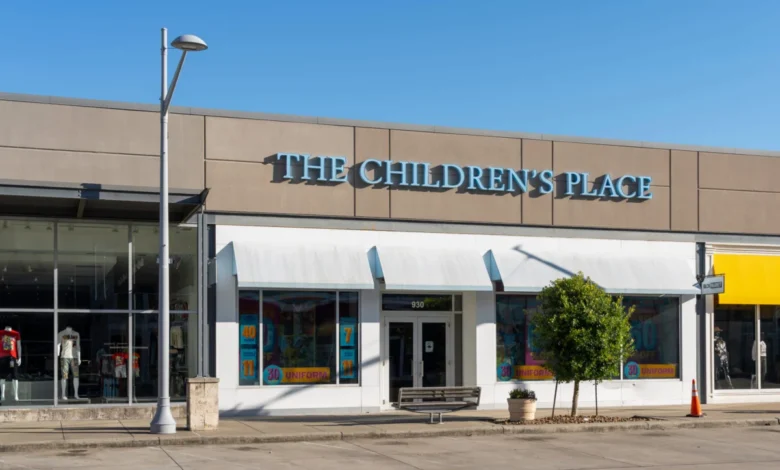
The Children’s Place Inc., a nearly 60-year-old staple in children’s apparel retail, has officially filed for Chapter 11 bankruptcy protection. The formal court documents, dated November 8, outline the company’s aggressive restructuring strategy, which includes seeking a buyer for substantially all of its assets through a court-supervised sale process. Bidding for the assets is slated to begin in December, marking a dramatic turning point for a brand that has dressed generations of growing families across North America.
Despite the profound financial distress prompting the bankruptcy filing, leadership has confirmed that both its physical brick-and-mortar storefronts and its ecommerce platforms will remain fully operational. The retailer, ranked No. 199 in the Top 1000 Database tracking North America’s largest online retailers by annual ecommerce sales, views this legal and financial maneuver as a vital lifeline to secure operational continuity and fund a comprehensive corporate overhaul.
Chronology of Financial Decline and Leadership Turmoil
The path to Chapter 11 has been paved by months of mounting financial pressures and operational instability. The Children’s Place has struggled against broader macroeconomic headwinds, shifting consumer spending habits, and fierce competition within the digital and physical children’s apparel sectors.
The depth of these financial troubles was laid bare in the company’s fiscal second-quarter financial report, covering the period ending August 1. During this quarter, The Children’s Place suffered a severe 18.9% year-over-year net sales decrease, bringing revenue down to $241.8 million. Compounding the top-line contraction, the retailer posted a heavy net loss of $31.0 million, signaling unsustainable cash-burn rates and tightening liquidity constraints that ultimately forced management’s hand toward restructuring.
Internal upheaval accompanied the financial freefall. Just days before the bankruptcy filing, U.S. Securities and Exchange Commission (SEC) filings submitted on November 4 revealed the sudden departures of four high-level executives, throwing the company’s governance into flux during a critical juncture. Amid these abrupt exits, John Szczepanski stepped forward to assume the role of acting president, tasked with steering the rudderless organization toward a viable restructuring path.
The Restructuring Plan and Sale Timeline
With the Chapter 11 petition now moving through the court system, The Children’s Place has established a compressed and transparent timeline to divest its assets and stabilize its business model. Co-Chief Restructuring Officer Rudy Morando emphasized that the primary goal of the Chapter 11 process is to achieve the most favorable outcome for the enterprise while safeguarding its legacy.
"Today’s announcement marks an important step in our efforts to secure the best path forward for The Children’s Place," Morando stated in a corporate release. "For nearly 60 years, The Children’s Place has supported growing families with apparel that customers have come to know and love."
According to the restructuring schedule outlined by the company, interested prospective buyers and investors have until December 9 to submit formal bids for the assets. Following the initial bidding phase, the court-supervised sale process is anticipated to accelerate throughout the upcoming quarters, with leadership aiming to successfully conclude the transaction by the end of 2026.
Company executives have stressed that transparency remains a core tenet of the proceedings, designed to reassure anxious vendors, landlords, and supply chain partners who might otherwise panic over counterparty risk.
"We recognize the significance of this development for our employees, customers, vendors, and other partners, and we are committed to conducting an efficient and transparent sale process," Morando added. "In the meantime, we remain focused on serving the families who have trusted The Children’s Place for generations."
Market Position and Digital Footprint
Before its current financial distress, The Children’s Place held a prominent position in the North American retail landscape, boasting a strong omnichannel presence. In addition to its standing as the No. 199 online retailer in the Top 1000 Database, the company also holds a ranking of No. 753 in Digital Commerce 360 and ReFiBuy’s specialized AI Commerce Rankings, which are cataloged within the Top 1000 Pro with AI Database. These metrics underscore the company’s historical investment in technology-driven retail strategies, even as traditional cost pressures eroded its bottom line.
The retention of ecommerce operations during the bankruptcy proceedings is considered crucial for preserving enterprise value. By keeping digital storefronts active, The Children’s Place maintains a direct revenue stream and customer engagement channel, which makes the underlying business significantly more attractive to potential acquiring entities seeking an established brand with immediate market penetration.
Broader Industry Implications and Fact-Based Analysis
The Children’s Place bankruptcy highlights the ongoing volatility facing traditional brick-and-mortar specialty retailers, particularly those reliant on mall-based traffic and middle-market consumer spending. Over recent years, apparel brands targeting families have faced a triple threat: persistent inflationary pressures squeezing household budgets, rising digital acquisition costs, and intense competition from fast-fashion giants and discount powerhouses.
The decision to pursue an asset sale under Section 363 of the U.S. Bankruptcy Code allows distressed companies to shed burdensome legacy liabilities, such as unprofitable store leases and legacy debt, while transferring operational assets to a financially healthier owner free of encumbrances. For the retail sector, this case will serve as a bellwether for how legacy brands can leverage court protection to execute rapid corporate surgery without completely liquidating their market footprint.
As December 9 approaches, all eyes will be on the bankruptcy court in New York to see which strategic buyers or private equity firms emerge with bids for the iconic children’s brand. For the millions of parents who rely on the retailer for everyday children’s wear, the immediate future remains stable, but the long-term identity of The Children’s Place hangs in the balance as it prepares to enter a new chapter under new potential ownership.