Kentucky Horsewear and Woosh claim top honors at the annual Becom Awards in Brussels

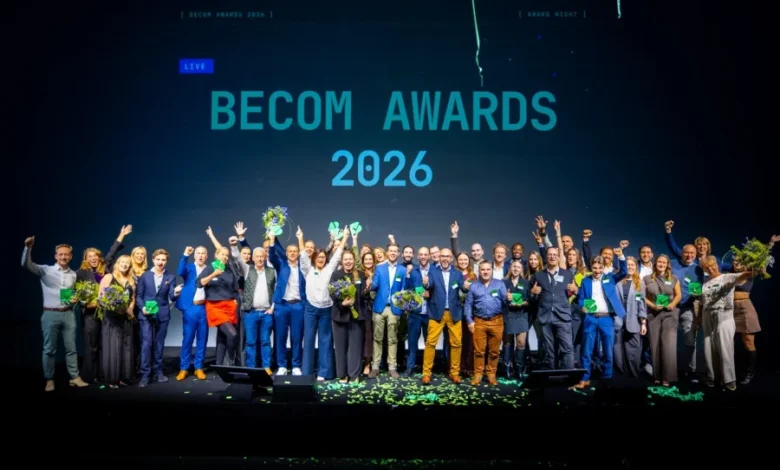
The annual Becom Awards, widely regarded as the pinnacle of recognition for the Belgian e-commerce and digital retail sector, concluded yesterday in a high-profile ceremony in Brussels. The event, organized by Becom—the national trade association representing the interests of online retailers—highlighted a significant shift in the digital landscape, where agility and innovation are increasingly trumping sheer corporate scale. This year’s edition saw a record-breaking participation pool of over 120 candidates, a testament to the thriving entrepreneurial spirit within the Belgian digital ecosystem.
From this extensive pool, a panel of ten expert judges meticulously evaluated submissions across 29 finalists, ultimately selecting 13 organizations to receive accolades. The crowning achievements of the evening, the Diamond Awards, were bestowed upon Kentucky Horsewear and Woosh, two companies that have demonstrated exceptional performance in the Direct-to-Consumer (D2C) and Business-to-Business (B2B) sectors, respectively.
A Chronology of Excellence and Industry Evolution
The Becom Awards have become a vital barometer for the health of Belgian e-commerce. Launched to celebrate digital transformation, the awards have evolved in tandem with the industry. In previous iterations, winners like Flo Féa, Rootsum, and Baunat captured headlines for their rapid scaling and customer-centric approaches. The trajectory from last year’s winners to this year’s cohort illustrates a maturation of the market; while previous winners were noted for their initial breakthroughs, this year’s honorees are being recognized for structural industry disruption and sustainable business models.
The selection process itself is a rigorous affair. Candidates must submit detailed performance metrics, strategic plans, and evidence of digital integration. The jury, comprised of seasoned industry veterans and digital transformation experts, assesses not only revenue growth but also operational resilience, customer experience, and the ability to pivot in an increasingly volatile global market.
Profile of the Diamond Award Winners
The Diamond Award for D2C went to Kentucky Horsewear, a company that serves as a case study for successful brand expansion. Founded in 2011 with an initial revenue of 200,000 euros, the company has undergone a meteoric rise, reporting nearly 27 million euros in revenue last year. Originally reliant on traditional retail channels, Kentucky Horsewear shifted its focus to a sophisticated D2C model, complemented by a robust global presence. Today, the brand supplies premium equestrian and canine equipment to customers in 75 countries. The jury’s decision to award the company was based on its seamless integration of digital sales channels with high-end product development, proving that a niche focus can achieve massive international scale.
In the B2B category, Woosh secured the Diamond Award for its pioneering work in circular economy solutions. The company, which was a finalist in three separate categories, has effectively created a new market segment in Belgium: the circular management of diapers. By providing a service that handles the collection and recycling of used diapers—a sector traditionally dominated by linear waste disposal—Woosh has demonstrated that B2B e-commerce can be a vehicle for radical environmental sustainability. The jury noted that Woosh’s ability to build an entirely new supply chain infrastructure while leveraging digital platforms for service management was a defining factor in their victory.
Category Winners: A Diverse Tapestry of Innovation
The breadth of this year’s winners underscores the diversity within the Belgian digital economy. The list of winners by category highlights a shift toward specialization and niche market mastery:
- Rising Star: X-Oats
- Growth Champion: Just Russel
- Reinvention: Zelektro
- Digital Innovation: Qallo
- Winning Concept: Couvert
- Sustainable Impact: Rootsum
- Experience Excellence: Curafyt
- Channel Excellence: In den Olifant
- Marketplace Excellence (Big Company): Louis de Poortere
- Marketplace Excellence (Small Company): Gigacrea
- Global Growth Out: Baunat
Each of these companies represents a specific facet of digital success. For instance, the recognition of Zelektro for "Reinvention" highlights the importance of legacy businesses successfully navigating the shift to digital, while the "Global Growth Out" award for Baunat showcases the maturity of Belgian companies in competing on the international stage.
The Strategic Vision of Becom
Greet Dekocker, managing director of Becom, emphasized during the ceremony that the awards serve as a reflection of the broader European digital transformation. "These winners prove that you do not have to be a multinational to innovate, grow internationally, or transform an entire sector," Dekocker stated.
This sentiment points to a strategic shift in the European business environment. For years, the prevailing narrative suggested that global tech dominance was the sole purview of massive corporations with unlimited R&D budgets. The success of companies like Curafyt or Qallo challenges this assumption, suggesting that digital tools have democratized access to markets, allowing smaller, more focused firms to outmaneuver larger competitors through superior customer experience and specialized service offerings.
Market Analysis: Implications for the Digital Sector
The data emerging from this year’s awards suggests three key trends currently shaping the Belgian and European e-commerce landscape:
- The Sustainability Pivot: The victory of Woosh and the recognition of companies with sustainable business models indicate that ESG (Environmental, Social, and Governance) factors are no longer peripheral to commerce—they are becoming core business drivers. Customers are increasingly voting with their wallets for companies that offer circular, low-impact solutions.
- Global Scalability as a Default: The success of Kentucky Horsewear and Baunat highlights that even businesses originating in smaller markets like Belgium are now built with a "born-global" mindset. The infrastructure provided by modern e-commerce platforms has lowered the barriers to entry for international expansion, allowing companies to reach global customer bases within a few years of inception.
- Specialization over Generalization: The diversity of the category winners, ranging from toy stores like In den Olifant to high-end equestrian goods, confirms that generalist retailers are finding it harder to compete with specialists who offer deep domain expertise and curated shopping experiences.
The Role of Independent Retailers
A notable aspect of this year’s competition was the inclusion of independent retailers alongside high-growth tech-driven firms. The "Channel Excellence" award for In den Olifant serves as a reminder that the digitalization of retail is not just about automation or AI; it is about the effective marriage of digital tools with traditional, high-touch customer service. In an era of increasing automation, these retailers are finding that their physical heritage can be a competitive advantage when paired with a robust digital strategy.
Looking Ahead
As the Becom Awards conclude, the broader implication for the industry is clear: the threshold for success is rising. As digital literacy increases among consumers, the expectations for logistics, site performance, and brand narrative are higher than ever. The 2026 winners have set a high benchmark, not just in terms of revenue, but in their capacity to solve complex problems—be it logistical complexity, environmental waste, or market penetration.
The Belgian e-commerce sector remains a robust contributor to the national economy, and events like the Becom Awards play a crucial role in documenting the rapid pace of change. As these companies continue to scale, their progress will likely be scrutinized by investors and competitors alike, serving as a blueprint for the next generation of digital entrepreneurs.
For now, the message from Brussels is definitive: the future of retail is decentralized, specialized, and increasingly circular. The companies honored this week are not just participating in the digital economy; they are actively defining its parameters for the coming decade. Whether through the innovative use of artificial intelligence or the fundamental restructuring of industry supply chains, the Becom winners demonstrate that the most significant transformations in commerce often originate from the most unexpected places.