AWS Weekly Roundup: Advancing Agentic Intelligence, Streamlined Data Migrations, and Infrastructure Optimization

The primary challenge of modern digital transformation is not the adoption of new technology itself, but the operational friction required to migrate existing workflows into those new environments. Last week, Amazon Web Services (AWS) introduced a series of updates designed to lower these barriers to entry, focusing on non-disruptive transitions for data infrastructure and enhanced runtime performance for generative AI agents. From the simplified migration of Hive tables to Apache Iceberg via Amazon S3 Tables to the launch of the high-performance AgentCore Runtime, the announcements reflect a strategic push toward elasticity and operational efficiency.
Revolutionizing Data Migration: S3 Tables and Apache Iceberg
The industry has long viewed the migration of legacy Hive tables to Apache Iceberg as a resource-intensive endeavor, often requiring weeks of dedicated engineering time to re-provision compute and re-map data pipelines. AWS has fundamentally altered this narrative by introducing a managed migration path within Amazon S3 Tables.
This new functionality allows organizations to migrate Parquet-based tables registered in the AWS Glue Data Catalog directly into S3 Tables without the need for additional pipeline development. The process is defined by a three-step workflow: initiation, incremental synchronization, and final cutover. By utilizing an incremental synchronization model, the source data remains writable throughout the process, minimizing downtime to a brief window during the final transition.
From a technical standpoint, S3 Tables performs a comprehensive validation of the source data, generating a compatibility report that ensures data integrity before the move. Because the service leverages existing infrastructure, there are no additional charges for the conversion process itself, with users paying only for the data copied. Once the migration is complete, the tables are immediately accessible via Amazon Athena, Amazon SageMaker Unified Studio, and any other engine supporting the Iceberg REST API. This development is particularly significant for enterprises looking to modernize their data lakes without disrupting active production workloads.
Enhancing AI Agent Performance with AgentCore V2
As generative AI shifts from proof-of-concept to production-grade agentic workflows, runtime efficiency has become a critical bottleneck. The release of the Amazon Bedrock AgentCore Runtime (V2) addresses the dual challenges of memory management and cold-start latency.
The V2 runtime introduces a sophisticated approach to resource allocation. Unlike traditional runtimes that maintain peak memory usage regardless of demand, the new AgentCore environment starts with a small memory footprint, paging in additional resources on demand and releasing them when sessions go cold. This "pay-for-what-you-use" model is expected to provide significant cost relief for organizations running high-volume, intermittent agent workloads.
Furthermore, the implementation of a snapshot-based boot process has drastically reduced cold-start times. In controlled tests, the V2 runtime maintained P75 cold-start latencies of approximately two seconds for container images ranging from 200 MB to 2 GB. In contrast, legacy runtimes experienced exponential latency growth as image sizes increased, with start times climbing toward 30 seconds for larger images. To leverage these improvements, developers simply update their platformVersion to V2. This transition requires ensuring that containers report health on the /ping endpoint only after full initialization, a nuance that emphasizes the importance of refined lifecycle management in containerized AI applications.
Scaling DynamoDB: Bulk Data Loading
Database management at scale received a major update with the introduction of bulk put item support in Amazon DynamoDB. This feature allows users to ingest line-delimited DynamoDB JSON or Amazon Ion files directly from Amazon S3 into existing tables.
The significance of this launch lies in its asynchronous nature and efficiency. By utilizing dedicated system capacity for these imports, organizations can load massive datasets—such as 100 million 1 KB items in under an hour—without exhausting the provisioned throughput of the production table. Each record within the batch can carry its own condition expression, allowing for complex data loading scenarios that mix standard inserts with version-guarded writes. This capability simplifies data backfilling and bulk updates, though users are advised that the process is not transactional in the sense that cancellations do not roll back items already successfully written.

Infrastructure and Connectivity: From Kafka to Interconnect
Beyond data and AI, AWS has bolstered its infrastructure offerings to improve real-time processing and network connectivity.
The introduction of queue consumption mode for Apache Kafka in AWS Lambda represents a major shift in how serverless functions handle high-throughput streams. Previously, parallelism in Kafka event sources was capped by the number of partitions. By leveraging Kafka share groups (available in Kafka 4.2 and later), the new queue mode allows developers to distribute records from a single partition across a significantly larger number of parallel Lambda invocations. While this necessitates that functions be idempotent—as the ordering guarantees are relaxed in favor of at-least-once delivery—the change provides the elasticity needed for massive, unpredictable data spikes.
Simultaneously, the preview of AWS Interconnect, launched in partnership with Equinix, streamlines the "last mile" of private connectivity. By providing a pre-configured, quad-redundant connection between Equinix data centers and AWS, the service removes the complexity of manual router configuration and cross-connect ordering. With MACsec encryption by default and a 99.99% availability SLA, the service addresses the growing demand for secure, low-latency hybrid cloud architectures.
Security and Observability: The SBOM Inventory
In the current cybersecurity climate, visibility into software dependencies is not merely a best practice but a regulatory requirement. AWS Security Hub has expanded its capabilities to provide an automated Software Bill of Materials (SBOM) inventory across an organization’s compute estate.
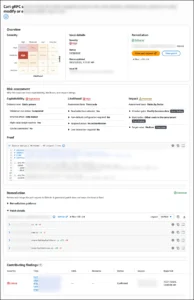
By aggregating data from Amazon Inspector, Security Hub now provides a unified view of every software package installed across Amazon EC2 instances, Amazon ECR images, and Lambda functions. This allows security teams to instantly identify the footprint of specific libraries or vulnerabilities across their entire infrastructure, drastically reducing the time required for incident response and patch management. The inclusion of this feature within Security Hub Essentials at no additional cost underscores the commitment of AWS to providing baseline security observability to all users.
Industry Implications and Forward-Looking Analysis
The broader implication of these updates is a systematic focus on removing "migration friction." Whether it is moving legacy data tables to an open-source format like Iceberg, or transitioning AI agents to a more efficient runtime, AWS is positioning its ecosystem as the path of least resistance for modernizing infrastructure.
The decision to contribute the large-transaction binary log optimization back to the community MySQL project further illustrates the symbiotic relationship between AWS and the broader open-source ecosystem. By optimizing commit latency for massive transactions—reducing it from seven minutes to just a few seconds—AWS has not only improved its managed Aurora MySQL service but has also elevated the performance ceiling for all MySQL users.
Looking toward the upcoming re:Invent conference, these announcements provide a clear window into the strategic priorities of the cloud giant. As organizations prepare to scale their generative AI and data analytics operations, the emphasis on elastic, managed, and low-latency infrastructure will likely dominate the conversation. The integration of these tools into existing workflows—without requiring significant re-architecting—is the hallmark of the current AWS product cycle.
For developers and systems architects, the takeaway is clear: the focus is shifting from "how to build" to "how to optimize and transition." As these services mature, the ability to rapidly adopt new technologies like Iceberg tables or V2 agent runtimes will become a key differentiator for businesses seeking to maintain a competitive edge in an increasingly automated and data-driven marketplace. The convergence of these updates, occurring simultaneously across database, compute, and security domains, signals a mature, cohesive approach to cloud evolution that favors incremental, low-risk, and high-reward technological adoption.