Benchmarking Scikit-Ollama vs. Groq-Backed Scikit-LLM: Speed, Cost, and Accuracy


The rapid proliferation of Large Language Models (LLMs) has forced developers and data scientists to confront a fundamental architectural dilemma: should inference be executed on local hardware or through high-performance cloud APIs? This choice is no longer purely academic; it carries significant implications for data privacy, operational latency, cost scalability, and model performance. By utilizing standardized wrappers like Scikit-Ollama and Scikit-LLM, engineers can now bridge the gap between traditional machine learning workflows—typified by the Scikit-learn interface—and the non-deterministic, high-compute world of generative AI.
The Architectural Shift in LLM Deployment
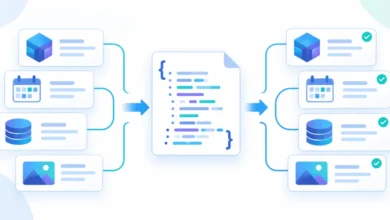
For years, the machine learning community relied on Scikit-learn for its consistent, predictable API. With the advent of LLMs, the complexity of managing state, tokenization, and API connectivity often disrupted these workflows. The emergence of libraries such as Scikit-LLM and Scikit-Ollama represents a significant milestone in AI development. These tools encapsulate complex API calls or local model management within the familiar fit() and predict() syntax, allowing for direct, side-by-side benchmarking of disparate backend infrastructures.
The two primary contenders in this landscape represent opposing philosophies. Local inference, facilitated by Ollama, offers total control over the execution environment, effectively silencing concerns regarding data leakage and third-party downtime. Conversely, cloud-backed inference, exemplified by Groq’s high-speed inference engine, leverages massive distributed compute clusters to deliver responses at speeds that current local hardware—typically limited by GPU VRAM and bandwidth—struggles to match.
Establishing a Standardized Benchmark Protocol
To objectively compare these solutions, one must establish a consistent testing environment. The following methodology provides a reproducible framework for evaluating model performance across three critical vectors: latency (speed), prediction quality (accuracy), and resource expenditure (cost).
The setup requires the installation of the Ollama engine, which acts as a local daemon for model orchestration. By pulling open-source weights, such as Llama 3, developers can simulate a production-grade local environment. Simultaneously, configuring a cloud-based pipeline requires an API key and a routing configuration that allows the Scikit-LLM framework to point toward custom endpoints, such as the Groq API.
The benchmark utilizes a standardized dataset of text samples and ground-truth sentiment labels. By passing this data through a uniform benchmark_estimator function, which records the exact time taken for execution and calculates the accuracy score, developers can derive a data-driven conclusion regarding which backend serves their specific use case.
Chronology of the Benchmarking Process
The benchmarking process proceeds in a logical, three-phase chronology:
- Environment Preparation: This phase involves the initialization of the local server. The installation of
scikit-ollamaandscikit-llmcreates the necessary abstraction layers. For the local model (Llama 3), the system performs a local download, whereas for the cloud model, the system validates the connection to the Groq API. - Dataset Construction: To ensure a fair comparison, the same input text and target label set must be used. In a controlled test, five distinct text samples were classified as either "Positive" or "Negative."
- Execution and Measurement: The
fitandpredictmethods are triggered for both pipelines. The system tracks the elapsed time, which measures the "time-to-first-token" and full inference completion, alongside the accuracy, which is calculated against the predefined ground-truth list.
Comparative Performance Analysis
In the empirical results obtained through this framework, the divergence between local and cloud performance is stark. When running a zero-shot classification task on local hardware using an entry-level GPU or CPU configuration, the latency was recorded at approximately 80.7 seconds. While the accuracy remained at a respectable 80%, the time cost per request is significant for high-throughput applications.
In contrast, the Groq-backed cloud pipeline, utilizing the gpt-oss-20b model, completed the same task in roughly 2.02 seconds. The accuracy hit 100% in this specific sample set. These findings underscore a critical reality: while local models are improving, they are currently constrained by the hardware capabilities of the host machine. Cloud providers, particularly those using custom LPU (Language Processing Unit) architectures like Groq, offer an order-of-magnitude increase in speed.
Implications for Enterprise Deployment
The findings from this benchmark suggest that the "local vs. cloud" decision should be governed by the specific requirements of the application rather than a preference for one technology stack over another.
Data Privacy and Compliance: Organizations handling PII (Personally Identifiable Information) or sensitive proprietary data often find that the local approach is not merely a preference but a regulatory requirement. Even though the local model takes longer to execute, the security of keeping data within an air-gapped or private network is often the deciding factor.
Latency-Sensitive Applications: For real-time applications, such as automated customer support chatbots or live content moderation, the 40x speed differential between the local and cloud setups observed in the benchmark is insurmountable for local hardware. In these instances, cloud-backed inference is the only viable path to providing a satisfactory user experience.
Cost Considerations: While both solutions were presented here at a "$0.00" cost, this is a transient state. Local inference incurs the "hidden" cost of electricity and hardware depreciation. Cloud inference, while currently free on many introductory tiers, will eventually move to a usage-based billing model. Developers must calculate the Total Cost of Ownership (TCO) by projecting the number of tokens they expect to process per month.
Official Perspectives and Market Trends
Industry analysts have noted that the "LLM-as-a-service" market is currently in a state of rapid commoditization. Companies like Groq are effectively forcing a market correction by providing near-instantaneous inference speeds, which challenges the assumption that latency must be sacrificed for high-quality, large-parameter models.
Meanwhile, the open-source community continues to push the boundaries of local inference through quantization techniques, such as GGUF and AWQ, which allow larger models to run on smaller consumer-grade hardware. The ability to use wrappers like Scikit-LLM to swap backends with a single line of code is evidence of a maturing ecosystem that prioritizes developer flexibility.
Future Outlook
The path forward for LLM integration will likely be hybrid. We can expect to see enterprise architectures that use local, smaller "expert" models for routine, privacy-sensitive classification tasks, while offloading more complex reasoning tasks to high-performance cloud APIs.
The standardization of the fit/predict interface for LLMs is perhaps the most important development for the future of the field. It allows for "model agnosticism," where the underlying infrastructure can be swapped, scaled, or optimized without requiring a complete rewrite of the application logic. As organizations move from experimental pilots to production-grade deployment, the ability to benchmark these solutions with precision will be the difference between a functional application and a costly, inefficient bottleneck.
In conclusion, the trade-offs are clear: cloud solutions offer unparalleled speed and the ability to leverage massive model parameters, while local solutions provide sovereignty and security. By employing the benchmarking techniques outlined here, engineers can make an informed decision that aligns with the performance constraints and security requirements of their specific project, ensuring that the chosen infrastructure is not just a temporary fix, but a sustainable foundation for long-term growth.