The Curious Phenomenon of Why Cockroaches Die on Their Backs and the Biological Mechanisms Behind It

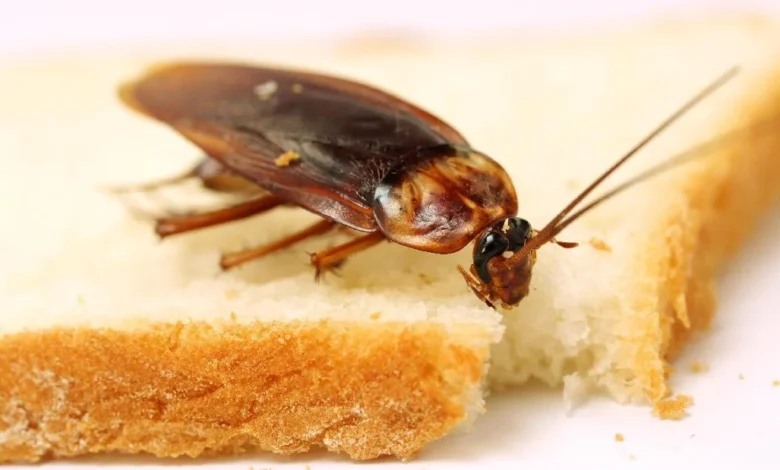
Cockroaches are widely regarded by entomologists and pest control experts as the ultimate survivors of the insect world. Capable of enduring weeks without sustenance, surviving extreme radiation levels, and even persisting for days after decapitation, these resilient creatures have evolved over hundreds of millions of years to thrive in almost every terrestrial environment on Earth. However, there remains a persistent biological irony: despite their incredible evolutionary adaptations, cockroaches are frequently discovered dead in a position of complete vulnerability—lying on their backs, legs flailing upward. This phenomenon is not a mere coincidence of chance but is deeply rooted in the interplay between their unique physiological anatomy, the chemical environment of modern human dwellings, and the laws of physics.
The Anatomy of Vulnerability
To understand why a cockroach dies in this specific, seemingly undignified position, one must first look at the creature’s center of gravity and physical construction. A cockroach possesses a convex, rounded back and a relatively flat, elongated underside. Their six legs are designed for rapid locomotion across rough terrain, utilizing friction to propel their bodies forward.
When a cockroach is upright, it is a model of biomechanical efficiency. However, if it loses its footing on a smooth surface—such as polished tile, glass, or varnished wood—the creature’s rounded thorax and abdomen make it difficult to maintain stability. Once a cockroach finds itself inverted, it lacks the necessary musculature or leverage to push against a smooth surface to right itself. Unlike beetles, which possess specific body structures that can act as a fulcrum to flip back over, the cockroach is often caught in a "point of no return" scenario. If the surface is too smooth to provide a grip, the insect’s attempts to use its legs to turn over are rendered futile, leading to a state of exhaustion that eventually results in death.
The Role of Chemical Agents and Neurotoxicity
While accidental flipping is a reality of their daily lives, the most common reason for finding a cockroach dead on its back in a residential or commercial setting is exposure to insecticides. Modern pest control products, particularly those categorized as neurotoxins, are designed to target the insect’s central nervous system.
When a cockroach comes into contact with a synthetic pyrethroid or an organophosphate, the chemical disrupts the transmission of nerve impulses. This disruption causes a cascade of involuntary muscle contractions, or spasms, which inevitably lead to a total loss of motor coordination. As the cockroach begins to experience tremors and paralysis, it loses the ability to maintain its equilibrium. It will often flip onto its back during these final, convulsive movements. Because the chemical has effectively paralyzed the muscles required to flip back over, the insect remains trapped in this position until its physiological systems shut down entirely.
From a toxicological standpoint, this is a planned outcome for many pest control formulations. By inducing muscle failure, the chemicals ensure that the insect is not only neutralized but also immobilized, preventing it from crawling into inaccessible areas to die. This serves the dual purpose of keeping the pest contained and allowing homeowners to verify the efficacy of the treatment.
Environmental Factors and Habitat Interaction
The architectural environment of the modern home plays a significant role in this phenomenon. The interior of a typical house—filled with synthetic, non-porous surfaces—is vastly different from the natural habitats where cockroaches evolved, such as leaf litter, soil, and bark.
In the wild, a cockroach that falls onto its back is surrounded by textures—twigs, stones, soil, and organic debris—that provide the necessary leverage to regain an upright position. A quick push against a piece of dirt or a blade of grass is often enough to right the insect. Conversely, the kitchen or bathroom floor provides no such mechanical advantage. The "slippery" nature of these environments acts as a death trap.
This is why, in urban settings, we rarely see this behavior outside. In a garden or a natural forest floor, a cockroach is unlikely to die in a supine position because the environment itself facilitates its recovery. The phenomenon is essentially an "urban-induced" mortality pattern, highlighting how human-made structures inadvertently create conditions that exacerbate the vulnerability of even the most hardy pests.
Physiological Exhaustion and the Energy Deficit
Beyond external toxins and physical surfaces, there is the factor of internal exhaustion. A cockroach that finds itself inverted on a smooth surface will immediately engage in a frantic, high-energy effort to correct its orientation. This involves rapid, repetitive movements of the legs and wings, which consume significant amounts of metabolic energy.
For a cockroach already nearing the end of its life cycle, or one that is suffering from nutritional stress, this physical exertion is a major metabolic drain. If the insect is unable to flip over within the first few minutes, it enters a state of rapid fatigue. As its glycogen stores are depleted, the insect’s muscles fail, and it succumbs to a state of systemic collapse. Essentially, the insect dies of exhaustion caused by its own desperate, unsuccessful struggle for survival.
Scientific Implications and Pest Control Data
Data from entomological studies suggests that the "death by inversion" is a hallmark of certain insecticide classes. Pest control professionals often use the rate at which cockroaches move to their backs as a metric for testing the potency of new chemical compounds. If a substance causes an insect to flip within 30 minutes, it is deemed highly effective at interrupting the insect’s nervous system functionality.
Furthermore, research into the biomechanics of insect locomotion, such as that conducted by researchers at the University of California, Berkeley, has utilized cockroaches as models for robotics. These studies have highlighted the extreme importance of leg-to-surface interaction. The findings confirm that without the ability to apply a specific torque against a surface, the insect is mathematically incapable of reversing its orientation. This research has influenced not only how we control pests but also how we design small, autonomous robots that need to navigate complex, varied environments without getting stuck.
Broader Impact on Public Health and Sanitation
The visibility of dead, inverted cockroaches in homes is more than a trivial curiosity; it is a signal of the effectiveness of a sanitation or pest management program. In public health contexts, such as hospital kitchens or food processing facilities, the presence of these insects is taken as a failure of integrated pest management (IPM) protocols.
However, the fact that they are found in this position also suggests that insecticides are being utilized. While effective, this raises secondary concerns about the presence of toxic residues in living spaces. Public health officials generally advocate for a transition toward mechanical traps and bait stations rather than broad-spectrum sprays, which minimizes the risk of humans and pets inhaling or coming into contact with the neurotoxic chemicals that cause these involuntary spasms.
Conclusion
The sight of a cockroach lying on its back, legs reaching toward the ceiling, is a final, involuntary manifestation of the creature’s struggle against an environment it was never biologically evolved to inhabit. Whether caused by the disruption of its nervous system via chemical intervention, the lack of friction on man-made surfaces, or the total exhaustion of its metabolic reserves, the posture is a byproduct of a mismatch between ancient biology and modern domesticity. While these insects continue to be a subject of fascination for their durability and their role as models for bio-inspired engineering, their ignominious end on our linoleum floors remains one of the most visible, albeit unintended, consequences of our constant war against them. Understanding the biological mechanisms behind this common sight provides a deeper look into the intricate relationship between urban pests and the environments we build to keep them out.
Related posts: