Nelayan Banda Aceh Kreatif Manfaatkan Beton dan Ban Bekas Jadi Pemberat Rumpon Murah Berkualitas

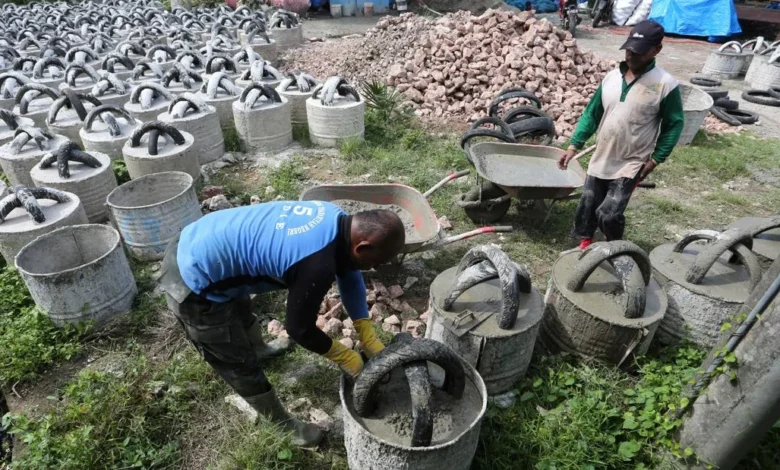
Banda Aceh — In a display of resourcefulness and sustainable traditional craftsmanship, local fishermen in the coastal village of Lampulo, Banda Aceh, have turned to unconventional materials to support their livelihood. Members of a local fishing community in Indonesia’s westernmost province have been hard at work manufacturing artificial fish aggregating device (FAD) sinkers—locally known as pemberat rumpon—using a durable combination of concrete and discarded automotive tires. This ingenious recycling initiative not only addresses the community’s economic needs by significantly cutting down operational costs but also highlights an eco-friendly approach to managing rubber waste in coastal regions.
The production process, which was documented in late November 2026, showcases how grassroots innovation continues to sustain traditional fishing practices in the modern era. Operating with limited budgets, theseAcehnese fishermen have streamlined the fabrication of rumpon anchors to cost approximately Rp150,000 per unit. By repurposing old tires as outer molds and structural reinforcements for heavy concrete blocks, the fishermen have created a reliable, low-cost method to anchor traditional fish attractors securely into the ocean floor, ensuring stability against strong underwater currents.
Background and Context of Traditional Fishing in Lampulo
Lampulo is widely recognized as one of the most prominent fishing hubs in Banda Aceh and the broader Aceh region. The port village has a rich history deeply intertwined with the maritime sector, serving as a vital economic lifeline for thousands of residents. Following the devastating Indian Ocean tsunami in 2004, the fishing infrastructure in Lampulo underwent massive rebuilding efforts, transforming it into a modern yet culturally traditional maritime community.
Despite advancements in commercial fishing technology, a significant portion of fishermen in Aceh still relies heavily on traditional and semi-traditional gear, including rumpon. A rumpon acts as an artificial reef or fish aggregating device, suspended in the open sea to attract pelagic fish species such as tuna, skipjack, and mackerel. Because these devices must remain stationary in deep waters, they require heavy, reliable sinkers to prevent them from drifting away. Historically, sourcing these heavy anchors posed a financial challenge, often forcing fishermen to purchase expensive commercial hardware or rely on less durable makeshift materials. The adoption of concrete and used tires represents a major milestone in local self-reliance.
The Manufacturing Process: Ingenuity Meets Economy
The creation of a concrete and tire sinker requires meticulous physical labor and precise engineering on a micro-scale. Members of the Lampulo fishing group gather discarded rubber tires from local automotive repair shops, effectively upcycling waste that would otherwise end up in landfills or pollute local marine ecosystems.
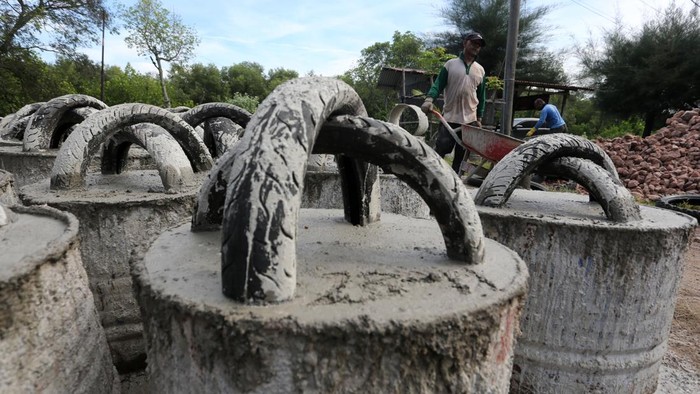
The process begins by preparing the tire casing, which serves as a flexible yet sturdy mold that helps protect the seabed from abrasive concrete edges while providing added tensile strength. Concrete—a mixture of cement, sand, gravel, and water—is then mixed by hand or in small mixers and poured directly into the hollow cavity of the tire. Integrated into this wet mixture are heavy-duty metal loops or hooks, securely anchored into the core to serve as attachment points for the thick ropes leading up to the surface rumpon structure.
Once cured, these composite sinkers weigh hundreds of kilograms, providing the immense density required to hold fast against turbulent oceanic currents. At a production cost of roughly Rp150,000 per unit, this method undercuts commercial anchoring alternatives by a wide margin. For artisanal fishermen operating on thin profit margins dictated by fluctuating fuel prices and seasonal catches, keeping operational expenditures low is paramount to maintaining household financial stability.
Economic and Environmental Implications
The initiative by the Lampulo fishermen carries dual benefits: economic relief and environmental mitigation. From an economic perspective, the ability to produce essential fishing gear locally fosters community resilience. Instead of depending on external suppliers or expensive industrial equipment, the fishermen pool their labor and resources to manufacture equipment as needed. This localized supply chain insulates them from supply chain disruptions and inflation affecting imported or factory-made marine hardware.
From an environmental standpoint, the repurposing of old rubber tires addresses a notoriously difficult waste management challenge. Used tires are non-biodegradable and pose serious fire and health hazards when discarded improperly. By encapsulating them in concrete and sinking them as part of anchored marine structures, the fishermen help rid local neighborhoods of rubber clutter. Furthermore, marine biologists note that submerged tires and concrete structures often double as artificial reefs, providing hard substrates where barnacles, algae, and small marine organisms can attach, thereby fostering local biodiversity beneath the ocean surface.
Broader Perspectives and Future Outlook
Observers and maritime experts have pointed to the Lampulo initiative as a prime example of grassroots circular economy principles in action within Indonesia’s fisheries sector. While large-scale industrial fisheries often capture headlines for high-tech advancements, the resilience of artisanal fishers at the country’s periphery demonstrates a profound understanding of sustainable resource management.
Local cooperatives and fisheries extension services in Aceh have increasingly taken notice of such community-led innovations. Stakeholders suggest that providing formal training, safety gear, and minor financial subsidies or grants to these fishermen could amplify their productivity. Expanding the initiative could allow Lampulo to supply affordable rumpon sinkers to neighboring coastal districts, potentially turning a localized survival strategy into a micro-enterprise.
As the fishing community in Lampulo moves forward, the sight of fishermen shaping concrete and repurposing rubber tires remains a testament to their unwavering work ethic. In an era marked by economic uncertainties and environmental challenges, the fishermen of Banda Aceh continue to chart their own course, proving that traditional wisdom and modern resourcefulness can successfully anchor a sustainable future.