Global AI Coalition Releases Predicted 3D Structures for Over 2,800 Viral Protein Complexes to Fortify Pandemic Preparedness

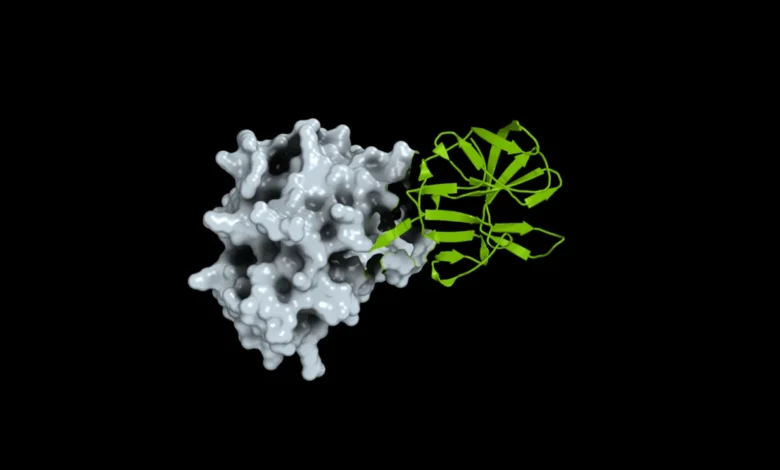
The global scientific community has taken a monumental step forward in proactive healthcare as a coalition of premier research organizations, spearheaded by NVIDIA, Google DeepMind, and the European Molecular Biology Laboratory’s European Bioinformatics Institute (EMBL-EBI), officially released a massive repository of predicted three-dimensional structures for the protein complexes of more than 2,800 viruses. Published openly via the AlphaFold Database, this unprecedented dataset aims to arm researchers worldwide with the structural blueprints necessary to preemptively counter future pathogens before they trigger widespread global crises.
When SARS-CoV-2 emerged in late 2019, vaccine developers and virologists held a vital scientific advantage. Decades of foundational research concerning the family of coronaviruses meant that scientists already possessed a comprehensive understanding of the pathogen’s key structural proteins, most notably the spike protein. This prior knowledge allowed researchers to design, test, and manufacture effective vaccines in record-shattering timelines. However, infectious disease experts and epidemiologists have consistently warned that the next global health emergency may originate from a completely novel viral family—an unexpected threat for which humanity lacks a comparable head start.
To bridge this critical knowledge gap, the newly unveiled dataset targets viral families known to infect humans, ranging from common cold-inducing pathogens to more severe and emerging threats such as the Mpox virus. By mapping these structures proactively, the international coalition seeks to create a digital stockpile of biological data, ensuring that scientists are never again forced to operate entirely in the dark when an unfamiliar pathogen makes the jump to human populations.
Decoding the Molecular Architecture of Pathogens
At the heart of this technological leap is AlphaFold2, Google DeepMind’s revolutionary artificial intelligence model capable of predicting how amino acid sequences fold into intricate three-dimensional protein structures. While individual proteins are fascinating, they rarely function in isolation. Instead, biological processes rely on protein complexes—sophisticated, multi-molecule assemblies that interact to execute cellular functions. Viruses hijack these cellular mechanisms to replicate, meaning that vaccines and antiviral therapeutics must frequently disrupt these specific protein-protein interactions to neutralize a pathogen.
Traditionally, determining the precise 3D structure of a protein complex has been a painstakingly slow and expensive endeavor. Conventional experimental methodologies, such as X-ray crystallography and cryogenic electron microscopy, require researchers to crystallize proteins and bombard them with radiation or capture high-resolution images through advanced microscopy. These processes routinely take years of laboratory work and can cost thousands of dollars per individual structure, leaving thousands of lesser-studied viruses structurally unmapped.
By combining AlphaFold2 with the NVIDIA BioNeMo Inference Runtime—a GPU-accelerated framework designed to optimize and scale AI workloads—the research collective dramatically accelerated this process. What previously took years of meticulous laboratory experimentation can now be inferred in a matter of minutes. This computational efficiency allowed the team to scale inference across thousands of entire viral proteomes, predicting the structures of complex protein groups en masse. Furthermore, NVIDIA has openly released the BioNeMo Structure Prediction Pipeline, a GPU-accelerated workflow allowing scientists globally to input their own protein sequences and rapidly generate high-confidence 3D structural predictions.
A Treasure Trove of Uncharted Biological Data
The implications of this dataset extend far beyond merely cataloging known biological structures. Approximately 30 percent of the protein interactions featured in the newly released database are completely unprecedented within the scientific record. These complex interaction shapes have never before been documented in the Protein Data Bank, the primary international repository for experimentally determined protein structures.
This vast reservoir of novel structural data serves as a powerful engine for hypothesis generation. Biologists, virologists, and artificial intelligence researchers can now study viral mechanisms at an unprecedented level of granularity. By investigating how individual proteins interact within a broader viral proteome, researchers can identify potential vulnerabilities, design targeted diagnostic tools, and formulate novel therapeutic interventions long before an outbreak materializes.
The urgency of this initiative is underscored by sobering statistical models. An analysis published by the Center for Global Development estimates a roughly 50 percent probability that the world will face another pandemic as severe as COVID-19 by the year 2050. In this context, proactive digital biology transitions from an academic pursuit into an absolute economic and public health necessity.
Global Collaboration and Equitable Access
The release of the dataset was strategically coordinated to coincide with high-level international discussions on pandemic prevention, preparedness, and response, convened by the World Economic Forum during the United Nations General Assembly meeting in New York City. The overarching initiative represents a remarkable convergence of international scientific cooperation, uniting organizations such as the Coalition for Epidemic Preparedness Innovations (CEPI), EMBL-EBI, Google DeepMind, NVIDIA, Seoul National University, Sungkyunkwan University, the Swiss Institute of Bioinformatics, and the University of Glasgow.
With the integration of this latest dataset, the AlphaFold Database now houses predictions for more than 260 million protein and protein complex structures, covering virtually every cataloged protein known to science. Importantly, the stakeholders have emphasized the critical importance of open access, ensuring that researchers in low- and middle-income countries—who are frequently on the front lines of emerging regional disease outbreaks—can access these vital structural insights without financial or infrastructural barriers.
Institutional and Academic Perspectives
Leaders across the participating organizations have underscored the transformative potential of democratized biological data.
"Our ambition with the AlphaFold Database has always been to democratize access to foundational biology at scale," stated Risha Patel, life sciences partnerships manager at Google DeepMind. "This collaboration to bring thousands of viral complexes into the database will equip scientists around the world with insights they need to help prepare for future outbreaks."
Jo McEntyre, interim director of EMBL-EBI, highlighted the egalitarian nature of the project. "Making this data open is critical for understanding viral diagnostics and developing treatments and vaccines," McEntyre noted. "The dataset also covers lesser-studied viruses and lowers the barriers for scientists in low-resource settings who are confronting outbreaks firsthand."
For veteran virologists, the contrast between historical research methodologies and contemporary AI-driven capabilities is stark. Joe Grove, professor of molecular virology at the Medical Research Council-University of Glasgow Centre for Virus Research and a key collaborator on the project, reflected on his own academic journey.
"When I did my Ph.D., there were no structures for any of the proteins we were investigating. It was like working in the dark—we had to guess what was going on," Grove said. "When the next pandemic happens, there may be something that comes out of the blue, and we’ll be lacking the knowledge we had for COVID. What we’re trying to do is stockpile some of that knowledge ahead of time. This dataset is a powerful tool for all the researchers doing their Ph.D.s now, giving them high-quality structural data that’s going to accelerate fundamental science."
Enabling the Next Generation of Digital Biology
From an analytical standpoint, the integration of generative artificial intelligence and high-performance accelerated computing into structural biology represents a paradigm shift. Chris Dallago, applied research science team lead in digital biology at NVIDIA, framed the release as a foundational catalyst for the entire scientific ecosystem.
"This database is an engine for hypothesis generation," Dallago explained. "We’re enabling biologists and the AI community to investigate protein interactions, not just as single molecules but as complexes, so the whole field can move forward."
As the scientific community absorbs this vast influx of structural data, the focus now shifts toward experimental validation. While AI-predicted structures provide exceptionally accurate estimations of molecular shapes, high-confidence predictions must still be rigorously tested and verified through traditional laboratory methods before clinical deployment. Nevertheless, by shortening the exploratory phase of vaccine and drug development from years to mere minutes, this global coalition has fundamentally altered humanity’s defensive posture against biological threats.
Researchers, bioinformaticians, and medical professionals can explore the newly released viral protein complex dataset through the AlphaFold Database Pandemic Preparedness Portal, utilize the open-source BioNeMo Structure Prediction Pipeline for custom target analysis, and engage with the broader ecosystem of NVIDIA BioNeMo tools to pioneer the next era of predictive medicine.