West Jakarta Intensifies Tuberculosis Control Efforts, Tracking Over 42,000 Suspects Towards 2030 Elimination Goal

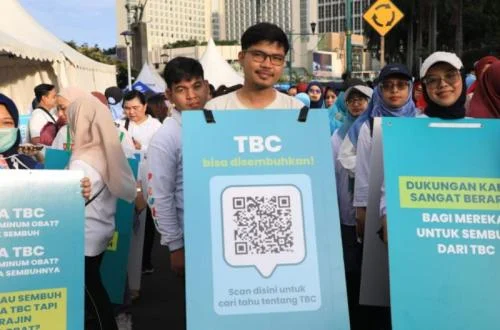
The West Jakarta City Government (Pemkot Jakbar) is significantly intensifying its efforts to combat tuberculosis (TBC) within its jurisdiction, reporting that as of July 20, 2026, a substantial 42,826 residents suspected of having TBC have received comprehensive services in accordance with established health standards. This robust response underscores a critical commitment to public health in one of Indonesia’s most densely populated regions, aligning with national and provincial objectives to eradicate the infectious disease.
Sahruna, Head of the West Jakarta Health Sub-agency (Sudinkes), detailed the remarkable progress made in the first five months of 2026. During this period, the scope of TBC case finding and treatment has successfully reached 6,056 patients. This figure represents a positive and accelerated trajectory compared to data recorded just three months prior, on April 15, 2026, when only 3,027 cases had been detected. This acceleration is crucial as the city strives to meet its ambitious target of detecting a total of 11,955 TBC cases in West Jakarta by the end of this year, a goal highlighted by Sahruna during a press briefing in Jakarta on Tuesday. The concerted drive reflects a proactive approach to identifying and managing cases early, which is paramount in breaking the chain of transmission and mitigating the disease’s spread.
The Global and National Burden of Tuberculosis
Tuberculosis remains one of the world’s deadliest infectious diseases, despite being preventable and curable. Globally, the World Health Organization (WHO) estimates that millions of people fall ill with TBC each year, and a significant number succumb to the disease. Indonesia is among the top three countries with the highest TBC burden, contributing substantially to global TBC cases alongside India and China. The disease primarily affects the lungs but can also impact other parts of the body, and its transmission occurs through airborne particles when infected individuals cough, sneeze, or speak. Factors such as poverty, malnutrition, crowded living conditions, and weakened immune systems (including those with HIV/AIDS) exacerbate the risk of TBC infection and progression to active disease.
Recognizing the severe public health threat, the Indonesian government has made TBC elimination a national priority, setting an ambitious target to eliminate the disease by 2030. This objective aligns with the United Nations Sustainable Development Goals (SDGs) and the WHO’s End TB Strategy, which calls for a 90% reduction in TBC deaths and an 80% reduction in TBC incidence by 2030 compared to 2015 levels. Achieving elimination means reducing TBC incidence to less than 10 cases per 100,000 population per year. This formidable task requires sustained political will, robust health systems, innovative diagnostic tools, effective treatment regimens, and strong community engagement.
Jakarta’s Strategic Response: The 2030 Elimination Goal
Within this broader national context, the DKI Jakarta Provincial Government has committed to achieving TBC elimination by 2030. This commitment translates into comprehensive strategies and operational plans implemented at the city and sub-city levels, such as those currently underway in West Jakarta. The provincial strategy emphasizes early detection, comprehensive treatment, robust contact tracing, and preventive therapy, underpinned by public awareness campaigns and improved access to healthcare services. The capital city, with its high population density and diverse socio-economic landscape, faces unique challenges in TBC control, including ensuring equitable access to care across all communities and managing potential drug-resistant strains of the disease. The progress in West Jakarta serves as a vital indicator of the broader provincial effort’s effectiveness and scalability.
Detailed Look at West Jakarta’s Implementation: Detection Strategies
Sahruna elaborated on the dual-pronged approach employed by the West Jakarta Health Sub-agency for TBC detection: active and passive case finding. This integrated strategy is designed to capture a wider spectrum of cases, from those actively seeking help to individuals who may be unaware of their infection.
Active Case Finding (ACF): This proactive strategy involves systematically searching for TBC cases within the community, especially among high-risk populations.
- Health Screenings: Regular health screenings are conducted in various community settings, including residential areas, workplaces, and public spaces. These screenings often involve initial symptom checks and, if necessary, further diagnostic tests. The goal is to identify individuals who may have TBC but are not yet symptomatic or have not sought medical attention.
- Free Health Check (CKG) Program: The CKG program is a crucial component, offering accessible health services, including TBC screening, to residents without financial barriers. By removing cost as an impediment, the program encourages more individuals to get tested, particularly those from vulnerable groups who might otherwise delay or forego medical consultation. The CKG often integrates TBC screening with checks for other non-communicable diseases, promoting a holistic approach to community health.
- Role of TBC Cadres: Community health workers, often referred to as TBC cadres, play an indispensable role in active case finding. These trained volunteers, drawn from local communities, act as a bridge between the health system and the populace. Their responsibilities include:
- Community Outreach: Visiting homes, educating residents about TBC symptoms, transmission, and the importance of early diagnosis and treatment.
- Symptom Screening: Identifying individuals presenting with chronic cough or other TBC symptoms.
- Referral: Guiding suspected cases to nearby health facilities for definitive diagnosis.
- Treatment Adherence Support: Providing emotional and practical support to patients undergoing treatment, ensuring they complete their full course of medication.
- Contact Tracing Assistance: Helping identify and refer close contacts of confirmed TBC patients for screening and preventive therapy.
Their localized knowledge and trusted position within the community are invaluable for overcoming stigma and encouraging participation in TBC control programs.
Passive Case Finding (PCF): This traditional approach relies on individuals presenting themselves to healthcare facilities when they experience TBC symptoms.
- Self-referral to Health Facilities: Suspected cases (suspects) who experience symptoms like persistent cough, fever, night sweats, or weight loss are encouraged to visit public health centers (Puskesmas), hospitals, or private clinics.
- Rigorous Diagnostic Procedures: To ensure diagnostic accuracy, every healthcare facility adheres to strict protocols. This typically involves:
- Sputum Examination: Microscopic examination of sputum samples for the presence of acid-fast bacilli (AFB), the bacteria that cause TBC. Newer molecular rapid diagnostic tests (e.g., GeneXpert) are increasingly being utilized for faster and more accurate diagnosis, including the detection of drug resistance.
- Radiology (X-ray): Chest X-rays are used as an indicative medical tool to identify abnormalities in the lungs consistent with TBC, especially in cases where sputum tests are negative or inconclusive, or in specific populations like children.
This combination of active and passive strategies aims to maximize case detection, ensuring that as many infected individuals as possible are identified and linked to care.
Progress and Challenges in Case Finding
The reported figures illustrate significant momentum. The increase from 3,027 detected cases by April 15 to 6,056 by the end of May (five months into 2026) represents an almost doubling of identified patients in a relatively short period. This acceleration suggests the active case-finding strategies and cadre involvement are yielding positive results. Sahruna’s projection that case findings will continue to rise underscores the ongoing commitment to early detection efforts in the field. However, achieving the annual target of 11,955 cases means that West Jakarta still needs to detect approximately 5,900 additional cases within the remaining months of the year. This requires sustaining and potentially scaling up current efforts, especially in hard-to-reach populations or areas with historically low reporting. Challenges include:
- Stigma: TBC remains associated with stigma, leading some individuals to delay seeking care or to hide their condition.
- Access Barriers: Despite programs like CKG, geographical access, transportation costs, and time off work can still be barriers for some.
- Diagnostic Capacity: Ensuring all facilities have access to rapid and accurate diagnostic tools, and adequately trained personnel to operate them.
- Follow-up: Maintaining consistent follow-up with detected suspects to ensure they complete the diagnostic process and initiate treatment.
Comprehensive Patient Management and Prevention
Beyond detection, the quality of care and robust preventive measures are critical to TBC control. Of the total patients identified, 4,438 are confirmed to be receiving treatment in accordance with established quality standards. This adherence to treatment protocols is vital, as incomplete or irregular treatment can lead to drug resistance, a significant global health threat.
Monitoring and Adherence:
- Drug Adherence Monitoring: Sudinkes West Jakarta regularly monitors patients’ adherence to their prescribed medication regimens. TBC treatment typically involves a multi-drug therapy lasting 6 to 9 months, and consistent intake is essential for cure and preventing drug resistance. This monitoring often involves directly observed treatment (DOT) or community-based support to ensure patients take their medication daily.
- Contact Tracing and Screening: A critical preventive measure involves the rigorous examination of close contacts of confirmed TBC patients. This includes family members, co-workers, and others who have had prolonged exposure.
- Tuberculosis Preventive Therapy (TPT): For close contacts who are identified as healthy but at high risk of developing active TBC (especially children and immunocompromised individuals), TPT is administered. TPT involves taking anti-TBC drugs for a shorter duration (e.g., 3-6 months) to prevent latent TBC infection from progressing to active disease. This strategy is crucial in preventing new cases and curbing the spread of the infection within households and communities.
Health Promotion and Education:
- Promotion of Clean and Healthy Living Behavior (PHBS): Sudinkes West Jakarta vigorously promotes PHBS through various educational campaigns. This includes emphasizing good hygiene practices, proper ventilation in homes, adequate nutrition, and a healthy lifestyle to boost overall immunity.
- Cough Etiquette Education: Proper cough etiquette (e.g., covering mouth and nose with a tissue or elbow when coughing or sneezing) is fundamental in preventing the airborne spread of TBC bacteria.
- Immunization: While the BCG vaccine offers some protection against severe forms of TBC in children, particularly TBC meningitis and disseminated TBC, it is not fully protective against pulmonary TBC in adults. Nevertheless, comprehensive immunization programs contribute to overall child health and resilience.
- Information Dissemination on Access to Services: Continuous dissemination of information regarding TBC symptoms and the availability of free diagnostic and treatment services at local health centers is vital to empower communities to seek timely care. This proactive communication helps reduce delays in diagnosis and treatment, which are often linked to poorer outcomes and increased transmission.
The Role of Community Engagement and Partnerships
The success of West Jakarta’s TBC control program hinges significantly on active community participation and robust partnerships. TBC cadres, as frontline health workers, exemplify community engagement. Their ability to foster trust, disseminate vital information in local languages, and navigate cultural sensitivities is indispensable. Furthermore, collaboration extends beyond health agencies to include:
- Local Government Offices: Providing administrative support, policy enforcement, and resource allocation.
- Non-Governmental Organizations (NGOs): Often playing a crucial role in outreach, advocacy, patient support, and delivering specialized services.
- Private Sector: Engaging private healthcare providers to ensure standardized TBC care across all health facilities and leveraging corporate social responsibility initiatives for TBC awareness and prevention.
- Academic Institutions: Contributing through research, capacity building, and training for healthcare professionals.
This multi-sectoral approach ensures that TBC control efforts are comprehensive, sustainable, and responsive to the diverse needs of the community.
Broader Implications and Future Outlook
The intensive efforts in West Jakarta have broader implications for public health and socio-economic development. By actively detecting and treating TBC, the city is not only saving lives but also preventing long-term disabilities, reducing healthcare costs, and boosting economic productivity. A healthy workforce is a productive workforce, and reducing the TBC burden can significantly contribute to local and national economic growth. Furthermore, achieving the 2030 TBC elimination target in Jakarta would serve as a powerful model for other high-burden regions in Indonesia and globally, demonstrating that with sustained political will, innovative strategies, and community involvement, even the most challenging infectious diseases can be brought under control.
Looking ahead, West Jakarta’s TBC control program will need to continuously adapt to emerging challenges, such as the potential rise of drug-resistant TBC strains, the impact of co-morbidities like diabetes and HIV, and the need for personalized care approaches. Investing in research for new diagnostic tools, shorter treatment regimens, and more effective vaccines will also be crucial. The commitment articulated by Sahruna and the ongoing efforts reflect a long-term vision: to create a Jakarta where TBC is no longer a public health threat, ensuring a healthier and more prosperous future for all its residents. The journey to elimination is arduous, but the current momentum in West Jakarta provides a hopeful indicator of achievable progress towards the ambitious 2030 goal.
Related posts: