Perimenopause Misinformation and China’s Latest AI Leap: A Comprehensive Report on Emerging Global Technologies and Scientific Frontiers

The global technological landscape is currently undergoing a period of rapid and multifaceted transformation, characterized by significant breakthroughs in artificial intelligence, medical science, and space exploration, alongside a growing concern regarding the dissemination of misinformation in women’s health. While Chinese startups are aggressively narrowing the gap with American AI counterparts through the release of massive open-source models, the medical community is raising alarms over the commercialization of perimenopause, a transitionary phase of life that is increasingly being targeted by unverified diagnostic claims and predatory marketing. This convergence of high-stakes innovation and digital-age challenges underscores a pivotal moment for international policy, scientific integrity, and the global economy.
The Menopause Economy: Navigating Misinformation in Midlife Health
Perimenopause, the multi-year transition leading up to menopause, has shifted from a taboo subject to a central focus of the burgeoning "femtech" industry. However, medical experts warn that the increased visibility of the condition has been accompanied by a surge in scientific inaccuracies. Despite the proliferation of at-home testing kits and targeted supplements, clinical consensus maintains that there is no definitive biological test for perimenopause. The condition is characterized by fluctuating hormone levels—specifically estrogen and progesterone—which can vary significantly from day to day, rendering a single blood or saliva test clinically inconclusive.
The commercialization of this life stage is driven by a market estimated to reach $24.4 billion by 2030. Influencers and "TV doctors" have played a dual role: they have successfully de-stigmatized symptoms like hot flashes, brain fog, and insomnia, but they have also created a vacuum filled by non-evidence-based treatments. For instance, many wellness brands promote "hormone balancing" supplements that lack rigorous FDA oversight or clinical trial backing. Furthermore, experts emphasize that many symptoms attributed to perimenopause in midlife may actually stem from lifestyle factors, chronic stress, or unrelated medical conditions, leading to potential misdiagnoses and the neglect of underlying health issues.
China’s Strategic Leap in the Global AI Race
In a development that has sent ripples through the global semiconductor and software markets, a Chinese AI startup, Moonshot AI, has released what is reportedly the world’s largest open-source artificial intelligence model. This release marks a significant milestone in Beijing’s efforts to achieve technological self-sufficiency and parity with US-based leaders like OpenAI and Anthropic. The new model is designed to compete directly with high-tier Western systems, demonstrating advanced reasoning capabilities and a massive parameter count that challenges the perceived dominance of proprietary American models.
The launch had an immediate impact on the financial sector, causing a temporary slide in AI-related and semiconductor stocks as investors recalibrated the competitive landscape. Analysts suggest that China is intentionally pivoting toward an open-source strategy to circumvent US-led export restrictions on high-end hardware. By fostering a robust open-source ecosystem, China aims to standardize its technology across the developing world. This strategy was recently echoed by President Xi Jinping during the World Artificial Intelligence Conference (WAIC) in Shanghai, where he positioned China as a primary AI partner for the Global South, emphasizing a future where China leads not only in technological innovation but also in the establishment of global AI governance standards.
Breakthroughs in Neural Technology and Rehabilitative Medicine
The field of neurotechnology has recorded a landmark achievement with the development of a brain implant that has successfully restored sensation and functional movement in a paralyzed patient. In a clinical setting, the recipient, who had lost use of his hands due to a spinal cord injury, was able to perform complex tasks such as feeding himself and drinking from a cup. This "neural bypass" technology works by intercepting signals from the brain and transmitting them directly to the muscles, effectively circumnavigating the damaged portion of the nervous system.
Significantly, researchers noted that some level of movement persisted even when the electronic stimulation was deactivated, suggesting a degree of neuroplasticity and long-term healing induced by the device. This development coincides with reports from China regarding the approval of the world’s first commercially viable brain-computer interface (BCI) chip. These parallel advancements indicate that the race for neural integration is no longer limited to theoretical research but is moving rapidly toward clinical and commercial application, offering new hope for millions of individuals living with paralysis.
Astronomy and the Search for Habitable Worlds
In a major discovery for exoplanetary science, astronomers have confirmed the presence of an atmosphere on a nearby Earth-like planet. This world, located in a "Goldilocks zone" where temperatures might allow for liquid water, represents the first potentially habitable exoplanet known to possess a stable atmosphere. While the exact chemical composition of the atmosphere is still being analyzed by the James Webb Space Telescope (JWST), the presence of any gaseous envelope is a critical prerequisite for the existence of life as we know it.

This discovery is complemented by recent findings from the International Space Station (ISS) regarding human physiology in microgravity. A new study suggests that the "wasting away" of astronauts’ bodies during long-term spaceflight is linked to mitochondrial disruption. The lack of gravity appears to interfere with the energy-producing centers of cells, leading to a significant reduction in protein production and muscle mass. Understanding these biological mechanisms is essential for future crewed missions to Mars and beyond, as scientists work to develop countermeasures to protect the human body in deep space.
Regulatory Pressures and Digital Privacy in the EU
The European Union continues to lead the global charge in tech regulation, recently ordering Google to share its vast repositories of search data with competing search providers. This move is part of a broader effort to dismantle the perceived monopoly held by major tech firms under the Digital Markets Act (DMA). Furthermore, the EU has mandated that Google open its Android operating system to rival AI bots, ensuring that consumers have a choice between Google’s proprietary AI and third-party alternatives.
Simultaneously, privacy advocates are raising concerns over the data-sharing practices of popular health-tracking applications. New research into period-tracking apps has revealed significant vulnerabilities, with many platforms sharing sensitive health data with third-party advertisers and data brokers. In a post-Roe v. Wade legal environment in the United States, the privacy of reproductive health data has become a matter of legal and personal security. This has spurred a niche market for "adversarial clothing"—garments designed with patterns that confuse facial recognition algorithms—reflecting a growing public desire to reclaim anonymity in an increasingly monitored society.
Sustainable Engineering: Transforming Waste into Resources
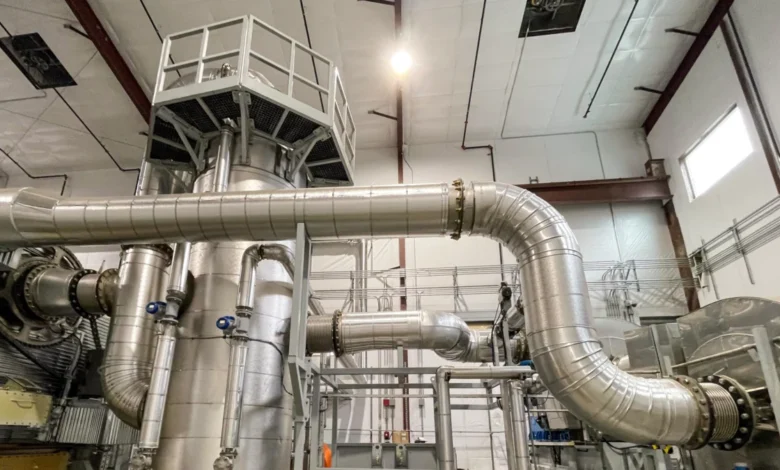
On the environmental front, a new industrial facility in Seattle is demonstrating a circular economy approach to waste management. The Varcor facility utilizes advanced vapor compression distillation to treat human and livestock waste, transforming fecal matter into concentrated fertilizers and clean water. This technology addresses two critical issues: the environmental hazard of untreated sewage and the global shortage of phosphorus and nitrogen, which are essential for agricultural productivity.
By reframing "waste" as a resource, these energy-efficient systems offer a scalable solution for urban and rural areas alike. As traditional fertilizer production remains energy-intensive and reliant on finite mined resources, the ability to recycle nutrients from the human food chain represents a significant step toward sustainable food security.
Chronology of Recent Technological Milestones
- January 2025: The Varcor facility begins full-scale operations, proving the viability of fecal waste recycling for commercial agriculture.
- April 2026: China announces a strategic shift toward open-source AI models to foster international collaboration and bypass hardware sanctions.
- June 2026: Regulatory bodies in China approve the first domestic brain-computer interface chip for medical use.
- July 16, 2026: Astronomers publish findings in Nature confirming the atmosphere of a nearby Earth-sized exoplanet.
- July 17, 2026: Moonshot AI releases the world’s largest open AI model; European regulators issue new mandates for Google regarding search data and Android AI integration.
Analysis of Broader Impacts and Global Implications
The convergence of these events suggests a world that is becoming more technologically sophisticated but also more fragmented. The AI race between the US and China is no longer just about computational power; it is about the "soft power" of open-source ecosystems and the ability to set global standards. As China narrows the gap, the US may face pressure to reconsider its export policies or risk being sidelined in the development of AI for the Global South.
In the realm of health and privacy, the tension between commercial interests and scientific truth is reaching a breaking point. The "hype" surrounding perimenopause and the privacy flaws in health apps demonstrate that technological progress often outpaces the regulatory and ethical frameworks intended to manage it. However, the breakthroughs in neural implants and sustainable waste management provide a counter-narrative of technology as a profound force for human healing and environmental restoration.
As society moves forward, the primary challenge will be to ensure that the "menopause economy" and the "AI arms race" are governed by transparency and empirical evidence, ensuring that the benefits of the digital and biological revolutions are accessible, safe, and grounded in reality. The coming years will likely see an intensification of these trends, as the boundary between human biology and machine intelligence continues to blur, and the quest for resources drives innovation in the most unlikely of places—from the stars above to the waste beneath our feet.
Related posts: