Amazon Pharmacy taps eNavvi to embed pricing, availability into prescribing workflows

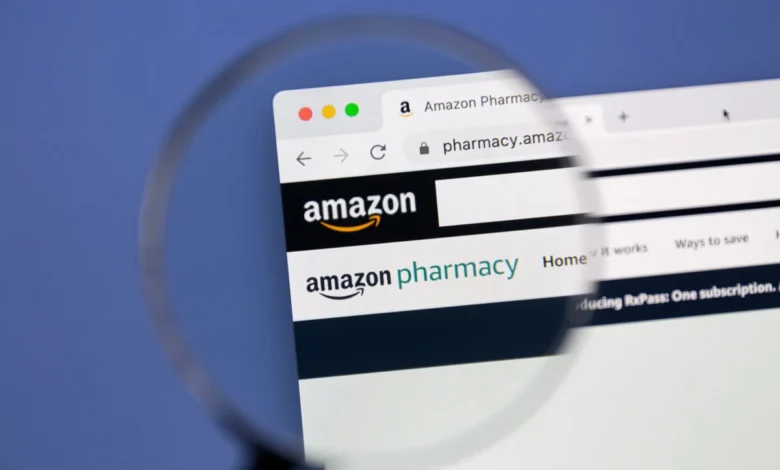
In a move designed to collapse the traditional distance between a medical consultation and the fulfillment of a prescription, Amazon Pharmacy and the digital prescription platform eNavvi have announced a strategic collaboration. This partnership aims to provide healthcare providers with a comprehensive suite of real-time medication data—including transparent pricing, stock availability, and delivery logistics—directly within the clinical workflow. By embedding these capabilities into the software physicians use during patient encounters, the two companies intend to transform the typical doctor’s visit into a "single point-of-sale" (POS) moment, leveraging Amazon’s extensive logistics infrastructure to ensure rapid medication delivery.
The collaboration represents a significant step in the evolution of digital health, moving beyond simple electronic prescribing toward a fully integrated commerce model. Under the new arrangement, clinicians using the eNavvi platform will gain immediate visibility into the cost of medications at Amazon Pharmacy. This integration allows for informed decision-making at the point of care, potentially reducing the frequency of "sticker shock" at the pharmacy counter, which is a leading cause of prescription abandonment. Furthermore, the partnership will utilize Amazon’s rapidly expanding same-day delivery network, which currently services nearly 3,000 cities and towns across the United States.
The Strategic Evolution of Amazon’s Healthcare Ambitions
To understand the significance of the eNavvi partnership, it is necessary to view it within the broader context of Amazon’s decade-long push into the healthcare sector. Amazon’s entry into the space began in earnest with the 2018 acquisition of PillPack, a digital pharmacy startup, for approximately $753 million. That acquisition provided the regulatory licensing and infrastructure necessary for Amazon to launch its own pharmacy brand.
In 2020, the company officially debuted Amazon Pharmacy, offering Prime members free two-day delivery and significant discounts on generic and brand-name drugs. Since then, the ecommerce giant has steadily expanded its footprint through both organic growth and massive acquisitions, most notably the $3.9 billion purchase of One Medical in 2023. This acquisition gave Amazon a physical presence in the primary care space, complementing its digital-first pharmacy model.
The timeline of Amazon’s healthcare development highlights a clear trajectory toward vertical integration:
- 2018: Acquisition of PillPack establishes the foundational pharmacy infrastructure.
- 2020: Launch of Amazon Pharmacy provides a consumer-facing retail platform.
- 2022: Launch of Amazon Clinic (now part of One Medical) offers virtual care for common conditions.
- 2023: Introduction of RxPass, a $5 monthly subscription for unlimited generic medications, further incentivizes Prime membership.
- 2024: Expansion of same-day delivery for medications to nearly 3,000 U.S. cities.
- Present: The eNavvi partnership integrates these services directly into the physician’s prescribing interface.
Technical Integration and the "Point of Care" Experience
The partnership with eNavvi addresses a specific technical bottleneck in the healthcare industry: the lack of real-time data in Electronic Health Record (EHR) systems. Traditionally, when a doctor writes a prescription, they have limited visibility into whether a specific medication is in stock at the patient’s local pharmacy or what the patient’s out-of-pocket cost will be. This information gap often leads to delays, as pharmacists must call doctors to request alternatives when a drug is too expensive or unavailable.
By integrating Amazon Pharmacy’s data into eNavvi’s prescribing screen, the collaboration creates a transparent "corridor" for data. Simon Chang, Chief Executive Officer at eNavvi, emphasized that this fundamentally changes the physician’s capabilities. "Transparent pricing, real-time availability, and direct routing to Amazon Pharmacy means better decisions and fewer barriers between patients and the medications they need," Chang stated.
The user experience for the patient is designed to be as frictionless as possible. Once a physician selects a medication on the eNavvi platform, the system can display the Amazon Pharmacy price. If the patient chooses to proceed, the prescription is routed directly to Amazon for fulfillment. For the millions of Americans who are already Amazon Prime members, the benefits are compounded. Prime members can access savings of up to 80% off generic medications and participate in RxPass, which provides a curated list of common medications for a flat monthly fee.
Market Positioning and Comparative Analytics
The move also reinforces Amazon’s dominance in the broader digital commerce landscape. According to data from Digital Commerce 360, Amazon holds the No. 1 position in the Top 1000 Database, which tracks the largest North American online retailers by annual ecommerce sales. The company also ranks No. 3 in the Global Online Marketplaces Database, based on third-party gross merchandise value (GMV).
However, the data also reveals areas where Amazon is still scaling its capabilities. In Digital Commerce 360’s AI Commerce Rankings, Amazon sits at No. 158. This suggests that while Amazon is a leader in logistics and marketplace scale, there remains significant room for growth in the application of advanced artificial intelligence to personalized commerce—a field that is increasingly relevant in the healthcare sector for predictive diagnostics and personalized treatment plans.
The partnership with eNavvi allows Amazon to bypass some of the traditional hurdles of AI-driven commerce by focusing on "workflow integration." Rather than waiting for an AI to predict what a patient needs, Amazon is placing its store at the exact moment a human professional—the doctor—identifies a need.
The Convergence of Healthcare and "Shoppable Content"
Industry analysts have noted that the eNavvi-Amazon Pharmacy collaboration mirrors a larger trend in ecommerce: the collapsing of the sales funnel. Vivien Garnès, co-CEO and co-founder of the influencer marketing platform Upfluence, suggests that healthcare is now adopting strategies pioneered by social media giants like TikTok and Instagram.
"The purchase decision used to happen after the discovery moment," Garnès observed. In the traditional model, a patient would receive a prescription (discovery) and then have to travel to a pharmacy or log onto a website later (purchase). "Too many touchpoints where a sale could be lost," Garnès added.
By embedding the pharmacy into the prescribing screen, eNavvi is applying the logic of "shoppable content." Just as a consumer can now buy a product directly through a TikTok Shop the moment they see it in a video, a patient can now have their medication ordered the moment it is prescribed. Garnès assesses that the "winners in any industry right now are the ones erasing the friction between deciding and buying."
Addressing the Crisis of "Pharmacy Deserts"
Beyond the convenience of ecommerce, the collaboration has significant implications for public health, particularly regarding medication access. Alys Reynders, chief marketing officer at Quickbase, points out that the healthcare sector has long struggled with "pharmacy deserts"—geographic areas where residents lack easy access to a physical pharmacy. These deserts are often found in low-income urban neighborhoods or sparsely populated rural areas.
"The collaboration between eNavvi and Amazon Pharmacy for real-time prescription orders and medication pricing has the potential to transform patient access to important treatments," Reynders said. She noted that by providing clinicians with direct access to real-time costs and availability, the platform can help eliminate hidden fees and physical bottlenecks.
As the U.S. economy shifts further into an "online-first" ecosystem, the ability to bypass physical infrastructure through a highly efficient nationwide delivery network becomes a vital tool for health equity. "The prospect of ‘pharmacy deserts’ emerging… can be mitigated using Amazon’s highly-efficient nationwide delivery network," Reynders added.
Implications for the Traditional Retail Pharmacy Sector
The aggressive expansion of Amazon Pharmacy into the clinical workflow poses a direct challenge to traditional brick-and-mortar giants like CVS Health and Walgreens Boots Alliance. For decades, these retailers have relied on the "front-of-store" model, where patients picking up prescriptions would also purchase high-margin consumer goods like snacks, cosmetics, and household items.
If Amazon and eNavvi succeed in capturing the "point-of-sale" moment at the doctor’s office, the foot traffic into traditional pharmacies could see a significant decline. This shift is already reflected in the recent strategies of CVS and Walgreens, both of which have closed hundreds of locations and are attempting to pivot toward providing more direct primary care services themselves to remain relevant in the patient journey.
However, Amazon’s advantage lies in its logistics. While traditional pharmacies are trying to build delivery networks from the ground up, Amazon is layering healthcare onto a pre-existing, world-class logistics machine. The same-day delivery network that delivers a pair of headphones can, with the right regulatory safeguards, deliver life-saving insulin or heart medication.
Future Outlook: The Age of Digital Transformation in Medicine
The partnership between eNavvi and Amazon Pharmacy is likely a precursor to more deeply integrated health-tech collaborations. As data security and interoperability standards (such as FHIR) continue to improve, the "secure corridor" for prescription data mentioned by Reynders will likely expand to include more complex health data.
Tanvi Patel, vice president and general manager at Amazon Pharmacy, reiterated the company’s commitment to this frictionless future. "We know that when patients can conveniently access their medications, they take them and live healthier lives," Patel said. This focus on "medication adherence"—the degree to which patients take their medications as prescribed—is a multi-billion dollar problem for the healthcare industry. Non-adherence leads to worsened health outcomes, more hospitalizations, and increased costs for the entire system.
By providing a glimpse into how medicine can thrive in the age of digital transformation, Amazon and eNavvi are setting a new standard for the industry. The focus is no longer just on the medication itself, but on the entire ecosystem surrounding its delivery: from the moment the doctor clicks "prescribe" to the moment the package arrives at the patient’s door. As this model scales, it could redefine the boundaries of both ecommerce and clinical practice, making "frictionless healthcare" a reality for a growing portion of the American population.