Brain Decision-Making Research at University of Illinois Challenges Traditional AI Models and Promises Energy-Efficient Computing

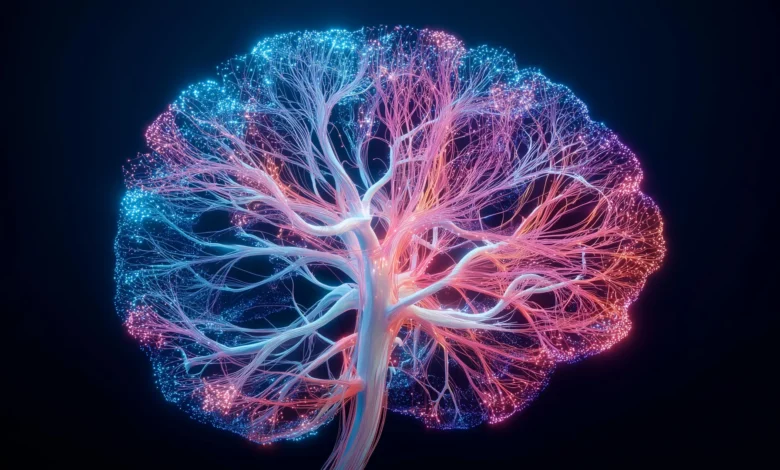
The traditional understanding of how the brain processes information and arrives at decisions is undergoing a fundamental shift following a groundbreaking study from the University of Illinois Urbana-Champaign. Researchers at The Grainger College of Engineering have uncovered evidence suggesting that decision-making processes begin much earlier in the brain’s architecture than previously assumed, occurring within the primary sensory regions rather than being confined to the higher-order executive centers. This discovery, published in the Proceedings of the National Academy of Sciences (PNAS), carries profound implications for the future of artificial intelligence (AI), potentially paving the way for a new generation of neural networks that are not only more intelligent but significantly more energy-efficient.
Led by Yurii Vlasov, a professor of electrical and computer engineering, the research team focused on the complex interplay between different regions of the brain during active tasks. Their findings challenge the long-standing "hierarchical" model of brain function, which posits that sensory data travels in a linear, one-way path from the peripheral senses to the frontal cortex, where a decision is finally rendered. Instead, the UIUC study suggests a more integrated, bidirectional system where decision-related signals are present even in the earliest stages of sensory perception.
The Quest to Reverse-Engineer Biological Intelligence
The human brain remains the most sophisticated and efficient processing unit known to science. Its ability to perform complex calculations, recognize patterns, and make split-second decisions while consuming roughly the same amount of power as a dim lightbulb—approximately 20 watts—is a feat that modern silicon-based AI cannot yet replicate. This disparity is why the National Academy of Engineering identified the reverse-engineering of the brain as one of the 14 "Grand Challenges for Engineering" in the 21st century.
For decades, the field of artificial intelligence has drawn inspiration from a simplified version of brain architecture. Convolutional Neural Networks (CNNs), which power everything from facial recognition to autonomous driving, are built on the hierarchical model. In these systems, data enters an input layer and passes through various hidden layers—each extracting more complex features—until it reaches an output layer that provides a classification or decision. While highly effective for specific tasks, this "feed-forward" structure lacks the dynamic flexibility and efficiency of the biological brain.
Professor Vlasov and his colleagues argue that to bridge the gap between current AI and true artificial general intelligence, researchers must look beyond this linear flow. "We want to learn from a billion years of evolution," Vlasov stated regarding the study’s motivation. He emphasized that by understanding the architectural organization of biological intelligence, engineers can emulate these structures to create AI that is "less power-hungry and more intelligent than it currently is."
Challenging the Hierarchical Status Quo
The prevailing theory of neuroscience for much of the 20th century was that the brain operates like an assembly line. In this view, the primary sensory areas, such as the visual or somatosensory cortex, act as mere relays that pass "raw data" to the "higher" brain regions like the prefrontal cortex, which serves as the CEO of the brain, making decisions and issuing commands.
However, the UIUC study utilized advanced neural recording techniques to observe the brains of mice as they navigated a virtual reality environment. The mice were tasked with making perceptual decisions based on sensory cues they encountered in a virtual corridor. The researchers focused their attention on the primary somatosensory cortex (S1), the area responsible for processing the sense of touch.
To their surprise, the team found clear evidence of decision-related activity within the S1 region. Rather than simply transmitting touch data forward, the neurons in the S1 area showed patterns of activity that correlated with the mouse’s eventual decision-making process. This suggests that the "earliest" parts of the brain are not just passive observers but are actively involved in the cognitive loop of deciding how to act.
The Role of Feedback Loops and Top-Down Regulation
The presence of decision-making markers in the sensory cortex points toward a system defined by interconnected feedback loops. In biological brains, information does not just move from "bottom to top"; it also moves from "top to bottom." This top-down regulation allows higher brain regions to influence how sensory information is perceived and processed in real-time.
This bidirectional flow means that a decision is not a single event that happens at the end of a chain. Instead, it is a distributed process that emerges from the continuous communication between multiple brain regions. When a mouse (or a human) is faced with a choice, the higher-order regions send signals back to the sensory regions, essentially "priming" them or filtering the incoming data based on expectations and goals.
"The neural code of the brain is still mostly an unknown language," Vlasov noted. However, he believes that this systems-level understanding provides a potential roadmap for building more efficient artificial neural networks. By incorporating feedback loops—similar to the Recurrent Neural Networks (RNNs) used in some AI today, but on a more fundamental architectural level—AI could theoretically achieve a level of nuance and efficiency currently reserved for living organisms.
Comparative Analysis: AI Energy Consumption vs. Biological Efficiency
The environmental and economic costs of training and running modern AI models have become a central concern for the tech industry. Large Language Models (LLMs) and deep learning systems require massive data centers that consume megawatts of electricity. In contrast, the biological brain’s efficiency is staggering.
| Feature | Modern AI System (e.g., GPT-4 Training) | Biological Human Brain |
|---|---|---|
| Power Consumption | Megawatts (Equivalent to thousands of homes) | ~20 Watts (Equivalent to a lightbulb) |
| Data Processing | Linear/Feed-forward (mostly) | Bidirectional/Feedback Loops |
| Learning Efficiency | Requires trillions of data points | Learns from few examples (Zero-shot/Few-shot) |
| Architecture | Static layers | Dynamic, plastic connections |
The UIUC research suggests that the brain’s efficiency may be a direct result of its non-hierarchical, feedback-heavy architecture. In a hierarchical system, every piece of data must be processed through every layer to reach a conclusion. In a feedback-oriented system, the brain can potentially "short-circuit" the process, using top-down signals to resolve ambiguities at the sensory level without needing to engage the full "computational power" of the higher cortex for every minor detail.
Chronology of Brain-Inspired Computing
To understand the weight of Vlasov’s findings, it is helpful to view them within the timeline of computational evolution:
- 1940s-1950s: The first "perceptrons" are developed, inspired by basic biological neurons.
- 1980s: The introduction of backpropagation allows for the training of multi-layer neural networks, reinforcing the hierarchical model.
- 2008: The National Academy of Engineering lists "Reverse-Engineer the Brain" as a Grand Challenge.
- 2012: The "Deep Learning" revolution begins, primarily utilizing feed-forward Convolutional Neural Networks for image recognition.
- 2020-Present: The rise of Transformers and LLMs; while powerful, these models face "scaling laws" where performance gains require exponential increases in energy and data.
- 2024: The UIUC study provides empirical evidence that decision-making is integrated into sensory regions, suggesting a departure from the strict hierarchy is necessary for the next leap in AI.
Future Research and Potential Applications
While the study does not provide an immediate blueprint for a new AI chip, it opens a significant new door for research. The next phase for Vlasov’s team involves investigating the "fast temporal dynamics" of these neural signals. They want to understand exactly when these feedback loops engage and how they coordinate across different levels of the brain.
To achieve this, the researchers are developing new technologies capable of measuring neural activity with higher precision and speed. Understanding the timing of these signals is crucial; in the brain, milliseconds matter. If researchers can decode the dynamic formation of these loops, those mechanisms could be translated into hardware—perhaps through neuromorphic computing or memristor-based architectures that mimic the synaptic behavior of the brain.
The potential applications of this research extend beyond just making "smarter" chatbots. It could revolutionize:
- Autonomous Systems: Drones and self-driving cars could process sensory data and make decisions with much lower latency and power consumption.
- Edge Computing: AI could be integrated into small, battery-powered devices (like medical implants or wearable tech) that currently lack the power to run complex neural networks.
- Robotics: Robots could achieve more fluid, natural movement and interaction by mimicking the feedback-rich motor control of biological organisms.
Conclusion: A New Direction for Artificial Intelligence
The work of the University of Illinois Urbana-Champaign team serves as a reminder that the most advanced "technology" on the planet is still the one between our ears. By proving that decision-making is a distributed, early-stage process rather than a late-stage executive function, the study provides a vital clue for the future of engineering.
As AI continues to grow in scale, the industry is hitting a wall regarding energy consumption and the sheer complexity of data required for training. The "billion years of evolution" that Professor Vlasov refers to has already solved many of these problems. The shift from a strict hierarchy to a dynamic, feedback-driven architecture may be the key to unlocking AI that is not only more capable but also sustainable. In the words of Vlasov, "Maybe with these analogies that we learn from real brains, we can improve AI further." The path forward for artificial intelligence may well lie in a more faithful reflection of the biological intelligence that inspired it in the first place.
Related posts: