Indonesian Stock Exchange Surges 1.74% to 6,340.02 Amidst Landmark Financial Reform and Sustained Bull Run


Jakarta, Indonesia – The Jakarta Composite Index (IHSG) closed Tuesday, July 21, 2026, with a remarkable 1.74% surge, reaching 6,340.02 points, driven by robust domestic sentiment and a significant legislative breakthrough. This impressive performance marked a continuation of the market’s bullish trend, solidifying its position as one of the best-performing indices in the region for the month. The day’s trading activity reflected widespread investor optimism, with 421 stocks recording gains, 205 remaining stagnant, and only 169 experiencing declines. Total trading volume reached an extraordinary 51.06 billion shares, valued at Rp 21.50 trillion, executed across 2.94 million transactions.
Domestic Reforms Fueling Market Confidence
The primary catalyst for Tuesday’s significant rally was the highly anticipated ratification of the Draft Law on the Indonesia International Financial Centre (RUU PFII) by the House of Representatives (DPR). This landmark legislative achievement is seen as a pivotal step towards transforming Indonesia into a competitive global financial hub, attracting substantial foreign investment and fostering a more dynamic financial ecosystem. Market participants have eagerly awaited the passage of this bill, recognizing its potential to unlock new avenues for capital inflow and bolster the nation’s economic resilience. The timing of the ratification, coinciding with a period of sustained market strength, amplified its positive impact, reassuring investors about the government’s commitment to structural economic reforms.
The RUU PFII, which has been under deliberation for an extended period, aims to establish a regulatory framework conducive to international financial operations, offering incentives and a streamlined environment for global financial institutions. Its objectives include enhancing Indonesia’s financial competitiveness, diversifying its economic base beyond traditional commodities, and positioning Jakarta as a regional financial powerhouse akin to Singapore or Hong Kong. The law is expected to introduce modern financial regulations, attract top-tier talent, and foster innovation within the financial services sector, thereby creating a robust platform for both domestic and international players. This long-term strategic vision, now backed by legislative action, provided a strong fundamental underpinning for the day’s market enthusiasm.
An Unprecedented Rally: IHSG’s Dominant July Performance
Tuesday’s strong closing extended an already impressive rally that has characterized the Indonesian stock market throughout July 2026. The IHSG opened strong and maintained its upward trajectory, marking its ninth consecutive trading day of gains. Furthermore, the index has advanced in 14 out of the last 15 trading days, with its only decline in July occurring on the 8th of the month. Since that minor dip, the IHSG has collectively surged by 7.93%. For the entire month of July, the month-to-date (MtD) gain has reached an astounding 12.35%, far surpassing typical monthly returns and highlighting the exceptional bullish sentiment currently pervading the market.
This sustained upward momentum reflects a confluence of factors, including improving corporate earnings outlooks, continued economic recovery, and proactive government policies. Historically, the IHSG’s average monthly gain has hovered around 1-2%, making the current July performance a significant outlier and indicative of a powerful market re-rating. Analysts suggest that this sustained rally is driven by a combination of recovering domestic consumption, robust commodity prices benefiting key Indonesian industries, and growing investor confidence in the country’s economic prospects. The sheer consistency of gains over such an extended period points to broad-based buying interest rather than isolated speculative movements.
Sectoral Leaders and Key Contributors
The market’s broad-based strength was evident across various sectors, with several experiencing substantial gains. The utilities sector led the charge, soaring by 4.68%, reflecting investor confidence in essential services and potentially anticipation of new infrastructure projects. The property sector followed closely with a 3.97% increase, signaling optimism about real estate development and urban growth. Basic materials saw a healthy 3.53% rise, likely benefiting from sustained global demand and stable commodity prices. The energy sector also performed strongly, climbing 2.95%, buoyed by a global uptick in oil prices amidst geopolitical tensions. In stark contrast, the health sector was the sole decliner, registering a marginal decrease, possibly due to profit-taking after previous strong performances or shifting investor focus towards growth-oriented sectors.
Individual stocks played a crucial role in propelling the IHSG higher. Amman Mineral Internasional (AMMN) was the top contributor, adding a significant 11.82 index points, underscoring the strong performance of the mining sector. Bank Rakyat Indonesia (BBRI), one of Indonesia’s largest banks, contributed 7.31 index points, reflecting the overall stability and growth in the financial services sector. Dian Swastatika Sentosa (DSSA) also made a substantial impact, contributing 10.74 index points, indicating strength in its diverse business segments, including energy and digital infrastructure. These key movers, representing critical sectors of the Indonesian economy, demonstrate the widespread nature of the market’s current positive trajectory.
Anticipating Monetary Policy and Banking Sector Health
Beyond the RUU PFII, domestic attention remains fixed on the ongoing Board of Governors Meeting (RDG) of Bank Indonesia (BI), which commenced today. The outcome of this meeting, particularly regarding the benchmark interest rate, is keenly awaited by market participants. While the current market sentiment leans towards a hold or a modest rate cut to further stimulate economic growth, BI’s decision will be heavily influenced by a range of macroeconomic indicators, including inflation rates, Rupiah stability, and the global economic outlook. Analysts are closely scrutinizing BI’s stance on inflation, which has shown signs of moderation, potentially providing room for a more accommodative monetary policy. A stable Rupiah and controlled inflation are critical for maintaining investor confidence and ensuring sustainable economic expansion.
Adding to the positive domestic narrative, the Financial Services Authority (OJK) recently issued a statement affirming the robust condition of the national banking sector. OJK reported a healthy credit growth of 11.5% year-on-year, a significant indicator of economic activity and corporate health. This robust credit expansion suggests that businesses are actively investing and expanding, and consumers are confident in their spending power. The OJK’s assessment provides reassurance about the financial stability of the country, mitigating concerns about potential systemic risks and reinforcing the attractiveness of Indonesian financial assets. A strong banking sector is fundamental to a thriving economy, facilitating capital allocation and supporting various industries.
Navigating Global Headwinds: External Pressures and Opportunities
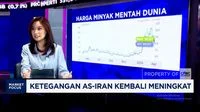
Despite the strong domestic performance, investors remain vigilant of several external factors that could influence market sentiment. Geopolitical tensions in the Middle East have escalated, particularly after the Houthi group announced a maritime blockade against Saudi Arabia. This development has reignited fears over global energy supply disruptions, pushing oil prices higher. For Indonesia, a net importer of crude oil, rising global oil prices can present a dual challenge: potentially increasing import bills and exacerbating inflationary pressures, while also benefiting its significant energy export sector. The government’s energy subsidy policies will be under scrutiny to mitigate the impact of higher fuel costs on domestic consumers and industries.
Furthermore, global monetary policy developments continue to cast a shadow. The People’s Bank of China (PBOC) recently maintained its Loan Prime Rate (LPR), signaling a cautious approach to monetary easing despite ongoing challenges in its property sector and broader economic recovery efforts. Meanwhile, the strengthening US Dollar Index and rising US Treasury yields are creating headwinds for emerging markets, including Indonesia. A stronger dollar makes dollar-denominated debt more expensive for developing nations and can trigger capital outflows as investors seek higher returns in safer US assets. These external pressures necessitate careful monitoring by Indonesian policymakers to maintain macroeconomic stability and ensure continued attractiveness for foreign capital.
For Indonesia, balancing these global dynamics with its domestic agenda is crucial. While the RUU PFII and strong banking sector data paint a positive picture, the global environment demands prudence. The Bank Indonesia’s decision on interest rates will be particularly critical in navigating these cross-currents, aiming to strike a balance between supporting economic growth and maintaining financial stability against external shocks. The ability of the Indonesian government and central bank to effectively manage these global challenges while capitalizing on domestic reforms will determine the sustainability of the IHSG’s current bullish trajectory.
Investor Outlook and Future Implications
The current rally, largely fueled by the RUU PFII ratification and robust economic indicators, has significantly bolstered investor confidence in Indonesia’s long-term growth story. The passage of the financial center law is expected to gradually attract more international financial players, fostering greater liquidity and depth in the capital markets. This could lead to increased foreign direct investment (FDI) in the financial sector, knowledge transfer, and the creation of high-value jobs. Furthermore, the enhanced regulatory environment and incentives are likely to encourage more domestic companies to list on the exchange, offering investors a wider array of investment opportunities.
However, market analysts also caution against complacency. While the short-term outlook remains positive, potential risks include a prolonged escalation of geopolitical conflicts, a sharper-than-expected global economic slowdown, or unexpected policy shifts domestically. The current valuation levels, after such a significant rally, will also be a point of consideration for some investors, potentially leading to profit-taking in the near term. Nevertheless, the overarching sentiment remains optimistic, with many believing that Indonesia is well-positioned to capitalize on its demographic dividends, abundant natural resources, and proactive reform agenda. The IHSG’s performance in July 2026 is a testament to the market’s resilience and the potential of Indonesia’s economy to achieve sustained growth amidst a complex global landscape. The focus now shifts to the effective implementation of the RUU PFII and the continued prudence of monetary and fiscal policies to sustain this momentum into the latter half of the year.