The Download: Chinese AI divides the White House, and a record copyright payout

The tension reached a boiling point over the weekend as prominent figures within the Trump administration’s orbit traded public insults, revealing deep ideological and economic divisions. David Sacks, a venture capitalist and influential adviser to the President, launched a scathing critique of domestic AI leaders, specifically targeting Anthropic. Sacks characterized the company’s models as "lobotomized" and "woke," suggesting that American safety protocols have rendered domestic technology inferior to more permissive international alternatives. Simultaneously, Emil Michael, a senior official within the Department of Defense, directed personal attacks at OpenAI’s leadership, specifically calling the company’s new head of strategic futures a "supreme village idiot."
The Kimi Catalyst: A Shift in the Global AI Balance
The primary source of this friction is the unexpected technical prowess of Kimi, an open-source model that is currently offered for free. Developed by Moonshot AI—a Beijing-based unicorn founded by Yang Zhilin, a former Google and Meta researcher—Kimi has demonstrated capabilities that rival or exceed the flagship models of Silicon Valley’s most well-funded companies.
The economic implications are immediate. While OpenAI’s GPT-4 and Anthropic’s Claude 3 operate on high-cost subscription and API models, the availability of a free, open-source alternative of similar intelligence creates a massive market disruption. For the Trump administration, which has prioritized "America First" technological dominance, the existence of Kimi presents a paradox: how to protect the business interests of US tech giants while ensuring that American developers have access to the best available tools, even if those tools originate from a geopolitical rival.
Chronology of Recent AI Policy Instability
The current crisis is the culmination of several months of escalating tension regarding international competition and domestic regulation:
- April 2026: Chris Fall is appointed to lead the newly formed Federal AI Safety Institute (CAISI). His mandate is to establish rigorous safety standards for large-scale models.
- June 2026: Anthropic faces a massive class-action lawsuit from authors and creators alleging the unauthorized use of copyrighted material for model training.
- July 12, 2026: Moonshot AI releases the Kimi K3 model, featuring a context window and reasoning capabilities that stun Western analysts.
- July 20, 2026: A federal judge approves a record $1.5 billion copyright settlement against Anthropic, the largest in history, significantly impacting the company’s capital reserves.
- July 20, 2026: Chris Fall abruptly resigns from CAISI after only three months in the position, leaving a leadership vacuum in the government’s primary AI safety body.
- July 21, 2026: Reports emerge that the Trump administration is considering an unprecedented total ban on Chinese AI models within US borders.
Internal Fractures and Political Infighting
The debate over how to respond to Kimi has split the Trump advisory world into two primary camps. The first camp, often associated with traditional venture capital and "accelerationist" philosophies, argues that US companies have become bogged down by "safety alignment" that mimics progressive social engineering. David Sacks’ comments reflect this view, suggesting that the "woke" constraints placed on US models are a strategic liability that allows Chinese models to be more "truthful" or at least more functional.
The second camp, which includes many national security hawks and safety advocates, views the rise of open-source Chinese models as a Trojan horse. They argue that allowing Chinese software to become the backbone of the global developer ecosystem provides Beijing with immense soft power and potential backdoors into Western infrastructure. This group is currently pushing for a federal ban on the use of Chinese models, a move that has been met with fierce resistance from tech investors who fear such a ban would stifle innovation and invite retaliation.
Tech investor Chamath Palihapitiya weighed in on the controversy, stating on social media that a ban would be a "terribly self-defeating form of intervention." He and others argue that the US should instead focus on out-competing China through superior hardware and fewer domestic regulations.
Legal and Economic Pressures on US Firms
While the political battle rages, US AI companies are facing severe legal headwinds. The approval of Anthropic’s $1.5 billion settlement marks a turning point in the "fair use" debate. While the settlement provides a payout to authors whose works were used for training, many in the creative community remain dissatisfied, viewing the sum as a "license to steal" for wealthy tech corporations.

Furthermore, the financial burden of these settlements, combined with the emergence of free Chinese alternatives, has led to a cooling of investor enthusiasm. If US firms must pay billions in licensing fees while Chinese firms operate without such constraints, the competitive gap could widen. This has led to calls for the Trump administration to provide federal subsidies or legal protections for "strategic" AI firms, further complicating the administration’s stance on free-market principles.
The Global Response: China’s Strategic Countermoves
The government in Beijing is not a passive observer in this conflict. Reports from the Financial Times and Reuters indicate that China is considering its own set of tighter export controls. These would likely target not just the AI models themselves, but the advanced chips and underlying architectures developed by Chinese startups.
Beijing’s goal appears to be twofold: first, to prevent the West from benefiting from Chinese breakthroughs, and second, to keep its most promising AI talent and startups within the domestic ecosystem. By mulling restrictions on how Western firms can acquire or partner with Chinese AI companies, Beijing is signaling that the era of open global collaboration in AI is effectively over.
Technological Defensive Measures: Hardware Independence
In response to the volatility of the software market and the threat of international restrictions, US tech giants are pivoting toward hardware self-sufficiency. Google is reportedly developing a new proprietary chip, codenamed "Frozen V2," designed specifically to run its Gemini models more efficiently. Scheduled for a 2028 rollout, the chip represents a strategic move to decouple AI performance from the general-purpose GPU market currently dominated by Nvidia. This move toward vertical integration is seen as a necessary safeguard against both supply chain disruptions and the competitive pressure of high-performance international models.
Broader Societal and Ethical Implications
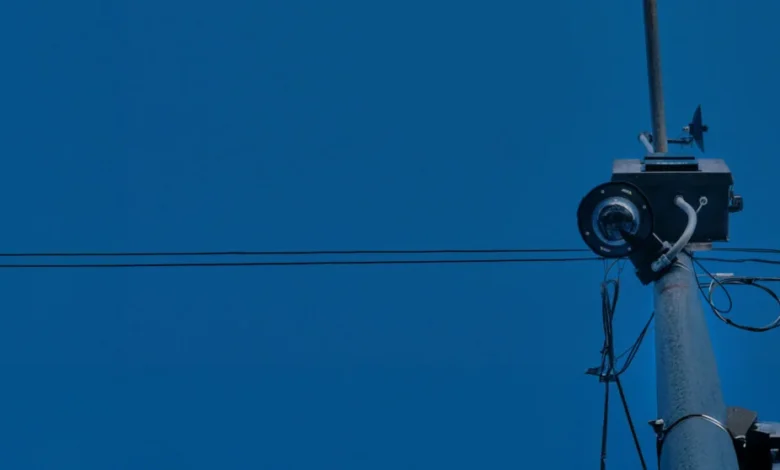
The "war" over AI models extends beyond the boardroom and the White House. In Chicago, the deployment of a vast "surveillance panopticon"—a network of thousands of interconnected cameras—has demonstrated the real-world power of AI-driven monitoring. While police credited the system with a 90-minute arrest following a mass shooting on a train, civil rights activists warn that such systems create a "chilling effect" on public life.
Similarly, in New Orleans, the police department has explored the possibility of arming drones with weapons, a move that has sparked intense ethical debates. These domestic applications of AI technology are becoming intertwined with the geopolitical struggle; as the US government debates banning Chinese software, it simultaneously adopts increasingly aggressive AI-driven surveillance and policing tactics that critics argue mirror the very authoritarianism they seek to oppose.
Fact-Based Analysis of Future Outlook
The internal conflict within the Trump administration’s AI circle is a symptom of a larger transition in the global order. The "Kimi crisis" has exposed the fact that the United States no longer holds a monopoly on frontier AI intelligence.
If the administration moves forward with a ban on Chinese models, it risks isolating the US developer community and triggering a cycle of protectionism that could slow the overall pace of innovation. However, if it takes no action, it faces the prospect of US companies losing significant market share to state-subsidized Chinese entities.
The resignation of Chris Fall suggests that finding a middle ground—one that balances safety, economic competitiveness, and national security—is becoming an impossible task. As 2026 progresses, the "AI war" is likely to move from verbal insults among advisers to formal executive orders and legislative battles that will define the digital landscape for the next decade. The outcome will determine whether the future of AI remains an open, global endeavor or a bifurcated system of "digital iron curtains."
Related posts: