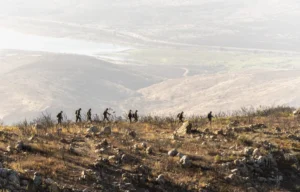
The US spent billions on border surveillance. Why can’t it catch people before they die?


The deployment of sophisticated, AI-driven surveillance technology along the United States-Mexico border was framed by policymakers as a transformative solution to both national security and humanitarian concerns. By creating a "virtual wall" of autonomous towers, cameras, and sensor arrays, the federal government promised a more efficient way to detect border crossings, allowing agents to respond rapidly to individuals in distress. However, a rigorous investigation by MIT Technology Review into the efficacy of this infrastructure reveals a harrowing disconnect between the stated objectives of the surveillance apparatus and the reality on the ground.
The case of José Morales Bernal serves as a somber indictment of this technological reliance. In April 2024, one day before he was set to celebrate his 32nd birthday, Morales entered the United States. His path took him directly into the field of view of three state-of-the-art surveillance towers equipped with advanced artificial intelligence designed specifically to detect and track human movement. Under the operational parameters of the system, his presence should have been flagged, alerted to dispatchers, and met with an immediate response from Border Patrol agents—who are officially trained to provide life-saving medical intervention.
Instead, the technology remained silent or ignored. Morales perished just 360 feet from the base of the nearest tower, succumbing to environmental exposure. His body was not discovered by the high-tech sensors intended to monitor the area, but by local landfill workers who happened upon the scene. This incident is not an isolated failure but part of a systemic pattern identified by researchers who mapped nearly 4,000 locations where human remains were recovered against the coordinates of approximately 600 surveillance towers. The data suggests that a massive humanitarian crisis is unfolding in full view of the government’s own high-tech cameras, yet the surveillance network appears fundamentally incapable of preventing the resulting loss of life.
The Evolution of the Virtual Wall
The concept of a "virtual wall" gained significant political momentum in the early 2000s, as traditional physical barriers—fences and walls—were deemed insufficient to cover the vast, rugged terrain of the Southwestern border. Over the past two decades, the Department of Homeland Security (DHS) and Customs and Border Protection (CBP) have invested billions of dollars in Integrated Fixed Towers (IFT) and Remote Video Surveillance Systems (RVSS).
These systems utilize long-range cameras, thermal imaging, and radar to create a persistent monitoring layer. The shift toward AI-enabled analytics was intended to reduce "false positives"—alerts triggered by animals or blowing brush—and ensure that agents were notified only when human activity was confirmed. Despite the exponential increase in computing power and sensor sensitivity, the transition from detection to intervention remains a persistent bottleneck. Critics argue that the technology focuses heavily on interdiction and enforcement, prioritizing the tracking of migrants as "targets" rather than as individuals who may be in critical need of medical assistance.
A Chronology of Surveillance Expansion
The implementation of these technologies has occurred in distinct phases:
- 2006–2011: The era of the Secure Border Initiative Network (SBInet), which attempted to integrate radar and camera technology. The program was widely criticized for cost overruns and technical failures, eventually leading to its cancellation.
- 2012–2018: A pivot toward more localized, modular surveillance solutions. CBP began deploying towers that could be moved to high-traffic areas based on intelligence patterns.
- 2019–Present: The integration of machine learning and AI. Newer towers are capable of classifying objects automatically, theoretically allowing for real-time monitoring of vast swaths of land with fewer human operators.
Despite these advancements, the human cost has continued to climb. According to data collected by various humanitarian groups and corroborated by the recent investigation, the years following the massive rollout of these AI towers have seen record numbers of migrant deaths in the desert. The discrepancy between the technological capacity to "see" the border and the operational failure to provide aid suggests that the surveillance infrastructure has not been configured to prioritize humanitarian rescue.

The Technological and Operational Gap
The failure to save lives like that of Morales Bernal stems from a combination of technical limitations and operational priorities. While AI can identify a human figure, it cannot interpret the context of that person’s movement. A person wandering in a disoriented manner due to dehydration is often classified by the system the same way as someone attempting to evade detection. Consequently, agents are trained to approach such encounters with caution, often treating the individual as a security risk rather than a medical emergency.
Furthermore, the "human in the loop" aspect of these systems is often limited by the sheer volume of alerts. When a system is calibrated to detect thousands of movements per day, agents may experience "alarm fatigue," where they become desensitized to the constant stream of alerts generated by the towers. In many cases, if an alert is deemed a "low-priority" crossing, it may not trigger an immediate field response, leaving the individual to continue their journey alone through lethal environmental conditions.
Official Responses and Systemic Implications
The Department of Homeland Security has frequently defended the use of surveillance technology as an essential component of modern border management. Proponents argue that without these towers, the vast majority of the border would be completely unmonitored. They maintain that the technology has successfully led to the apprehension of thousands of individuals and has deterred many more from attempting dangerous crossings.
However, the findings of the MIT Technology Review investigation have prompted calls for a reassessment of how these tools are deployed. Humanitarian organizations are increasingly advocating for "smart" surveillance that includes automated alerts for signs of medical distress, such as long-term stationary behavior in extreme heat. They argue that if the government can spend billions to track people, it has an ethical and legal obligation to ensure that the same technology is used to save them from preventable death.
The implications of this failure extend beyond the immediate tragedy of lost lives. It raises fundamental questions about the role of AI in state governance and the ethics of automated enforcement. If a surveillance system is designed to ignore the plight of the vulnerable while focusing exclusively on apprehension, it fundamentally alters the mission of the agencies involved.
The Broader Context of AI and Public Policy
The failure at the border is indicative of a broader trend where advanced technology is deployed as a "black box" solution to complex sociopolitical problems. As policymakers lean into AI for everything from national security to public safety, the case of the border towers serves as a cautionary tale.
In recent months, the debate over AI has shifted toward safety and regulation, with government entities worldwide exploring "kill switches" and safety protocols for autonomous systems. While these discussions are vital for high-level AI deployment, they often ignore the "low-level" AI—the surveillance and monitoring tools already in operation. The failure to integrate a humanitarian safety net into the border surveillance infrastructure is a clear example of how technical efficiency does not equate to effective or ethical governance.
As the US continues to refine its border strategy, the data clearly shows that technology alone is not a panacea. Without a shift in institutional culture—one that treats the border as a space for humanitarian response as much as a site for security—the "virtual wall" will continue to observe the tragic, preventable deaths of those attempting to cross, effectively turning high-tech surveillance into a silent, passive witness to a deepening human crisis. The challenge for the future is not just to make the technology faster or more accurate, but to make it more accountable to the human lives it monitors.