Samsung Reports Soaring Galaxy AI Adoption in Southeast Asia, Signaling a Paradigm Shift in Smartphone Usage

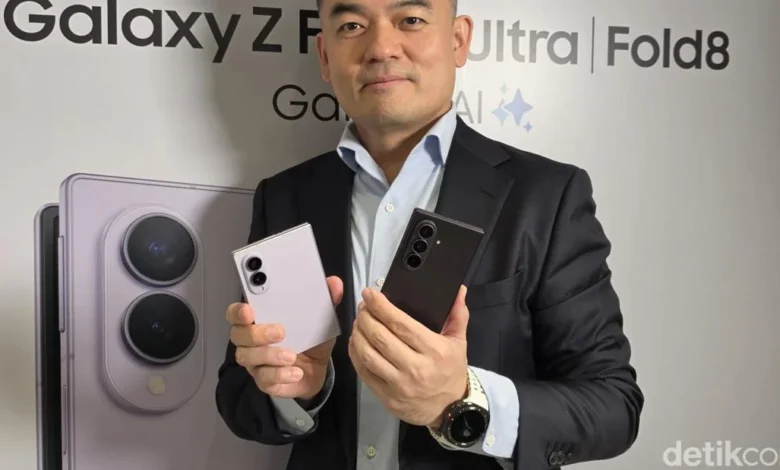
London – Samsung Electronics, the South Korean technology giant, has unveiled a significant surge in the adoption of its artificial intelligence (AI) features, collectively known as Galaxy AI, among smartphone users in Southeast Asia. The company reported a remarkable 95% engagement rate among Galaxy users across the region, including crucial markets like Indonesia, indicating that these advanced AI capabilities are now deeply integrated into their daily digital lives. This substantial figure represents a sharp increase from the 84% usage recorded just months prior, in September 2025, underscoring the rapid mainstreaming of AI as a core utility rather than a mere novelty within the smartphone ecosystem.
The announcement was made by Chon Hong, Head of Marketing for Samsung Electronics Southeast Asia & Oceania, on the sidelines of the eagerly anticipated Galaxy Unpacked 2026 event in London. Hong emphasized Samsung’s continuous monitoring of user interaction with Galaxy AI, highlighting the strong engagement as a testament to the features’ practical value and seamless integration. "We are observing robust engagement with Galaxy AI across Southeast Asia among our customers," Hong stated, adding, "We continuously strive to understand, monitor, and listen to how they utilize our on-device AI experiences." The data suggests a profound shift in consumer behavior, where AI is no longer a peripheral function but an indispensable tool for navigating the complexities of modern digital life.
The Dawn of Galaxy AI: A Strategic Pivot
The introduction of Galaxy AI marked a pivotal moment for Samsung and the broader smartphone industry. Debuting with the Galaxy S24 series in early 2024, Galaxy AI was presented not just as a collection of new features, but as a strategic pillar for Samsung’s future mobile offerings. At its core, Galaxy AI is built on a "hybrid AI" approach, leveraging both on-device processing for speed, privacy, and efficiency, and cloud-based AI for more complex tasks requiring extensive computational power and access to vast datasets. This dual strategy aims to deliver a comprehensive and responsive AI experience, moving beyond basic voice assistants to intelligent functionalities that enhance productivity, communication, and content creation.
The suite of Galaxy AI features is diverse, encompassing capabilities such as Live Translate for real-time multilingual communication, Chat Assist for tone adjustments in messages, Note Assist for intelligent summaries and formatting, and Photo Assist for generative image editing. However, the standout features driving the high adoption rates, as noted by Chon Hong, are "Circle to Search with Google" and "Now Brief" (or similar contextual summary features). Circle to Search allows users to simply draw a circle around any image, text, or video on their screen to instantly initiate a Google search, providing a revolutionary way to discover information. Now Brief, on the other hand, helps users quickly distill information from web pages, articles, or notes into concise summaries, addressing the growing challenge of information overload.
This strategic emphasis on AI also positions Samsung at the forefront of a fiercely competitive landscape, where major players like Apple, Google, and various Chinese manufacturers are all vying for supremacy in the AI-powered smartphone arena. Samsung’s early and aggressive push into on-device AI, coupled with its extensive global reach, has allowed it to set a high bar for what consumers can expect from their next-generation mobile devices.
Southeast Asia: A Fertile Ground for Innovation
Southeast Asia stands as a critically important market for Samsung, characterized by its youthful demographic, rapidly expanding middle class, and high rates of digital adoption. Countries like Indonesia, Vietnam, Thailand, the Philippines, and Malaysia are experiencing a digital transformation, with smartphones serving as the primary gateway to the internet for millions. This dynamic environment makes the region an ideal testing ground and growth engine for advanced technologies like Galaxy AI.
Samsung has historically held a strong market presence in Southeast Asia, often leading in smartphone shipments. The region’s consumers are known for their openness to adopting new technologies that offer practical benefits, particularly those that enhance communication, education, and entertainment. The multi-ethnic and multilingual nature of Southeast Asian societies, for instance, makes features like Live Translate incredibly valuable, while the fast-paced digital economy underscores the utility of tools like Circle to Search and Now Brief for quick information retrieval and productivity. The high smartphone penetration and robust internet infrastructure further facilitate the seamless integration and daily use of AI features, cementing their role in everyday life.
Chronology of Adoption: A Rapid Ascent
The journey of Galaxy AI adoption in Southeast Asia illustrates a swift and decisive embrace by consumers. When the data was first collected in September 2025, the adoption rate stood at 84% – an impressive figure for any new feature set. However, within a span of just a few months, this rate surged to approximately 95%. This accelerated growth points to several factors: effective marketing and education campaigns by Samsung, positive word-of-mouth among users, and the iterative improvements and expanded availability of Galaxy AI features.
Following its initial debut on the Galaxy S24 series, Samsung quickly rolled out Galaxy AI capabilities to a broader range of its flagship devices, including the Galaxy S23 series, the Galaxy Z Fold5 and Z Flip5, and the Galaxy Tab S9 series. This expansion made the advanced AI features accessible to a larger installed base of premium Samsung users, undoubtedly contributing to the rapid increase in adoption rates. The timing of Chon Hong’s announcement at Galaxy Unpacked 2026 further underscores Samsung’s ongoing commitment to AI, setting the stage for even more sophisticated AI integrations in upcoming devices, such as the eagerly anticipated Z Fold8. The continuous development and widespread availability have transformed Galaxy AI from a premium novelty into an expected and utilized functionality across Samsung’s high-end portfolio.
Deep Dive into User Engagement: What’s Driving the Numbers?
The high engagement rates are not merely statistical anomalies; they reflect a genuine integration of AI into user habits. Chon Hong specifically highlighted Circle to Search and Now Brief as two of the most frequently utilized features.
-
Circle to Search with Google: This feature addresses a common pain point in the digital age: the need for immediate information about something seen on screen. Whether it’s identifying an unfamiliar landmark in a social media photo, looking up a product shown in a video, or translating text within an image, Circle to Search offers an intuitive and friction-free method of inquiry. Its popularity in Southeast Asia can be attributed to the region’s highly visual and social media-driven digital culture, where users frequently encounter new information and content that sparks curiosity. The ability to seamlessly transition from viewing to searching without switching apps or typing queries significantly streamlines the user experience, fostering a new habit of "visual discovery."
-
Now Brief (or contextual summary features): In an era of information overload, tools that help users quickly digest content are invaluable. Now Brief’s ability to summarize lengthy articles, meeting notes, or web pages into concise bullet points or key takeaways caters directly to the modern user’s demand for efficiency. For professionals, students, and casual readers alike, this feature saves time and enhances comprehension, allowing them to extract essential information rapidly. In a region where many users consume content on the go and often in multiple languages, the contextual summarization capability proves particularly useful for bridging language barriers and managing information efficiently.
These features embody Samsung’s vision of "contextual AI," where the intelligence of the device adapts to the user’s immediate needs and surroundings. As Hong articulated, this represents a fundamental shift in consumer behavior. "Whenever you need something, consumers are now adopting new behaviors with AI," he noted, implying that users are increasingly relying on AI as an indispensable assistant for everyday tasks, from information gathering to communication.
The Foldable Advantage: Z-Series Leads the Charge
A particularly insightful detail from Samsung’s report is the even higher adoption rate among users of its foldable devices. Chon Hong revealed that an impressive 96% of Galaxy Z7 series users have engaged with Galaxy AI features. This statistic is highly significant, as it suggests a synergistic relationship between the innovative form factor of foldables and the utility of AI.
Foldable smartphones, with their larger, more versatile screens, provide an enhanced canvas for AI features. For instance, multitasking on a larger display, like that of the Z Fold series, becomes even more powerful when combined with AI tools. Users can have a video playing on one half of the screen and use Circle to Search on an object within that video on the other half, or quickly summarize an article using Now Brief while referencing another document. The expanded screen real estate facilitates a more immersive and productive AI experience, making these features feel even more natural and integrated. The Z Flip series, with its compact design and unique Flex Mode, also benefits from AI, enabling hands-free interactions and creative photography enhanced by generative editing tools. This trend suggests that as foldable technology matures and becomes more mainstream, AI will play a crucial role in maximizing the potential of these innovative devices, solidifying their position in the premium segment and attracting early adopters who value cutting-edge technology and enhanced productivity.
Industry Perspectives and Expert Commentary
Industry analysts have consistently highlighted AI as the next frontier for smartphone innovation. "The battleground for smartphone differentiation has clearly shifted from hardware specifications to intelligent software experiences," remarked a senior analyst from TechInsights, who wished to remain anonymous due to company policy. "Samsung’s aggressive rollout and impressive adoption rates for Galaxy AI demonstrate a successful strategy in a crowded market. It signals that consumers are ready for, and indeed actively seeking, more intelligent and intuitive device interactions."
Consumer behavior experts also weigh in on the implications. Dr. Anya Sharma, a professor of digital psychology at the University of Singapore, commented, "The high usage of features like Circle to Search points to a fundamental change in how humans interact with information. It’s moving beyond traditional search queries to more natural, visual, and contextual modes of discovery. This isn’t just about efficiency; it’s about reducing cognitive load and making technology feel more like an extension of our natural curiosity." She added, "For these AI features to become ‘new habits,’ they must be truly seamless, reliable, and demonstrably useful, which Samsung appears to have achieved."
The broader technology community sees Samsung’s success as a harbinger of things to come. Qualcomm and MediaTek, key chip manufacturers, are heavily investing in on-device AI capabilities for their processors, anticipating that more and more AI tasks will be handled locally on the smartphone. This trend not only enhances privacy and speed but also paves the way for a new generation of AI-powered applications developed by third-party developers, further enriching the smartphone ecosystem.
Broader Implications: Reshaping the Smartphone Landscape
The widespread adoption of Galaxy AI in Southeast Asia carries significant implications for Samsung and the entire smartphone industry.
- Competitive Advantage: Samsung’s leadership in AI adoption provides a strong competitive edge against rivals like Apple, Google, and Chinese brands such as Xiaomi and Huawei. As hardware specifications increasingly converge, AI becomes a critical differentiator, influencing consumer purchasing decisions. This success could compel competitors to accelerate their own AI development and integration strategies to remain relevant.
- Ecosystem Lock-in and Loyalty: By embedding AI deeply into daily user habits, Samsung strengthens its ecosystem. Users who become accustomed to the convenience and productivity offered by Galaxy AI are more likely to remain loyal to the Samsung brand and upgrade to newer Galaxy devices, ensuring a consistent user experience.
- Future of Smartphones: This trend accelerates the shift from hardware-centric value propositions to software and AI-centric experiences. Future smartphone innovations will likely focus less on incremental camera improvements or processor speeds, and more on intelligent features that anticipate user needs, automate tasks, and provide personalized assistance.
- New Revenue Streams and Services: As AI capabilities become more sophisticated, they open doors for new monetization opportunities. This could include premium AI features, AI-powered subscription services, or deeper integration with third-party applications that leverage Samsung’s AI platform.
- Ethical Considerations: With the increasing reliance on AI, discussions around data privacy, algorithmic bias, and responsible AI development become paramount. Samsung, like other tech giants, will need to navigate these ethical landscapes carefully, ensuring transparency and user trust.
The Road Ahead: Samsung’s AI Vision for Future Generations
Looking forward, Samsung is unequivocally committed to pushing the boundaries of AI in its mobile products. Chon Hong’s concluding remarks hinted at the exciting developments to come: "There are so many features embedded in the devices, and we are very excited to show consumers what new experiences will come through the Z Fold8 series." This statement confirms that AI will be a central theme for future Galaxy flagship launches, particularly for the premium foldable line, which serves as a showcase for Samsung’s most innovative technologies.
The Z Fold8, along with other upcoming Galaxy devices, is expected to feature enhanced AI capabilities, potentially including more advanced generative AI for content creation, even more intuitive personal assistant functions, and deeper integration with smart home ecosystems. The goal is to create a more personalized, proactive, and seamless user experience that blurs the lines between human intent and technological capability. As AI becomes more sophisticated, Samsung envisions a future where the smartphone acts not just as a tool, but as an intelligent companion, continually learning and adapting to serve its user better.
The soaring adoption rates of Galaxy AI in Southeast Asia are a powerful affirmation of Samsung’s strategic direction. It signals a paradigm shift where AI is no longer a futuristic concept but a present-day reality, fundamentally reshaping how consumers interact with their smartphones and, by extension, the digital world. Samsung’s success in this critical region sets a compelling precedent for the global trajectory of AI-powered mobile technology.