Meta and React Foundation Announce the Release of React Native 0.86 Featuring Android 15 Optimization and Enhanced Developer Tooling

The React Native core team has officially announced the release of React Native 0.86, a milestone update that emphasizes platform stability, modern Android design standards, and a significant shift in the project’s governance. This version follows the trend established with the 0.83 release by introducing zero user-facing breaking changes, a move that signals a new era of maturity for the cross-platform framework. By prioritizing a seamless upgrade path, the developers aim to reduce the maintenance burden for engineering teams globally, allowing them to focus on feature development rather than migration hurdles.
Beyond technical refinements, React Native 0.86 marks a historic transition in the project’s administrative structure. The entire React Native ecosystem, including the core repository, Metro, Yoga, and the official documentation, has been migrated from the "facebook" GitHub organization to a dedicated "react" organization. This move is part of the broader transition to the React Foundation, an independent entity established to provide long-term stewardship for the React ecosystem. While Meta remains a primary contributor, this shift reflects a commitment to a more community-centric, neutral governance model that ensures the framework’s longevity and stability in the open-source landscape.
Technical Evolution: Seamless Android 15 Integration
The primary technical highlight of React Native 0.86 is its comprehensive support for Android 15’s "edge-to-edge" mode. As mobile operating systems evolve, Google has increasingly pushed for applications to utilize the entire screen real estate, including the areas behind the status and navigation bars. In Android 15, this edge-to-edge behavior is enforced by default for apps targeting the latest SDK.
React Native 0.86 introduces critical fixes to ensure that layouts remain consistent even when the operating system enforces these immersive modes. This includes improvements to how the framework handles the edgeToEdgeEnabled Gradle property and internal adjustments to prevent UI elements from being obscured by system overlays. For developers, this means that upgrading to version 0.86 provides an out-of-the-box solution for Android’s latest design requirements, preventing the "letterboxing" or clipping issues that often plague apps transitioning to newer Android versions.
The implementation of these fixes involved extensive work on the underlying rendering engine to ensure that padding and insets are calculated correctly across a wide variety of Android device configurations. This focus on the Android platform is particularly timely, as the fragmentation of the Android ecosystem often presents the greatest challenge for cross-platform developers. By automating much of the edge-to-edge logic, React Native continues to bridge the gap between native performance and developer efficiency.
Enhancing Developer Experience with Modern Tooling
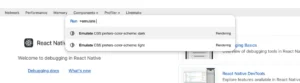
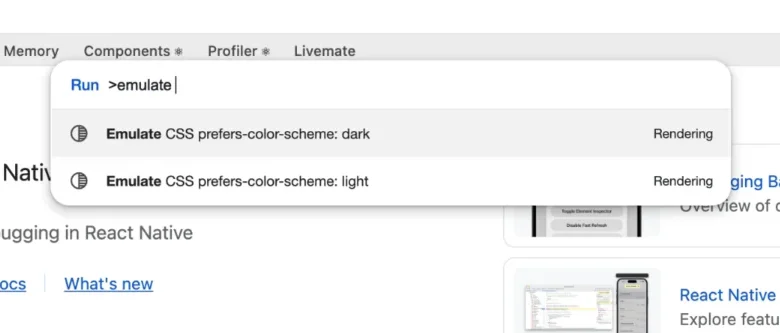
Developer experience (DX) remains a central pillar of the React Native roadmap. In this release, the React Native DevTools have received a notable upgrade with the inclusion of light and dark mode emulation. Leveraging the Emulation.setEmulatedMedia protocol, developers can now toggle their application’s appearance settings directly from the DevTools interface.
Previously, testing an application’s responsiveness to system-level theme changes required manual adjustments in the device or emulator settings, which could be a time-consuming process. The new emulation feature, accessible via a simple keyboard shortcut (Cmd/Ctrl + Shift + P), allows for instantaneous testing of theme-dependent styling. This functionality mirrors the capabilities found in modern web browser inspectors, further aligning the mobile development experience with the highly efficient workflows of the web ecosystem. The team noted that this emulation is a temporary state that resets upon disconnection, ensuring that the developer’s environment remains clean and predictable.
A Commitment to Stability: The Zero Breaking Change Strategy
One of the most significant aspects of the 0.86 release is what it does not contain: breaking changes. Historically, React Native was known for a rapid release cycle that often required significant code changes to maintain compatibility. However, starting with version 0.83 and continuing into 0.86, the core team has prioritized a "predictable and seamless" upgrade experience.
This strategy is a direct response to feedback from enterprise users who manage large, complex codebases. For these organizations, the cost of upgrading a framework can often outweigh the benefits of new features if the migration requires extensive refactoring. By ensuring that an app running on version 0.85 can move to 0.86 without code modifications, the React Native team is reinforcing the framework’s position as a production-ready tool for high-stakes environments.

To support this transition, the team continues to offer the React Native Upgrade Helper, a web-based tool that provides a side-by-side diff of the changes required in native project files (such as Gradle or CocoaPods configurations). This tool remains the recommended path for developers looking to stay current with the latest releases.
Organizational Shift to the React Foundation
The migration to the react organization on GitHub is more than a cosmetic change; it represents a fundamental shift in how the software is managed. The React Foundation was launched to provide a neutral home for React and its related projects, including Metro (the bundler), Yoga (the layout engine), and the React Native website.
Industry analysts suggest that this move is intended to foster a broader sense of ownership among the diverse group of companies that rely on React Native. By moving away from the "facebook" branding, the project aims to mitigate concerns regarding corporate influence and encourage even greater participation from other tech giants and individual contributors. GitHub will automatically handle the redirection of all existing URLs, Pull Requests, and Issues, ensuring that the transition is invisible to the end-user while providing a more robust foundation for the future.
Performance, Infrastructure, and Spec Alignment
While the headline features focus on Android and governance, version 0.86 includes a suite of under-the-hood improvements aimed at performance and web-standard alignment. The release contains over 596 commits from 97 unique contributors, highlighting the vibrancy of the community.
Key areas of focus in this release include:
- JSI (JavaScript Interface) Enhancements: New APIs have been added to the C++ interface, making the communication between native modules and the JavaScript engine more capable. This is a critical component of the "New Architecture" which aims to eliminate the asynchronous bridge in favor of direct synchronous calls.
- Web Spec Alignment: The runtime continues to evolve to match web standards more closely. This alignment is vital for developers who utilize "React Native for Web," as it ensures that code behaves consistently across mobile and desktop environments.
- Accessibility and Layout: Updates to the Yoga engine and accessibility APIs ensure that apps built with 0.86 are more inclusive and performant in complex layout scenarios.
Chronology and Support Policy
The release of 0.86 triggers a shift in the React Native support lifecycle. According to the official policy, version 0.86 is now the latest stable release. Consequently, version 0.83.x has moved to the "unsupported" category. The React Native team typically supports the three most recent minor versions, encouraging developers to stay within this window to receive critical security patches and bug fixes.
The timeline of recent releases shows an accelerated focus on the New Architecture. While version 0.86 maintains compatibility with the "Old Architecture," the groundwork being laid in the JSI and rendering layers suggests that a full transition is approaching. Developers are encouraged to begin testing their libraries and applications with the New Architecture enabled to prepare for future milestones.
Implications for the Broader Ecosystem
The release of 0.86 has immediate implications for major ecosystem partners like Expo. The Expo team has announced that React Native 0.86 support will be available through their expo@canary releases, allowing early adopters to test the new features within the Expo workflow.
For the broader mobile development market, React Native’s focus on stability and Android 15 compatibility serves as a competitive response to other frameworks like Flutter and Kotlin Multiplatform. By reducing the friction of upgrades and embracing independent governance, React Native is doubling down on its strengths: a massive developer pool, a mature library ecosystem, and a clear path toward high-performance native UIs.
In conclusion, React Native 0.86 is a release defined by refinement rather than reinvention. It provides the necessary tools for developers to meet the design standards of 2024 and 2025 while offering the peace of mind that comes with a stable, non-breaking upgrade path. As the project settles into its new home under the React Foundation, the community can expect a continued focus on reliability, performance, and cross-platform excellence.
Related posts: