Sudaryono Appointed Head of National Nutrition Agency to Spearhead Free Nutritious Meals Program

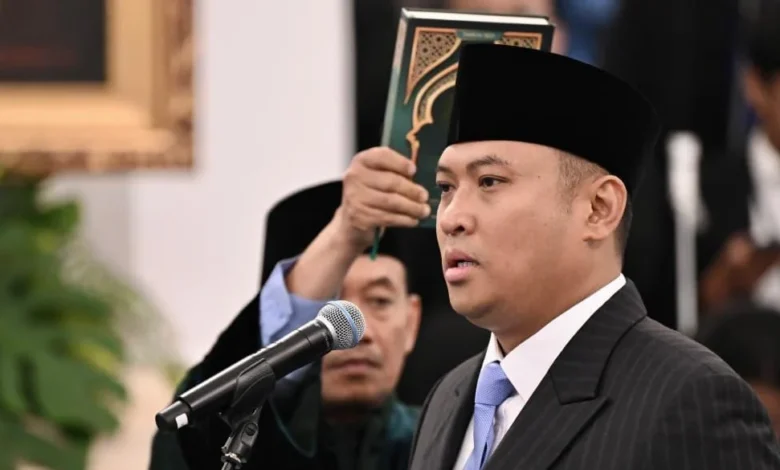
Jakarta, Indonesia – In a pivotal move underlining President Prabowo Subianto’s commitment to national health and economic development, Sudaryono has been officially appointed as the Head of the National Nutrition Agency (Badan Gizi Nasional – BGN). The announcement, made by Minister of State Secretary Prasetyo Hadi, confirms Sudaryono’s critical role in leading the implementation of the ambitious Free Nutritious Meals (Makan Bergizi Gratis – MBG) program, a cornerstone initiative of the new administration. Sudaryono steps into this significant position following the resignation of Nanik Sudaryati Deyang, who cited health reasons for her departure. His appointment, effective July 22, 2026, signals a strategic alignment of agricultural expertise with the nation’s nutritional goals.
The Mandate: Spearheading the Free Nutritious Meals Program
The Free Nutritious Meals program is more than just a social welfare initiative; it represents a comprehensive strategy aimed at addressing pervasive nutritional challenges, particularly stunting, while simultaneously stimulating local economies. Conceived during President Prabowo Subianto’s presidential campaign as "Free Lunch and Milk," the program has evolved into the more encompassing "Free Nutritious Meals" to allow for greater flexibility and cultural appropriateness in meal provisions across Indonesia’s diverse regions. Its primary beneficiaries are envisioned to be school children, pregnant women, and other vulnerable segments of the population, groups identified as critical for long-term human capital development.
The scale of the MBG program is unprecedented. It seeks to provide daily nutritious meals to millions, fundamentally altering the dietary habits and health outcomes of a significant portion of the Indonesian populace. Beyond the immediate goal of providing food, the program is designed to deliver balanced nutrition, crucial for cognitive development, physical growth, and overall well-being, especially during formative years. The administration anticipates that this sustained nutritional intervention will significantly contribute to reducing Indonesia’s national stunting rate, which, despite recent progress, remains a pressing public health concern. The government has set ambitious targets to further reduce stunting, with the MBG program positioned as a primary vehicle to achieve these goals.
The Strategic Importance of the National Nutrition Agency (BGN)
The establishment and strengthening of the National Nutrition Agency underscore the gravity with which the Prabowo administration views the issue of national nutrition. The BGN is not merely a coordinating body but a central pillar in the complex architecture required to deliver the MBG program effectively. Its mandate extends beyond logistical oversight to include policy formulation, inter-ministerial coordination, monitoring and evaluation, and ensuring the scientific rigor of the nutritional content provided.
Indonesia, an archipelago nation with vast geographical and socio-economic disparities, faces multifaceted nutritional challenges. While stunting receives considerable attention, other issues such as micronutrient deficiencies, anemia among women of reproductive age, and even emerging issues of obesity in urban areas, paint a complex national nutritional landscape. The BGN’s role is therefore critical in harmonizing efforts across various government ministries and agencies – including the Ministries of Health, Agriculture, Education, Social Affairs, and Finance – to create a cohesive and impactful nutritional strategy. The agency will be instrumental in developing standardized nutritional guidelines, adapting menus to local food cultures and availability, and establishing robust supply chains that can deliver food safety and quality across thousands of islands. A strong, decisive, and knowledgeable leader at its helm is indispensable to navigate these complexities and ensure the program’s success without interruption.
Sudaryono’s Profile and Prior Experience
Sudaryono brings a wealth of relevant experience to his new role, particularly from his tenure as Deputy Minister of Agriculture. His background in the agricultural sector provides him with a deep understanding of food production, supply chain management, and the intricacies of ensuring food security for a large and diverse population. This experience is directly pertinent to the MBG program, which will require massive procurement and distribution networks for agricultural products.
During his time at the Ministry of Agriculture, Sudaryono was involved in initiatives aimed at boosting agricultural productivity, enhancing farmers’ welfare, and stabilizing food prices. These efforts often involved direct engagement with farmers, livestock breeders, and fishermen, giving him practical insights into the challenges and opportunities within Indonesia’s primary food production sectors. Minister Secretary of State Prasetyo Hadi highlighted Sudaryono’s extensive involvement in the conceptualization and planning stages of the MBG program. "He has been involved from the very beginning in understanding the concept, discussing, formulating ideas, and proposing technical concepts for the implementation of this free nutritious meals program," Prasetyo Hadi stated, emphasizing Sudaryono’s foundational knowledge of the initiative. This intimate familiarity with the program’s genesis ensures continuity and a clear vision for its execution.
The Transition: Nanik Sudaryati Deyang’s Departure
The appointment of Sudaryono follows the resignation of Nanik Sudaryati Deyang, who stepped down from the Head of BGN position citing health reasons. While the details of her health concerns were not disclosed, her departure necessitated a swift and decisive replacement to maintain momentum for the BGN’s critical mandate. The government’s quick action to appoint Sudaryono underscores the administration’s priority to avoid any leadership vacuum that could impede the progress of the MBG program. The seamless transition aims to ensure that the strategic planning and initial implementation phases of the program remain on track, demonstrating the government’s commitment to uninterrupted service delivery.
Official Rationale Behind the Appointment
Minister Secretary of State Prasetyo Hadi elaborated on the specific considerations that led to President Prabowo’s selection of Sudaryono. These considerations underscore not only Sudaryono’s qualifications but also the strategic importance of the BGN and the MBG program.
First, Prasetyo Hadi emphasized the strategic importance of the BGN itself. "The position of BGN is very strategic in overseeing the MBG; there must be no vacuum at the top leadership of the institution," he asserted. This highlights the administration’s recognition that effective execution of such a large-scale program demands consistent and strong leadership. Any delay or uncertainty at the helm of BGN could have cascading effects on the program’s timeline and efficacy.
Second, Sudaryono’s deep involvement in the planning and conceptualization of the MBG program was a key factor. As Prasetyo Hadi explained, Sudaryono had "followed the concept from the birth of the Free Nutritious Meals program from the outset. He also, from the beginning, followed and together with all of us discussed, conceptualized, and designed the technical implementation of this free nutritious meals." This hands-on experience ensures that Sudaryono possesses a holistic understanding of the program’s philosophy, objectives, and operational intricacies, making him uniquely qualified to lead its execution.
Third, Sudaryono’s prior role as Deputy Minister of Agriculture directly aligns with the logistical demands of the MBG program. The provision of nutritious meals inherently relies on a robust and efficient supply of raw materials. "Providing Free Nutritious Meals is inseparable from his duties at the Ministry of Agriculture because, after all, the sources of raw materials, the sources of food ingredients that form the Free Nutritious Meals for the beneficiaries, have always been supported and underpinned as part of an ecosystem by the Ministry of Agriculture, where Mr. Sudaryono served as Deputy Minister," Prasetyo Hadi clarified. This synergy between his agricultural background and the BGN’s mission is expected to streamline procurement processes, ensure the availability of fresh and quality ingredients, and foster stronger links between food producers and the program’s beneficiaries.
Sudaryono’s Vision: Beyond Nutrition, Towards Economic Upliftment
Upon his appointment, Sudaryono articulated a vision for the MBG program that extends far beyond merely providing sustenance. He highlighted its profound positive impact on Indonesia’s economy, particularly in the agricultural sector. Drawing an evocative analogy, Sudaryono likened the program to the iconic video game character Pacman, whose perpetually open mouth consumes everything in its path. "This is a grand program. I have said on several occasions that this program is like Pacman, it eats everything," he remarked after his inauguration at the State Palace.
This "Pacman" analogy underscores the program’s immense capacity to absorb agricultural produce, thereby stimulating demand and stabilizing prices for farmers, livestock breeders, and fishermen across the archipelago. Sudaryono claimed that before the MBG program, instances of farmers being forced to discard their surplus produce due to market gluts and low prices were not uncommon. He cited examples like "people bathing in milk" or "throwing away carrots, vegetables, onions" due to overproduction and inability to sell. With the advent of MBG, he expressed confidence that such waste would become a thing of the past.
The economic multiplier effect of the MBG program is significant. By creating a consistent and massive demand for food ingredients, it provides a stable market for local producers. This not only prevents wastage but also incentivizes increased production, leading to greater income for rural communities. The program is expected to boost various sub-sectors of agriculture, including horticulture, livestock, fisheries, and staple crops. Furthermore, the logistical chain required to transport, process, and prepare these meals will generate employment opportunities in transportation, food processing, catering services, and local distribution networks. This localized economic absorption is crucial for fostering inclusive growth and reducing regional economic disparities, aligning the nutritional objective with broader national development goals.
Addressing Indonesia’s Nutritional Landscape
Indonesia has long grappled with high rates of stunting, defined as low height-for-age, which is indicative of chronic malnutrition during the critical early years of life. Stunting has severe long-term consequences, impairing physical and cognitive development, reducing educational attainment, and ultimately hindering economic productivity. In 2023, Indonesia’s stunting rate stood at approximately 21.5%, a figure the government aims to reduce significantly, ideally to below 14% in the coming years.
The MBG program is designed as a direct intervention against this challenge. By providing consistent, balanced, and nutritious meals, particularly to pregnant women and young children (through schools and community centers), it aims to address the root causes of stunting and other forms of malnutrition. The BGN, under Sudaryono’s leadership, will play a crucial role in ensuring the nutritional adequacy of these meals, tailoring menus to local dietary needs and available resources, and monitoring the program’s impact on nutritional indicators. This data-driven approach will be vital for evaluating the program’s effectiveness and making necessary adjustments.
Implementation Challenges and Opportunities
While the MBG program holds immense promise, its implementation will not be without challenges. The sheer scale and geographical spread of Indonesia present significant logistical hurdles. Ensuring equitable access to nutritious meals in remote and underdeveloped regions will require innovative distribution strategies and robust infrastructure. Quality control and food safety across millions of meals served daily will be paramount to prevent foodborne illnesses and maintain public trust.
Funding for such a grand program will also be a continuous consideration. While initial budgetary allocations are significant, sustaining the program over the long term will require careful financial management and potentially diversified funding sources. Furthermore, effective coordination among a multitude of government agencies at national, provincial, and local levels will be critical to avoid redundancies and ensure seamless execution. The BGN will need to establish clear lines of communication and accountability across this complex network.
However, these challenges also present opportunities. The program can foster innovation in local food production, encourage the development of sustainable agricultural practices, and empower local communities to take ownership of their nutritional well-being. By integrating nutritional education alongside meal provision, the MBG can promote healthier eating habits and increase awareness about balanced diets among beneficiaries and their families.
Reactions and Stakeholder Perspectives
The appointment of Sudaryono and the continued push for the MBG program are generally met with cautious optimism across various sectors. Within the government, there is a unified front in supporting the program as a key deliverable of the Prabowo administration. The agricultural sector, represented by farmer associations and commodity groups, views the program as a significant boon, anticipating increased and stable demand for their produce, which could lead to better prices and improved livelihoods. Public health experts, while acknowledging the potential benefits of widespread nutritional intervention, emphasize the need for rigorous scientific oversight, transparent monitoring, and flexible adaptation to ensure the meals are truly nutritious and culturally appropriate. Civil society organizations will likely focus on issues of transparency, accountability in procurement and distribution, and ensuring that the program genuinely reaches its intended beneficiaries without leakages or corruption.
Broader Implications
The Free Nutritious Meals program, under Sudaryono’s leadership at the BGN, is poised to become a defining legacy of President Prabowo Subianto’s administration. Its success could significantly elevate Indonesia’s human capital by nurturing a healthier, more intelligent future generation. Socially, it has the potential to reduce inequalities in access to basic nutrition, ensuring that children from even the most disadvantaged backgrounds have a fair start in life. Economically, it offers a powerful stimulus to the agricultural sector and related industries, fostering inclusive growth. Politically, a successful and well-implemented program could garner widespread public support and reinforce trust in government’s capacity to deliver on its promises.
As Sudaryono takes the reins of the National Nutrition Agency, the eyes of the nation will be on him and the MBG program. His blend of agricultural expertise and intimate knowledge of the program’s vision positions him as a crucial figure in Indonesia’s journey towards improved national nutrition and sustained economic development.