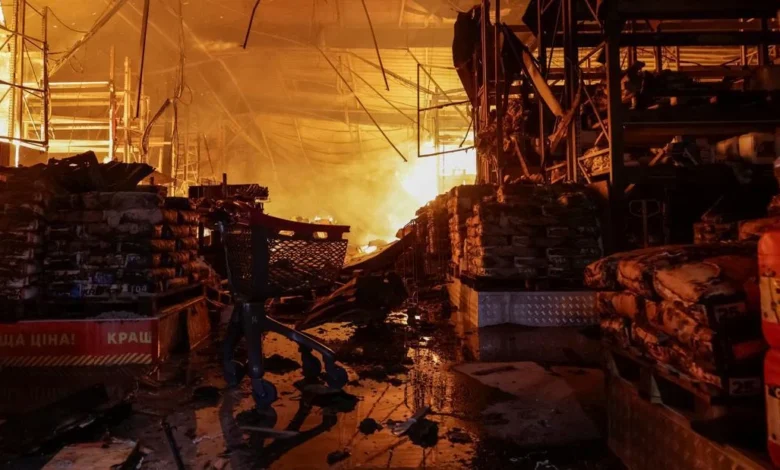
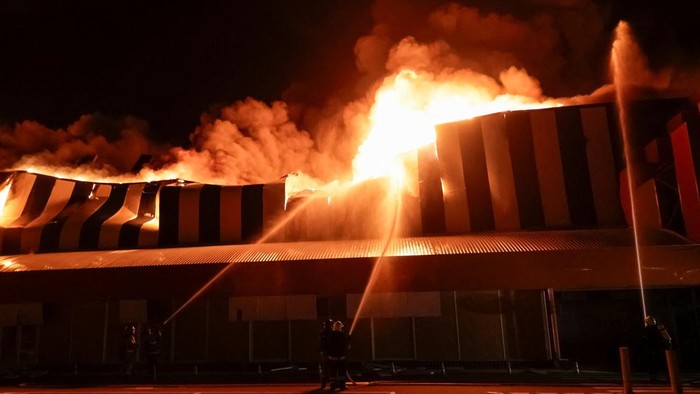
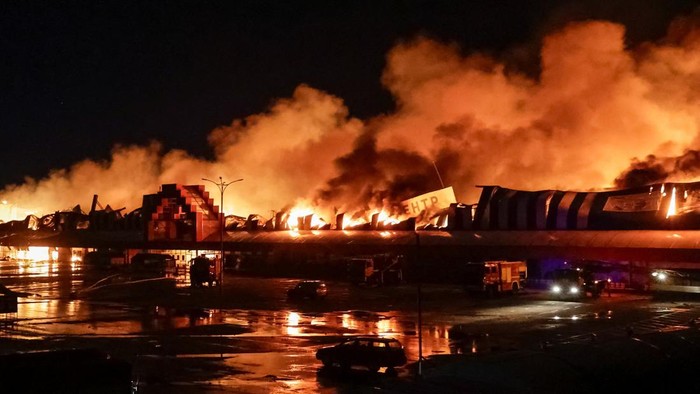
The ongoing armed conflict between the Russian Federation and Ukraine witnessed yet another devastating escalation on Saturday, October 24, 2026, when a barrage of Russian missiles struck the heart of Kharkiv, Ukraine’s second-largest city. The strikes directly targeted a major commercial shopping center specializing in household goods and daily necessities, setting the sprawling structure ablaze and sending thick plumes of black smoke billowing into the atmosphere. The catastrophic event has underscored the relentless vulnerability of civilian infrastructure in urban centers as the war grinds through its protracted timeline, drawing renewed international attention to the plight of civilians living near the frontline zones.

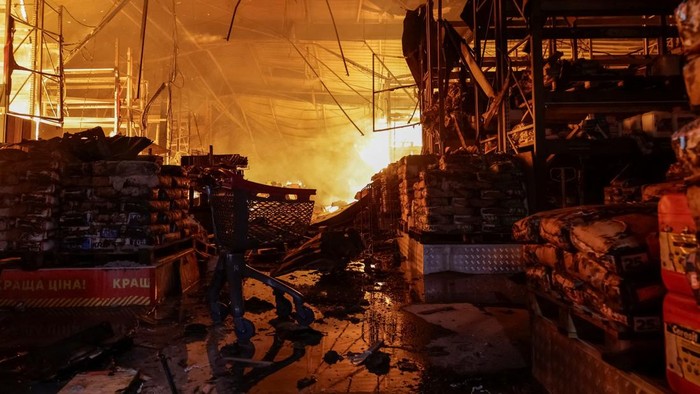
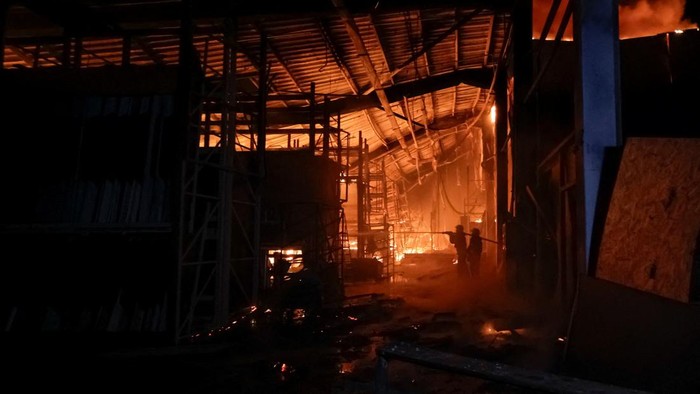
Emergency response units, including specialized firefighting teams and search-and-rescue personnel, were swiftly mobilized and deployed to the scene. Operating under hazardous conditions amid fears of secondary explosions and structural collapses, firefighters battled intense flames that consumed large portions of the retail facility. According to field reports and photo-journalistic documentation captured by Reuters photographer Sofiia Gatilova, emergency workers labored tirelessly to contain the blaze and prevent it from spreading to adjacent residential and commercial properties. While first responders established a secure perimeter and worked to douse lingering hot spots, precise casualty figures and an exhaustive assessment of the structural damage remained unavailable in the immediate aftermath of the strike, leaving local authorities and families anxiously awaiting verified updates.
Strategic Significance and Vulnerability of Kharkiv
Kharkiv has historically served as a vital cultural, industrial, and economic hub in northeastern Ukraine. However, its geographical proximity to the Russian border—situated approximately 30 kilometers (about 19 miles) away—has rendered it one of the most frequently targeted metropolitan areas since the full-scale invasion escalated in February 2022. Because of its strategic location, the city acts as a critical focal point in the broader military campaign, exposing its civilian population to continuous aerial bombardment, artillery fire, and missile attacks.
The targeting of civilian commercial infrastructure highlights a recurring pattern within the conflict. Shopping centers, grocery markets, apartment complexes, and educational institutions have repeatedly borne the brunt of military operations, severely disrupting the socioeconomic fabric of the region. Local government officials have frequently noted that destroying commercial hubs directly undermines the daily survival mechanisms of residents, threatening food security, local employment, and access to essential household commodities. As continuous air raid sirens dictate the rhythm of daily life in Kharkiv, the psychological toll on the civilian population continues to mount, fostering an atmosphere of perpetual uncertainty and fear.
Chronology of the October 24 Incident
The sequence of events unfolded on Saturday morning, shattering a brief sense of fragile calm in the northeastern Ukrainian metropolis.
- Early Morning Hours (Pre-Strike): Normal civilian activities were underway in parts of Kharkiv, with residents utilizing weekend hours to procure household goods and provisions at the targeted commercial center.
- The Strike: Air defense warnings preceded incoming missile trajectories, culminating in a direct impact on the shopping complex. The explosion triggered an immediate, massive fire, gutting portions of the retail establishment and shattering windows across neighboring blocks.
- Immediate Aftermath: Emergency dispatchers received hundreds of calls as smoke filled the city skyline. First responders arrived within minutes, initiating firefighting protocols and evacuating nearby civilians from potential danger zones.
- Afternoon Mitigation: Fire crews deployed specialized high-pressure water tenders and foam apparatuses to suppress the multi-front blaze. Meanwhile, municipal authorities began assessing infrastructural collateral damage to nearby utilities and transport routes.
- Official Documentation: Visual and factual documentation of the devastation was compiled by international and local press agencies, including Reuters, ensuring global visibility of the humanitarian and material toll inflicted upon the city.
Humanitarian and Economic Implications
The destruction of the shopping center in Kharkiv carries profound implications extending far beyond immediate material losses. Economically, the region’s retail and supply chain networks suffer continuous setbacks every time commercial facilities are compromised. Small-to-medium business owners, already grappling with wartime inflation, disrupted logistics, and dwindling consumer purchasing power, face insurmountable hurdles in rebuilding their livelihoods.
From a humanitarian perspective, the attack reinforces the urgent necessity for enhanced air defense systems to protect densely populated urban centers. International humanitarian organizations have repeatedly emphasized that civilian infrastructure must remain protected under international humanitarian law. However, the recurring nature of missile strikes on non-military targets demonstrates a systemic disregard for these legal frameworks, necessitating continuous adaptation by Ukrainian civil defense forces.
Furthermore, the psychological ramifications for Kharkiv’s residents cannot be overstated. Living under the constant threat of sudden missile attacks forces families to adapt to subterranean shelters, curfews, and disrupted educational and professional routines. The psychological resilience of the local populace is continuously tested as vital community touchstones—such as markets, parks, and shopping centers—are transformed into zones of destruction.
Official Responses and International Repercussions
In the wake of the attack, local authorities in Kharkiv reiterated their calls to Ukraine’s international partners for accelerated deliveries of advanced surface-to-air missile systems, such as Patriot and NASAMS batteries, to intercept incoming projectiles before they breach urban airspaces. Ukrainian officials stressed that safeguarding cities like Kharkiv, Odesa, and Kyiv requires a multi-layered defense shield capable of neutralizing ballistic and cruise missile threats.
International observers and diplomatic missions have continued to monitor the situation closely. While formal condemnations of the strike on civilian infrastructure are anticipated from Western allies, the incident serves as another grim reminder of the high human cost associated with the ongoing hostilities. As winter approaches, the destruction of commercial and heating-adjacent infrastructure poses an acute secondary threat, raising concerns regarding the habitability of urban centers facing sustained energy and supply deficits.
The tragic events of October 24 in Kharkiv encapsulate the broader reality of the Russo-Ukrainian war: a conflict where urban centers near the frontlines remain perpetually exposed to high-precision munitions, civilian spaces are routinely compromised, and the humanitarian crisis deepens with every passing month. As emergency crews conclude their work at the charred remains of the shopping center and local authorities tally the infrastructural losses, the residents of Kharkiv are once again left to pick up the pieces, demonstrating a grim endurance in the face of relentless adversity.