German SMEs generate over 20 billion euros in sales through Amazon as the e-commerce giant deepens its role in the European economy.


The landscape of German e-commerce has reached a significant milestone, with small and medium-sized enterprises (SMEs) leveraging Amazon’s digital infrastructure to generate total sales exceeding 20 billion euros in 2025. This figure, disclosed by Amazon in its latest SME Impact Report, marks the first time the company has provided a comprehensive view of the total revenue generated by German third-party sellers on its platform. While the exact total remains undisclosed, the threshold of 20 billion euros serves as a clear indicator of the symbiotic, albeit complex, relationship between local businesses and the Seattle-based retail titan.
A Decade of Digital Transformation and Export Growth
The trajectory of German SMEs on Amazon has been one of rapid, if recently cooling, expansion. A retrospective look at the company’s reporting reveals the scale of this transition. In 2019, international sales—revenue generated by German businesses selling to customers outside of Germany—stood at 2.75 billion euros. Over the subsequent five years, this figure experienced consistent upward momentum, climbing to 5.7 billion euros by 2024.
The latest data for 2025 shows cross-border sales reaching 5.9 billion euros. While this represents a new record, the rate of growth has decelerated significantly, moving from double-digit percentage increases in previous years to a modest, low-single-digit growth rate. This slowdown suggests a maturation of the market, where the initial surge of digitalization has transitioned into a phase of stable, albeit incremental, expansion. The primary export destinations for these German products remain France, Austria, Italy, the United States, and Spain, highlighting the continued importance of the European single market for German manufacturing and retail expertise.
Quantifying the Scale: 1,400 Products per Minute
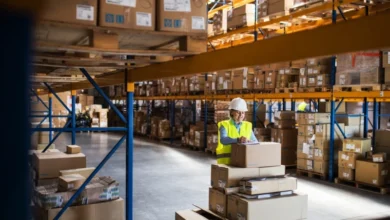
Behind the multi-billion-euro revenue figures lies a staggering volume of physical goods flowing through Amazon’s logistics network. In 2025, German SMEs successfully moved more than 750 million individual products via the platform. This translates to an average velocity of approximately 1,400 products sold every single minute.
Interestingly, the internal breakdown of these sales reflects a shifting balance. In 2024, Amazon reported a parity between domestic and international sales volumes, indicating that German sellers were as effective at reaching global consumers as they were at capturing local market share. This shift is a direct result of Amazon’s sustained push to integrate its Fulfillment by Amazon (FBA) services, which allow SMEs to store products in international warehouses, effectively removing the logistical barriers that once restricted smaller firms to their home markets.
The Mystery of the Declining Seller Count
Despite the record-breaking revenue, a closer examination of the data reveals a potential bottleneck or consolidation within the German seller base. Amazon’s recent disclosures state that "more than 40,000" German SMEs currently utilize its platform to reach customers. This figure is identical to the number reported in 2021. However, this follows a period of reported growth where the number of active SMEs had climbed to approximately 47,000 just last year.
This contraction—or at least a plateauing—of the active seller population warrants analysis. Industry observers suggest several contributing factors. First, the increasingly competitive nature of the Amazon marketplace may be squeezing out smaller, less agile retailers who cannot sustain the advertising spend required to maintain visibility. Second, the rising costs of compliance, logistics, and potential shifts in consumer spending patterns may have led some smaller firms to exit the platform or diversify their sales channels. The return to 2021-era seller numbers suggests that while the platform remains a powerhouse for high-performing SMEs, it is becoming an increasingly exclusive ecosystem for those with the resources to navigate high-volume competition.
Strategic Investments and Future Outlook
Amazon’s commitment to the German market is not limited to facilitating third-party sales. Earlier this week, the company announced a massive capital expenditure plan, pledging to invest more than 16 billion euros in Germany by 2027. This investment is earmarked for enhancing cloud infrastructure through Amazon Web Services (AWS), expanding logistics capacity, and improving last-mile delivery services.
The scale of this investment is reflective of Amazon’s dominant position in the German economy. Current market analysis indicates that Amazon influences approximately 63 percent of all online retail sales in Germany. Its reach, however, extends far beyond the digital realm, as its pricing and availability standards exert significant pressure on physical retail pricing and consumer expectations across the nation.
Navigating Growth: AI and Bureaucratic Hurdles
Looking forward, Amazon has identified three critical pillars for the continued success of its German partners: international expansion, the adoption of Artificial Intelligence (AI), and the reduction of regulatory bureaucracy.
The company’s focus on AI is particularly telling. Amazon is increasingly providing tools that automate listing translation, search engine optimization (SEO), and inventory management. For a German SME looking to enter the Italian or American market, these AI-driven tools are no longer optional luxuries but essential components of a viable export strategy. By lowering the technical barrier to entry, Amazon hopes to stimulate the stagnant growth rates observed in the cross-border segment.
However, the company’s call to reduce bureaucracy echoes a broader sentiment among German business leaders. The administrative burden of operating across multiple European tax jurisdictions, coupled with stringent environmental and data protection regulations, remains a significant deterrent for smaller firms. Whether Amazon can effectively lobby for these changes—or provide the technological solutions to bypass them—will play a decisive role in determining the next chapter of German e-commerce.
The Broader Economic Implications
The 20-billion-euro milestone serves as a focal point for a wider debate regarding the dependency of German SMEs on American digital infrastructure. While the platform has undoubtedly provided a lifeline for thousands of businesses to modernize and reach global markets, the concentration of market power raises questions about long-term sustainability.
Economists point to the "platform effect," where businesses that thrive on Amazon often become heavily reliant on its algorithms and fee structures. Should Amazon alter its commission rates or search visibility policies, the impact on these SMEs could be profound. Conversely, the sheer scale of the 750 million products sold underscores a vital truth: the modern German economy is fundamentally tethered to global e-commerce logistics.
As Amazon moves toward its 2027 investment targets, the dynamic between the tech giant and the German Mittelstand (small and medium-sized businesses) will continue to evolve. The focus will likely shift from sheer quantity—the number of sellers and the volume of products—to the quality and profitability of these digital businesses. For the German economy, which prides itself on industrial precision and high-quality exports, the digital transition represented by these 20 billion euros is no longer an experiment; it is the new, primary engine of growth.
In conclusion, the data released this year paints a picture of an e-commerce sector that is both thriving and reaching a state of high-pressure equilibrium. The growth in cross-border sales, while slowing, proves that the digital bridge between Germany and the rest of the world is stronger than ever. Yet, the fluctuating number of active sellers and the immense reliance on a single platform suggest that the future of German e-commerce will depend heavily on the ability of these businesses to innovate within, and perhaps beyond, the walls of the Amazon marketplace. As the company prepares its multi-billion-euro injection into the German market, the focus remains firmly on how much further this digital acceleration can go before hitting the ceiling of market saturation.
Related posts: