React Native 0.83 officially released with major developer tool upgrades and the integration of React 19.2


The release of React Native 0.83 marks a significant milestone in the evolution of the cross-platform framework, introducing long-awaited developer tooling and core upgrades while achieving a rare release cycle milestone: the absence of any user-facing breaking changes. This version, which integrates React 19.2, prioritizes developer productivity and performance transparency, providing engineers with sophisticated new utilities for debugging, state management, and architectural optimization.
A Landmark Release for Stability
For developers accustomed to the rigorous migration paths often associated with major framework updates, React Native 0.83 offers a seamless transition. By eliminating user-facing breaking changes, the core team has signaled a commitment to long-term stability and easier adoption for enterprise-level applications. This approach reduces the technical debt usually incurred during biannual or quarterly upgrades, allowing teams to focus on feature development rather than refactoring legacy codebases. The stability of version 0.83 comes at a time when the ecosystem is maturing, with the industry moving away from experimental volatility toward production-ready consistency.
Core Upgrades: React 19.2 and the Activity API
The inclusion of React 19.2 brings two critical primitives into the React Native ecosystem: the <Activity> component and the useEffectEvent hook.

The <Activity> component introduces a paradigm shift in how developers handle conditional rendering and screen state. By allowing developers to encapsulate UI segments in ‘visible’ or ‘hidden’ states, the component provides a native-level solution for preserving the state of complex trees that are not currently rendered. Unlike standard conditional rendering—which destroys a component’s state upon unmounting—the <Activity> API maintains the internal state of hidden components. This is particularly advantageous for applications involving complex forms, search filters, or infinite scrolling lists, where user interaction data must be preserved even when the UI is navigated away from or temporarily hidden.
Furthermore, the introduction of useEffectEvent addresses a long-standing pain point regarding the synchronization of side effects. Previously, developers often had to bypass ESLint rules to prevent effects from re-triggering due to external dependencies, a practice that frequently introduced subtle, hard-to-track bugs. By decoupling the event-handling logic from the effect itself, useEffectEvent ensures that state changes outside of an effect do not force unnecessary re-execution, thereby improving overall application responsiveness and code maintainability.
Revolutionizing the Debugging Experience
Perhaps the most visible advancement in this release is the total overhaul of the React Native DevTools. Moving away from the browser-based implementation, the new standalone desktop application provides a more robust and integrated environment for performance analysis and network inspection.
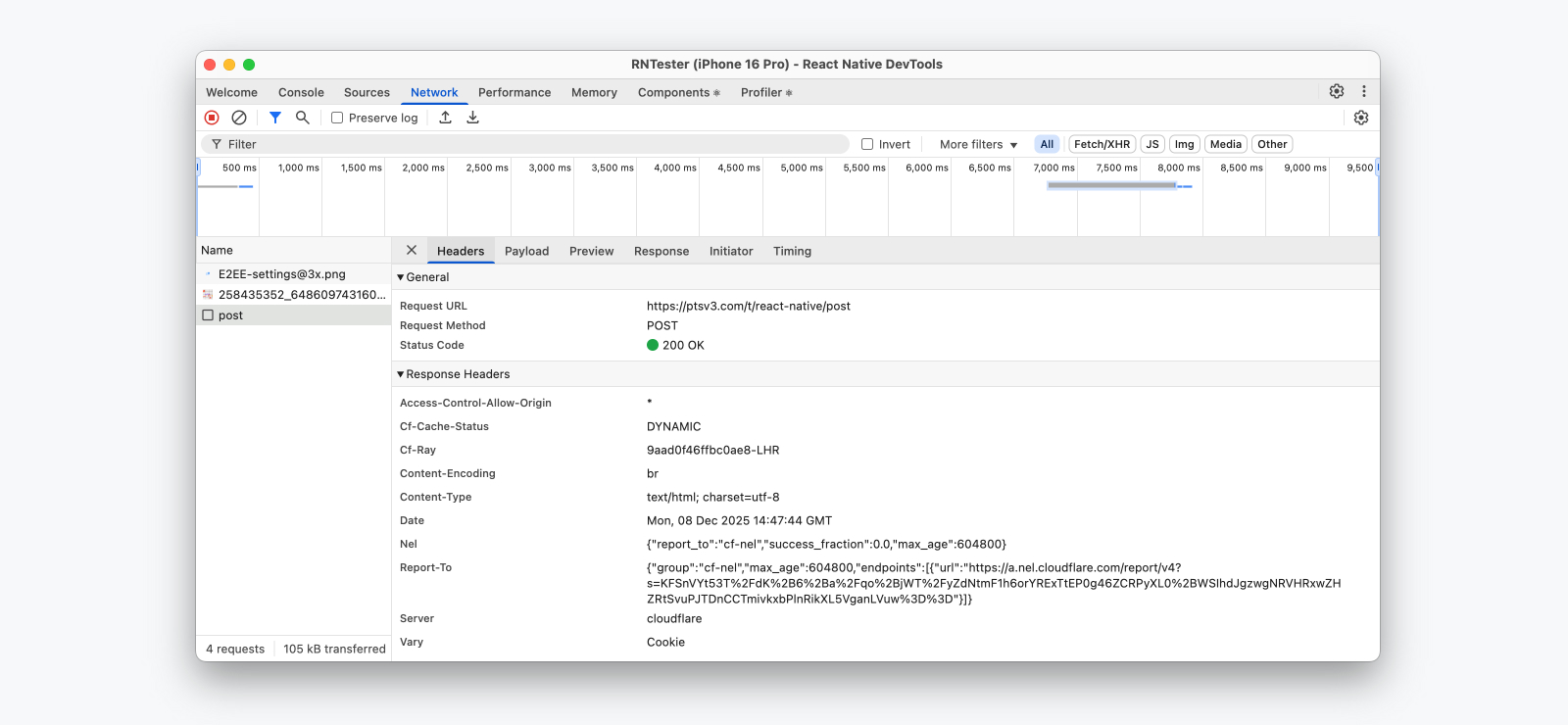
The new Network panel is a transformative addition, offering native-level visibility into fetch() and XMLHttpRequest traffic. Previously, developers often relied on external proxy tools like Charles or Flipper to intercept traffic; with this integration, developers can now inspect headers, timings, and request initiators directly within the development environment. The addition of the "Initiator" tab is a particularly sophisticated feature, allowing developers to trace a specific network request back to the exact line of code that triggered it.
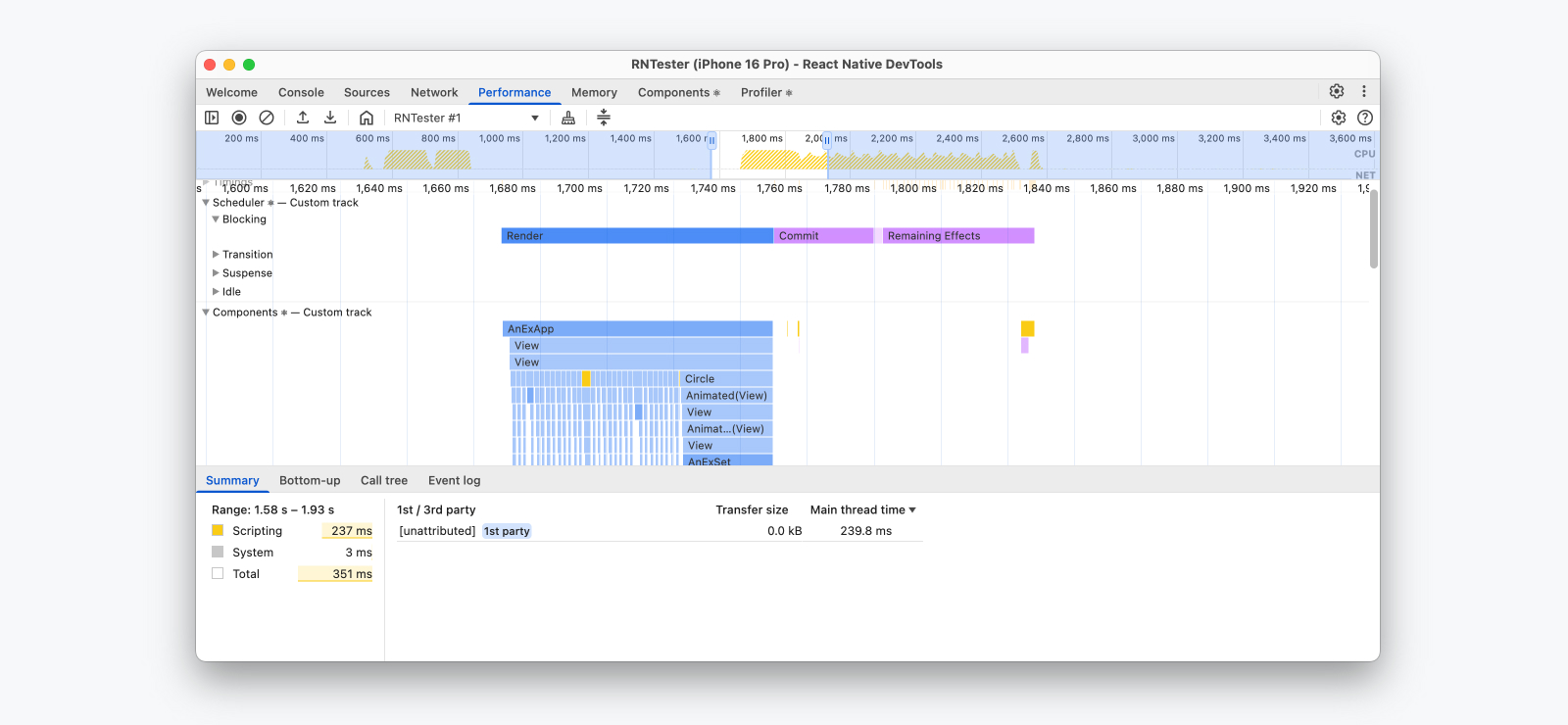
Coupled with the new Performance panel, which visualizes JavaScript execution, React rendering cycles, and user-defined timings in a unified timeline, the toolset provides a comprehensive view of app health. By utilizing the now-stable Web Performance APIs, teams can monitor real-world performance metrics, enabling a data-driven approach to optimization that was previously difficult to quantify without third-party monitoring services.
Architectural Improvements and Experimental Features
React Native 0.83 continues to push the boundaries of the New Architecture. The release introduces an experimental flag, RCT_REMOVE_LEGACY_ARCH, which enables developers to strip the legacy architecture code entirely from iOS builds. Internal testing by the core maintainers demonstrated significant improvements: in a clean app, build times were reduced by approximately 20%, and the final binary size saw a notable decrease. While this feature is currently experimental, it represents the roadmap’s ultimate goal of creating leaner, faster applications by shedding the overhead of the legacy bridge.
Additionally, the continued refinement of Hermes V1—the engine responsible for executing JavaScript in React Native—shows a clear commitment to performance. The V1 iteration includes optimized compiler and virtual machine improvements designed to minimize startup latency and memory footprint. While currently requiring a build-from-source approach, these advancements are indicative of the performance gains expected to reach general availability in the coming quarters.
Security and Ecosystem Context
The release coincides with discussions surrounding the security of React Server Components (RSC). While React Native 0.83 depends on React 19.2, the core development team has explicitly stated that the framework is not affected by the recent critical vulnerability identified in React Server Components. This is due to the fundamental differences in how React Native executes code compared to server-side React environments. However, the team has issued a strong advisory for developers working within monorepos: because monorepos often share dependencies, teams must audit their package.json files and upgrade any vulnerable packages immediately. A patch release, 19.2.1, is already slated to address these upstream dependencies, ensuring that the entire React ecosystem remains secure.
The Road Ahead: Expo and Future Support
The release cycle for React Native 0.83 also underscores the strong partnership between the core team and the Expo framework. With Expo SDK 55, scheduled for release in January 2026, developers will gain access to these core features in a managed, highly integrated environment. This delay is intentional, allowing the community to vet the new APIs and for the Expo team to ensure full compatibility with the enhanced networking and performance tracking tools.
For those managing legacy projects, the transition to 0.83 is supported by the React Native Upgrade Helper, an essential utility for identifying necessary configuration changes. As 0.80.x moves into its "unsupported" phase, the migration to 0.83 becomes not just an opportunity for performance gains, but a requirement for maintaining a secure and supported development pipeline.
Analysis of Broader Implications
The cumulative effect of these changes is a more professionalized, predictable development environment. By stabilizing Web Performance APIs and enhancing the DevTools, the React Native team is effectively lowering the barrier to entry for high-performance mobile development. These features—once available only to teams with the resources to implement custom monitoring and debugging solutions—are now standard, democratizing the ability to build, profile, and optimize complex mobile experiences.
The decision to focus on ‘zero breaking changes’ in this release is also a strategic move to restore developer confidence. After years of rapid, sometimes disruptive architectural changes—most notably the transition from the legacy bridge to the TurboModule/Fabric architecture—the ecosystem appears to be entering a period of refinement. This shift suggests that the "New Architecture" is nearing a state of completion, allowing the focus to pivot toward polishing the developer experience and ensuring long-term maintainability.

In conclusion, React Native 0.83 is a foundational release that balances the introduction of cutting-edge React 19 features with necessary quality-of-life improvements. By providing the tools to measure performance accurately and the architectural levers to reduce app bloat, the release empowers developers to deliver high-quality, efficient applications that meet the rigorous demands of the modern mobile market. As the ecosystem looks toward the next calendar year, the emphasis on stability and performance transparency will likely serve as the bedrock for the next generation of cross-platform innovation.