React Native 0.81 Released with Android 16 Support and Enhanced Performance Capabilities


The React Native team has officially announced the release of version 0.81, a milestone update that brings the framework into full alignment with the latest Android operating system requirements while introducing significant architectural refinements. As the mobile development landscape pivots toward more stringent hardware utilization and security standards, this release serves as a critical bridge for developers tasked with maintaining cross-platform parity. The update includes native support for Android 16 (API level 36), the deprecation of legacy UI components, and the integration of experimental build-speed optimizations for iOS, marking a substantial shift in how the ecosystem manages its native dependencies.
The Evolution of the Android Ecosystem and API Level 36
The most pressing driver for this release is the evolution of the Android operating system. With Android 16 (API level 36) looming as the new standard for mobile applications, Google has enforced a strict "edge-to-edge" display policy. This design mandate removes the ability for developers to opt out of full-screen rendering, ensuring that application interfaces utilize the entire screen real estate, including areas previously obscured by system bars or notches.
React Native 0.81 has been engineered to accommodate this by default. By targeting API level 36, the framework ensures that developers are compliant with Google Play’s evolving submission requirements. This transition is not merely aesthetic; it requires fundamental changes to how layout engines handle screen geometry. Consequently, the framework has introduced the edgeToEdgeEnabled Gradle property, providing developers with granular control over how these rendering behaviors manifest on older Android versions, thereby facilitating a smoother migration path for legacy projects.
The Deprecation of SafeAreaView
In conjunction with the transition to edge-to-edge layouts, the React Native team has formally deprecated the built-in SafeAreaView component. Historically, this component was an essential tool for managing content margins on devices with notches and curved corners, particularly within the iOS ecosystem. However, as modern display technologies have matured and Android has moved to a universal edge-to-edge paradigm, the limitations of the original SafeAreaView—which lacked deep customization and platform-agnostic flexibility—became a bottleneck.
The community has largely gravitated toward third-party alternatives, most notably the react-native-safe-area-context library, which offers a more robust, cross-platform solution. By deprecating the legacy component, the core team is signaling a transition toward more scalable and maintainable UI patterns. Developers are now encouraged to migrate to these community-driven solutions to ensure that their applications maintain consistent visual integrity across diverse device form factors, from compact smartphones to foldable tablets.
Strategic Shifts in Build Architecture and Performance
One of the most anticipated technical enhancements in version 0.81 is the expansion of precompiled iOS builds. Developed in a collaborative effort between the Meta React Native team and the engineers at Expo, this feature addresses one of the most common pain points in mobile development: slow build times. By pre-building React Native’s core dependencies, the framework can reduce total compilation time by up to 10x for projects where React Native remains the primary dependency.
This experimental feature builds upon the foundations laid in version 0.80 and represents a broader strategy to move away from local compilation of large, static framework code. While currently in an experimental phase, the potential for this to become a standard workflow could drastically reduce CI/CD overhead for enterprise-level applications. Developers interested in testing this capability can invoke it via environment variables during the pod install process, though the team advises that there are known limitations regarding specific link-time configurations that are currently being addressed.
Technical Compliance: 16 KB Page Size and Node.js Requirements
Security and platform compliance remain central to this release. Starting November 1, 2025, Google Play will require all apps to support a 16 KB page size for native binaries—a shift designed to optimize memory performance and improve system-level efficiency. React Native 0.81 is fully compliant with this requirement, ensuring that applications built with this version will not face rejection during the submission process. However, the onus remains on developers to ensure that any additional native modules or third-party libraries included in their projects also meet this 16 KB threshold.

Furthermore, the framework has updated its development environment prerequisites. The minimum requirement for Node.js has been elevated to version 20.19.4, aligning with the current Maintenance LTS (Long Term Support) release. Similarly, developers must now utilize Xcode 16.1 or higher for iOS builds. These updates reflect a proactive approach to security and feature availability, ensuring that the development toolchain is compatible with the latest advancements in JavaScript runtimes and Apple’s development suite.
Debugging and Tooling Improvements
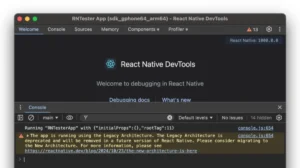
Debugging complex React Native applications has historically been a challenge, particularly when dealing with uncaught JavaScript exceptions that manifest as opaque stack traces. Version 0.81 introduces significantly improved error reporting within React Native DevTools. By surfacing the "Owner Stack"—a specialized trace that links errors back to the specific component hierarchy that triggered them—and explicitly identifying error causes, the framework reduces the time developers spend triaging issues.
This enhancement is expected to have a noticeable impact on production stability. However, teams that utilize external error-tracking services should be aware that the improved transparency may lead to a higher volume of reported exceptions, as previously swallowed or obscured errors are now exposed. Organizations may need to calibrate their backend logging logic to account for this increased fidelity in error reporting.
Chronology of the Release and Community Impact
The release of version 0.81 follows a rigorous development cycle involving over 1,110 individual commits from 110 contributors. This collaborative effort underscores the strength of the React Native open-source ecosystem. The release also marks the formal retirement of version 0.78.x, which has now transitioned to "unsupported" status under the project’s official support policy.
This transition period is critical for the industry. As organizations move to sunset older versions of the framework, the necessity of the "Upgrade Helper" tool becomes increasingly apparent. The React Native team continues to emphasize the importance of incremental updates, noting that the architectural changes in 0.81—such as the new RN_SERIALIZABLE_STATE macro for the New Architecture—are designed to support long-term sustainability rather than immediate disruption. Library authors, in particular, are encouraged to review the updated CMake integration functions, such as target_compile_reactnative_options, which simplify the management of C++ flags and build configurations.
Analysis of Broader Implications
The cumulative effect of these changes is a more standardized, performance-oriented framework. By forcing alignment with Android’s edge-to-edge display and 16 KB page size requirements, React Native is positioning itself as a "first-class citizen" within the mobile development ecosystem, ensuring that developers can meet platform requirements without needing to delve into native code for trivial layout or compliance issues.
The removal of the built-in JavaScriptCore (JSC) engine in favor of the community-maintained package is another strategic move. It allows the core team to focus on the Hermes engine—which is optimized specifically for React Native—while providing a clear path forward for legacy apps that still require JSC. This division of labor between core framework development and community-maintained modules is likely to define the project’s evolution over the next several years.
For businesses, the primary implication is one of increased maintenance velocity. While the initial upgrade to version 0.81 requires adjustments to build configurations, Xcode versions, and potentially UI layouts, the long-term payoff includes faster build cycles, improved debugging transparency, and guaranteed compatibility with the upcoming Android and iOS release cycles.
As the industry approaches the November 2025 deadline for Google Play’s page size requirements, the proactive nature of this release provides a clear roadmap. Developers are encouraged to move beyond the experimental features cautiously, prioritizing the migration of their UI components away from the deprecated SafeAreaView and ensuring that their CI/CD pipelines are compatible with the updated Node.js and Xcode requirements. The release of React Native 0.81 is, ultimately, a foundational update that stabilizes the framework’s architecture while setting the stage for a new generation of high-performance, compliant, and visually consistent mobile applications.