Google and Samsung Unveil Advanced Developer Frameworks for Galaxy Z Fold8 and Wear OS 7 to Redefine the Foldable and Wearable Ecosystem

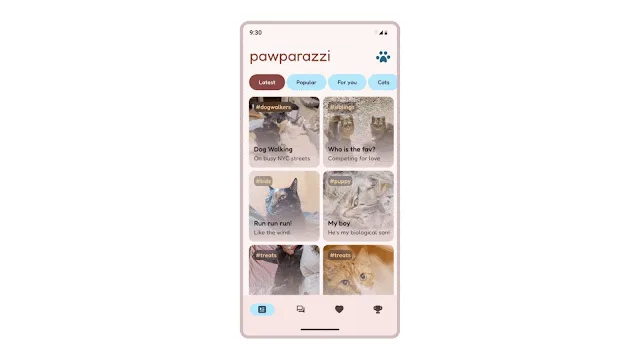
At the July 2026 Galaxy Unpacked event, Samsung officially launched its highly anticipated hardware lineup, headlined by the Galaxy Z Fold8 and a new generation of wearable technology powered by Wear OS 7. In a simultaneous announcement, Google’s Android Developer Experience team, led by Senior Product Manager Fahd Imtiaz and Developer Relations Engineer Miguel Montemayor, introduced a comprehensive suite of tools and guidance designed to assist developers in optimizing applications for these increasingly complex form factors. This release marks a significant shift in the Android ecosystem, moving away from traditional portrait-centric mobile design toward a landscape-first, adaptive architecture that leverages on-device artificial intelligence and sophisticated multi-display transitions.
The cornerstone of the 2026 hardware release is the Galaxy Z Fold8, which introduces an ultra-wide display with a landscape-first natural orientation. This architectural shift challenges long-standing assumptions in mobile development, where portrait mode has historically been the default state. To address this, Google has released updated guidance and tooling that prioritize fluid layout transitions, ensuring that as users move between cover screens, main displays, and various folded postures, the application experience remains uninterrupted and visually coherent.
The Evolution of the Foldable Form Factor: The Landscape-First Paradigm
The introduction of the Galaxy Z Fold8 represents a pivotal moment in the chronology of foldable devices. Since the inception of the category in 2019, manufacturers have experimented with various aspect ratios. However, the 2026 iteration signifies a move toward a wider, more cinematic canvas that functions more like a compact tablet than a traditional smartphone. This ultra-wide aspect ratio necessitates a fundamental rethink of layout architecture.
According to Google’s technical briefing, developers can no longer rely on hardcoded layout rules or fixed orientation assumptions. The new guidance focuses on three core pillars of responsive design: adaptive layouts, continuity, and posture awareness. Adaptive layouts utilize relative positioning and flexible containers to fill the expanded horizontal space of the Fold8. Continuity ensures that the state of the app—such as the position of a scroll or the progress of a video—is preserved during the physical transition of unfolding the device. Posture awareness allows the software to react to the "Flex mode" or partially folded states, enabling unique UI configurations like a tripod-free camera interface or a split-screen productivity view.
.png)
The 2026 update also provides the first official developer framework for trifold devices. While the Galaxy Z Fold8 remains a dual-pane foldable, the inclusion of trifold guidance suggests that the industry is preparing for a near-future where devices may have two hinges and three distinct display segments. By establishing these standards now, Google and Samsung are attempting to prevent the fragmentation that plagued early Android tablet efforts.
Technical Solutions for Complex Hardware Quirks
One of the most persistent challenges in foldable development has been the management of camera hardware. On a device like the Galaxy Z Fold8, moving from a compact outer display to an expanded inner display involves radical changes in aspect ratio, while the physical orientation of the camera sensor remains fixed. This often results in "sideways" or stretched previews if the application assumes a static relationship between the sensor and the UI.
To mitigate this, Google has urged developers to migrate their media pipelines to CameraX. The 2026 update to the CameraX library includes a PreviewView component that automatically calculates sensor orientation, device rotation, and scaling. For legacy applications that cannot undergo a full architectural overhaul, the introduction of the CameraViewfinder library provides a bridge, allowing developers to implement complex aspect ratio transformations and rotation logic with minimal code changes.
This technical intervention is critical as consumer expectations for high-end foldable devices include seamless content creation. As the market for foldables is projected to reach over 100 million units globally by the end of 2027, the ability for apps to provide a "pro-grade" camera experience regardless of the device’s physical fold state has become a competitive necessity.
Wear OS 7 and the Rise of Glanceable Interactions
The expansion of the Android ecosystem at Galaxy Unpacked extended to the wrist with the debut of Wear OS 7. The new operating system introduces "Wear Widgets," a feature designed to provide users with instant, glanceable access to information without requiring them to open a full application.

Built using Jetpack Glance and RemoteCompose, these widgets represent a significant evolution in wearable UI. Previously, multi-widget tiles were largely reserved for first-party system applications. Under the new Wear OS 7 framework, third-party developers can now populate these high-visibility surfaces. This change is aimed at increasing user engagement by reducing the friction required to check updates, such as fitness metrics, weather alerts, or financial data.
The move to Wear OS 7 also emphasizes the "glanceable" nature of modern wearables. Industry data from 2025 indicated that users are increasingly using smartwatches for short, five-second interactions rather than deep app exploration. By providing developers with the tools to build highly expressive, remote-rendered widgets, Google is aligning its software strategy with these evolving user behaviors.
Integrating Gemini Nano 4: On-Device Intelligence
Perhaps the most forward-looking aspect of the Galaxy Unpacked announcement is the integration of Gemini Nano 4 into Samsung’s new foldable devices. Gemini Nano 4 is Google’s latest on-device large language model (LLM), optimized for the specific power and thermal constraints of mobile hardware.
The model provides several key advancements over its predecessors:
- Multimodal Understanding: The ability to process and reason across text, images, and potentially audio inputs simultaneously on-device.
- Expanded Language Support: Native support for over 140 languages, facilitating global app localization without the need for constant cloud connectivity.
- Structured Output and Thinking Mode: New features within the ML Kit Prompt API that allow developers to receive organized data from the AI and observe its "reasoning" process for more complex tasks.
By utilizing Gemini Nano 4, developers can build intelligent features—such as automated text summarization, smart replies, and image description—that function entirely offline. This not only improves user privacy by keeping data on the device but also reduces latency and eliminates the costs associated with cloud-based AI API calls. Google’s Developer Relations team highlighted that sharing app capabilities with the intelligence system will allow Gemini to complete tasks on the user’s behalf, effectively turning the smartphone into a proactive personal assistant.

Market Implications and the Road Ahead
The collaboration between Google and Samsung in 2026 reflects a broader trend of consolidation in the premium mobile market. As hardware innovation in traditional "slab" smartphones reaches a plateau, foldables and AI-integrated wearables have become the primary drivers of growth.
Market analysts suggest that the emphasis on developer tooling is a strategic move to ensure the "app gap" between traditional phones and foldables is closed. If developers can easily optimize their apps for the Galaxy Z Fold8’s landscape-first display, the value proposition for consumers to switch to high-priced foldable devices increases significantly. Furthermore, the push for Wear OS 7 widgets suggests an attempt to create a more cohesive ecosystem where the phone, watch, and AI model work in a unified loop.
Official responses from the developer community have been cautiously optimistic. While the shift to landscape-first design requires additional work, the provision of libraries like CameraX and Jetpack Glance significantly lowers the barrier to entry. The consensus among early adopters is that the 2026 guidelines provide the most stable and predictable roadmap for foldable development to date.
Conclusion and Call to Action for Developers
The July 2026 Galaxy Unpacked event has set a new standard for the Android hardware landscape. With the Galaxy Z Fold8’s ultra-wide display and the sophisticated glanceable surfaces of Wear OS 7, the environment for which developers must build has grown more diverse and more capable.
Google has made its comprehensive guidance for building adaptive apps, along with dedicated quality guidelines for trifolds and landscape foldables, available on its official developer portal. A dedicated YouTube playlist has also been launched to provide deep-dive tutorials on implementing these new features. As the ecosystem continues to evolve, the message from Google and Samsung is clear: the future of mobile is no longer confined to a single screen or a single orientation. It is adaptive, intelligent, and increasingly centered on the seamless transition between different modes of interaction.
Related posts: