Treating Prompt Templates as Tunable Hyperparameters in Scikit-LLM GridSearchCV


In the rapidly evolving landscape of artificial intelligence, the bridge between traditional machine learning and modern generative models is becoming increasingly defined by rigorous, automated experimentation. As data scientists move beyond the manual trial-and-error approach to prompt engineering, a new methodology has emerged: treating prompt templates as tunable hyperparameters. By integrating Large Language Models (LLMs) into the familiar scikit-learn framework, practitioners can now apply systematic search algorithms—such as grid search—to identify the precise linguistic configurations that yield peak performance in zero-shot classification tasks. This transition from intuitive, heuristic-based prompting to data-driven optimization marks a significant step toward the professionalization of LLM deployment.
The Evolution of Model Optimization
The foundational principle of supervised machine learning has long been the tuning of hyperparameters. Whether adjusting learning rates, tree depths, or regularization constants, the goal remains constant: finding the optimal configuration to maximize model efficacy. Traditionally, this was restricted to numerical or categorical parameters within the architecture itself. However, the advent of Large Language Models has introduced a new, elusive variable—the prompt.
For years, prompt engineering remained an art form, relying on the intuition of developers to craft instructions that the model might interpret effectively. While effective in small-scale applications, this manual process lacks the scalability and reproducibility required for enterprise-level deployment. By treating a prompt template as a hyperparameter, engineers can effectively "train" their interaction layer, using cross-validation to objectively measure which phrasing, tone, or structural format produces the highest classification accuracy on a held-out dataset.
Technical Implementation and Workflow
The integration of LLMs into the scikit-learn ecosystem requires a bridge between the generative nature of transformers and the rigid estimator structure of the scikit-learn library. This is typically achieved through the development of a custom estimator class that inherits from BaseEstimator and ClassifierMixin.
The workflow begins with the initialization of a base model—such as the Qwen 2.5 series—which acts as the engine for zero-shot inference. Unlike traditional models that require weight updates, the zero-shot classifier utilizes the pre-existing knowledge of the model. The custom class acts as a wrapper, containing a fit method (which serves as a placeholder for consistency with the scikit-learn API) and a predict method that handles the tokenization, prompt formatting, and post-processing of the model’s output.
When the GridSearchCV object is invoked, it treats the prompt_template argument as a variable hyperparameter. The search algorithm then systematically cycles through a grid of predefined strings—varying the syntax, instructions, and context—to determine which template minimizes the error rate across the provided dataset. This allows for an empirical comparison of different instructional styles, such as direct commands versus request-based queries.
Comparative Analysis of Prompt Structures
The efficacy of a prompt is often contingent upon the alignment between the model’s training data and the specific task at hand. Experimental data suggests that model response varies significantly based on minor syntactical changes. For instance, a prompt structured as "Classify as positive or negative: text" may yield a different accuracy profile than "Is the sentiment positive or negative? Text: text."
During a cross-validated test, such variations are measured across multiple folds. This ensures that the chosen prompt is not merely "lucky" with a specific subset of data but is robust across diverse examples. In a scenario involving four distinct reviews, a grid search might reveal that the model prefers a more descriptive, role-based instruction, such as "Analyze this review. Output ‘positive’ or ‘negative’: text." The discovery of this preference, backed by a 75% accuracy rate in a small-scale pilot, demonstrates that systematic search can uncover subtle nuances in model behavior that are otherwise invisible to human observers.
Context and Broader Implications
The implications of this approach extend far beyond simple text classification. As organizations look to automate complex workflows—ranging from legal document review to medical triage—the reliability of the LLM output becomes paramount. Manual prompt engineering is susceptible to cognitive bias, where the engineer assumes the model interprets instructions as a human would. Automated hyperparameter tuning removes this assumption, grounding the development process in empirical evidence.
Furthermore, this strategy facilitates "model-agnostic" optimization. Because the grid search is performed on the wrapper rather than the model weights, developers can easily swap the underlying LLM—moving from a smaller, faster model to a larger, more capable one—without redesigning the experimental framework. This modularity is essential for managing costs and latency in production environments.
Operational Challenges and Best Practices
While the promise of automated prompt tuning is significant, it is not without operational challenges. The primary constraint is the computational cost of inference. Unlike traditional hyperparameters, where the search space is purely mathematical, testing a prompt requires a full forward pass through the transformer model for every item in every fold of the grid search. Consequently, as the dataset grows in size, the time required to complete the grid search increases linearly.
To mitigate these challenges, data scientists often employ:
- Sampling: Using a representative subset of the training data to conduct the initial prompt search.
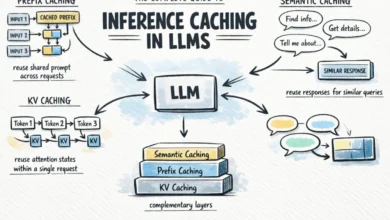
- Caching: Storing the results of previous inference passes to avoid redundant computation.
- Early Stopping: Terminating the grid search if the variance in performance between prompts falls below a certain threshold.
Furthermore, it is critical to ensure that the evaluation dataset is representative of the production environment. A prompt optimized for a specific, narrow dataset may suffer from "prompt overfitting," where the template is perfectly tuned to the quirks of the training data but fails to generalize to real-world, noisy inputs.
The Future of Systematic Prompt Engineering
The move toward treating prompts as hyperparameters is part of a larger trend toward "LLMOps" (Large Language Model Operations). As the ecosystem matures, we can expect to see standardized libraries that automate this process further, potentially moving beyond simple grid search to more sophisticated Bayesian optimization or evolutionary algorithms.
In these advanced scenarios, the optimization process could automatically generate new prompt variations based on the performance of previous iterations, effectively creating a self-improving pipeline. The role of the human engineer will shift from drafting individual prompts to designing the constraints and evaluation criteria within which these automated systems operate.
Conclusion
The methodology of treating prompt templates as tunable hyperparameters represents a critical maturity milestone in the application of Large Language Models. By leveraging the existing, well-understood infrastructure of scikit-learn, researchers and developers can bypass the limitations of anecdotal prompt crafting. This transition toward a data-centric, empirical approach ensures that LLM deployments are not only more predictable but also more capable of meeting the rigorous standards of accuracy and reliability required in modern enterprise applications. As the field continues to progress, the combination of systematic search and generative capability will undoubtedly remain a cornerstone of effective AI integration.