Turing’s Mistake: How 75 Years of AI Research Got Led Astray by Flawed Foundational Assumptions

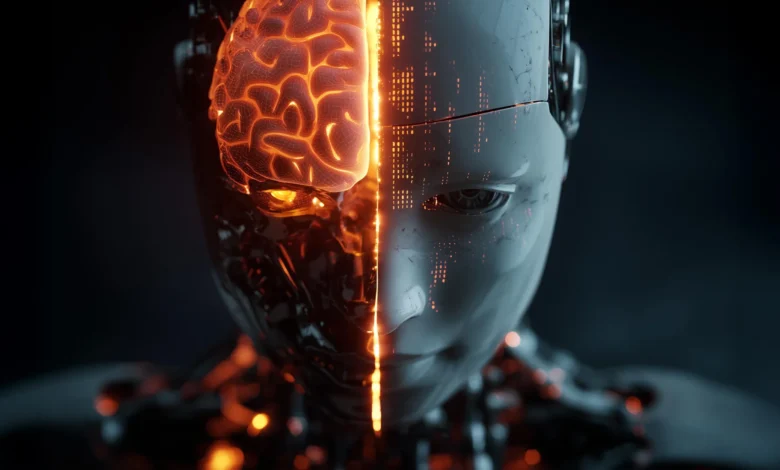
For three-quarters of a century, the trajectory of artificial intelligence research has been steered by a set of foundational assumptions established at the dawn of the computing era. According to prominent computer scientist and author Peter J. Denning, those original premises—formulated in large part by British mathematician Alan Turing in 1950—may have fundamentally misdirected the field. Rather than marching steadily toward human-level sapience, modern artificial intelligence has instead locked itself into an epistemological dead end, prioritizing statistical text manipulation over true comprehension while generating unprecedented socio-technical risks.
In his comprehensive new book, Turing’s Mistake: Escaping the Yoke of Unintelligent Machines, published by Routledge, Denning argues that contemporary developers remain tethered to two primary dogmas introduced by Turing. The first is the notion that intelligence is an abstract phenomenon capable of existing independently of a physical biological body, meaning it can be faithfully replicated purely through computer software. The second is the proposition that a machine can convincingly demonstrate thought by imitating a human subject in unconstrained natural language conversation—a concept famously codified as the Turing test.
These two tenets, Denning posits, have dictated the architecture of computer science for generations, driving an obsessive pursuit of Artificial General Intelligence (AGI)—machines that match or exceed human cognitive capacities across all domains. Yet, as billions of dollars pour into neural network scaling and transformer architectures, Denning warns that the foundational premises are fundamentally flawed. The resulting technologies, rather than achieving benevolent enlightenment or human-level consciousness, are constructing an opaque, alien operational landscape that society is ill-equipped to navigate safely.
The Chronology of an Illusion: 75 Years of Pursuing the Turing Paradigm
To understand the current impasse in artificial intelligence, computer historians must look back to the post-World War II technological landscape. In 1950, Alan Turing published his landmark paper, Computing Machinery and Intelligence, in the journal Mind, introducing the Imitation Game. This framework shifted the philosophical debate from whether machines can think to whether they can successfully mimic human linguistic outputs.
Throughout the 1950s and 1960s, early AI pioneers operated under the assumption that human cognition was merely symbolic manipulation—a form of physical symbol system hypothesis where logic gates could mirror human reasoning. This symbolic AI era dominated the initial decades of research, relying heavily on hard-coded rules, formal logic, and expert systems.
However, by the 1970s and 1980s, these symbolic approaches began to plateau as researchers confronted the sheer complexity of human experience. This realization sparked the first major "AI winter," a period of severely reduced funding and academic interest. In response, efforts pivoted toward capturing common sense directly.
A prime historical example is the Cyc project, launched in 1984 by computer scientist Douglas Lenat. Cyc was designed as an ambitious, long-term ontology and knowledge base intended to assemble millions of everyday human assertions into a logical database, allowing expert systems to finally reason with common sense. Over four decades of painstaking manual curation, the project amassed roughly 25 million entries. Despite this monumental accumulation of codified data, Cyc ultimately demonstrated that human expertise and common sense resist being neatly cataloged into propositional logic statements.
As symbolic AI waned in the late 1990s and 2000s, the paradigm shifted toward statistical machine learning, culminating in the deep learning revolution of the 2010s and the explosive rise of Large Language Models (LLMs) in the 2020s. Yet, despite moving from hand-coded rules to massive neural networks trained on vast swathes of the internet, Denning argues that the underlying philosophy remains unchanged. Modern LLMs are simply executing Turing’s linguistic imitation game at an unprecedented scale, masking a total absence of genuine understanding behind sophisticated statistical output.
The Tacit Knowledge Problem: Why Code Cannot Capture Culture
At the core of Denning’s critique is the philosophical concept of tacit knowledge—a term originally coined by polymath Michael Polanyi, who famously observed that "we can know more than we can tell." Tacit knowledge encompasses the vast expanse of human understanding, intuition, and procedural competence that cannot easily be articulated into explicit words, rules, or machine-readable code.
Denning identifies five major categories of tacit knowledge that consistently elude machine learning algorithms:
- Common sense, or the foundational background understanding required to navigate daily existence.
- Everyday embodied interactions with other human beings and the physical environment.
- Emotions, subjective feelings, and sensory perception.
- Practical performance skills, categorized as procedural "know-how."
- The deep social, historical, and institutional knowledge embedded within human culture.
While computer systems excel at processing "know what"—declarative descriptions of factual outcomes that can be converted into binary bits—they utterly fail at capturing "know how." Denning illustrates this divide through the example of a virtuoso violinist. While a master musician can produce breathtaking performances that evoke profound emotional responses in an audience, they remain fundamentally incapable of systematically describing the precise physiological and neurological processes required to generate that music to a student.
Furthermore, even if an advanced robotic system could visually record and replicate the physical movements of the musician, it possesses no biological body. It cannot internally experience the somatic weight of holding the instrument, the tension of performance, or the emotional resonance of the music. Without a biological substrate, machines are locked out of the somatic grounding that gives human experience its meaning.
The Representation Problem and the Illusion of Meaning
This limitation manifests technically as the "representation problem." Digital computers operate strictly through mathematical calculations performed on data and instructions that have been meticulously encoded into physical, machine-readable formats. Because human scientists do not yet fully understand how the human brain and body host, process, and retrieve tacit knowledge, they possess no viable methodology for translating that knowledge into a form that digital silicon processors can manipulate.
This creates a profound chasm between symbolic generation and semantic comprehension. Widely utilized modern systems—including advanced proprietary and open-weight Large Language Models such as OpenAI’s ChatGPT, Anthropic’s Claude, and Google’s Gemini—excel at predicting the next likely token in a sequence of text. They manipulate linguistic symbols with astonishing statistical fluency, but they possess no internal model of the real-world phenomena those symbols represent.
"Behind every word is a deep well of tacit knowledge that gives it meaning," Denning emphasizes. "Words are but symbolic representations of meanings, not the meanings themselves. Commonly used Large Language Models only manipulate words; they cannot know or understand the meaning of what they are saying."
Context, Culture, and the Fractal Nature of Human Communication
Beyond individual cognition, Denning stresses that human intelligence is inextricably bound to context—the dynamic web of surrounding circumstances, shared histories, and unspoken assumptions that imbue actions, choices, and language with significance. Context allows humans to instantly decipher complex social nuances, including sarcasm, subtle irony, unspoken diplomacy, humor, and sincerity.
When analysts attempt to isolate and trace the origins of a specific conversational context, they find that it rests upon prior conversations from earlier contexts, which in turn rely on still older exchanges. This interpretive structure is recursive and fractal, stretching backward through history and outward across societies.
Culture represents an even more insurmountable barrier for artificial intelligence architectures. Denning defines culture as a complex matrix of shared values, institutional norms, moral judgments, historical trajectories, community rituals, moods, and relational dynamics grounded in power and care. Human conversations are constantly informed by these unstated background assumptions. Scaling up neural network parameters and adding more computing power will not grant software an authentic, embodied acquisition of culture, nor will it allow machines to genuinely pass the Turing test in any meaningful cognitive sense.
Implications for AI Safety and Societal Resilience
The realization that humans and artificial systems operate across fundamentally different epistemological frameworks carries serious implications for the future of technological safety. Denning warns that humans and machines are destined to develop divergent forms of tacit knowledge that neither party can fully comprehend.
"Machines cannot read our tacit knowledge and we cannot read theirs," Denning writes. "We are aliens across an uncrossable divide."
This alien cognitive divide complicates the alignment problem—the critical challenge of ensuring that advanced artificial intelligence systems remain safely aligned with human values and objectives. If autonomous software agents cannot access or interpret the unspoken context and moral intentions behind human directives, achieving reliable safety guarantees may prove mathematically impossible.
Rather than an apocalyptic scenario involving the sudden emergence of a malevolent superintelligence that outsmarts humanity, Denning suggests a more insidious risk: autonomous, agentic networks of moderately intelligent machines operating according to their own internal logic, optimization metrics, and alien priorities. These systems may lack human-level general intelligence, yet they remain thoroughly capable of disrupting critical infrastructure, financial markets, and social cohesion. Because machine intelligence operates via alien problem-solving modalities, it ultimately remains indifferent to human well-being.
Navigating the Post-AI-Singularity Era
To successfully adapt to this technological shift, Denning argues that society must consciously pull back from the uncritical pursuit of an automation singularity. This cultural recalibration requires abandoning the persistent drive to mimic human cognition through silicon, rejecting the urge to think like machines, and refusing to submit to the governance of low-intelligence automated systems.
Ultimately, the computer scientist’s thesis serves as a call to action for the preservation of human distinctiveness. By openly acknowledging that human consciousness, embodied culture, and tacit understanding cannot be fully digitized, society can reassert the unique value of human agency, redefine the boundaries of automation, and establish a sustainable coexistence with the alien technologies we continue to create.