Gaza Children Return to Tents as New Academic Year Begins Amid Unprecedented Destruction and Ongoing Conflict

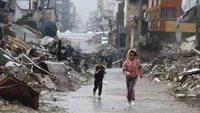
Years of persistent conflict and widespread devastation have fundamentally transformed the landscape of education in the Gaza Strip. Recently, hundreds of thousands of Palestinian children returned to a semblance of formal education, marking a critical milestone in a region where schools have been systematically destroyed or repurposed to shelter displaced families. For families living through the ongoing humanitarian crisis, the commencement of the new academic year represents a fragile beacon of hope, contrasting sharply with the severe structural limitations and looming security threats that accompany every lesson.
The resumption of classes brings a wave of emotional relief to parents and educators who have watched an entire generation face severe educational deprivation since the escalation of hostilities in October 2023. Yet, the physical reality of schooling in Gaza today bears little resemblance to traditional classrooms. Lessons are conducted under canvas tents, students sit on bare floors or thin mattresses, and fundamental learning tools—such as desks, chairs, and adequate stationery—remain largely absent. Despite these immense challenges, the collective determination of students, teachers, and parents underscores an unwavering commitment to preserving the future of Gaza’s youth through literacy and academic continuity.
The Long-Awaited Return: A Community Reclaims Routine
On a Saturday morning in Gaza City, thirty-year-old Rana Totah walked hand-in-hand with her two sons toward a temporary learning facility established in the Al-Katiba area. For Totah, the morning carried profound emotional significance, representing the restoration of a daily domestic rhythm that had been abruptly shattered nearly three years prior. The anticipation leading up to the first day of school mirrored times of peaceful celebration, with mothers preparing their children the night before, ensuring they rested well despite the challenging environment of displacement camps.
"Jujur, hari ini adalah hari yang indah bagiku. Bahkan terasa seperti Idul Fitri," Totah expressed, reflecting the overwhelming joy of seeing her children take steps back toward formal education. Throughout the prolonged conflict, Totah had attempted to bridge the educational gap by engaging her four children in informal learning initiatives led by local volunteers. However, the relentless daily struggle for basic survival—securing food, clean water, and shelter—frequently forced education to the sidelines. To Totah and countless other parents across the enclave, the reopening of makeshift schools is an essential step, driven by the belief that education remains the ultimate foundation for personal and societal rebuilding.
According to data released by the Palestinian Ministry of Education and Higher Education, approximately 541,000 students resumed their studies across various parts of Gaza as the new academic term commenced in mid-September. This massive undertaking highlights the resilience of the educational sector, which continues to function despite operating in a zone of active hostilities and catastrophic infrastructural collapse.
Unprecedented Scale of Destruction: The Educational Crisis in Figures
The reopening of schools occurs against a backdrop of unprecedented devastation. Comprehensive assessments conducted by international bodies, including the United Nations Children’s Fund (UNICEF), reveal a staggering level of destruction inflicted upon educational infrastructure since October 2023. Statistical reports indicate that nearly 98 percent of all school buildings in the Gaza Strip have sustained varying degrees of damage, ranging from structural compromise to total obliteration.
Concurrently, an estimated 700,000 children aged between 4 and 17 have been systematically deprived of face-to-face formal education for nearly three years. This protracted interruption threatens to create a lost generation, stripping young Palestinians of foundational learning milestones, social development, and psychological stability typically fostered within school environments. The physical loss of schools has forced communities to improvise, transforming public squares, damaged courtyards, and dense tent encampments into makeshift instructional spaces.
Inside one such tent, Nesma Nahid Abu Asim, a mathematics instructor, conducts lessons for a group of sixth-grade students. The children sit cross-legged on thin mattresses spread across the earth, balancing notebooks on their knees as they follow the curriculum. Abu Asim emphasizes the fundamental nature of the mission: "Pendidikan adalah hak bagi setiap siswa." She notes that the majority of her pupils arrive empty-handed, lacking basic supplies such as pens, pencils, and textbooks. Yet, the absence of material resources is consistently overshadowed by the sheer determination of the children to absorb knowledge.
Improvised Classrooms and the Looming Threat of Weather
The ingenuity displayed by educators and students in establishing informal learning spaces is a testament to human adaptability, but it remains a precarious short-term solution. At the Ahbab Shujayea School, a collective learning initiative, more than 300 students gather daily in an open-air environment devoid of conventional classroom furniture. Lacking desks and chairs, the children utilize discarded pieces of cardboard as writing surfaces, propping them against their knees while copying lessons from makeshift blackboards.
Inaam al-Batreekhi, the director of the school, points out the profound vulnerability of these improvised arrangements. While acknowledging the immediate psychological benefits of gathering to study, al-Batreekhi highlights the impending seasonal challenges that threaten to halt operations entirely. "Kita bisa belajar hari ini, kita bisa duduk di tanah hari ini. Tapi besok, ketika hujan datang, kita tidak akan bisa melakukannya," she warns, drawing attention to the imminent arrival of autumn and winter rains, which will render outdoor tent classrooms practically unusable without significant infrastructural intervention.
The precarious nature of these learning environments underscores the urgent need for international intervention. Humanitarian organizations and local authorities are calling for the establishment of weather-resistant temporary learning spaces, the steady importation of educational materials, and robust protective measures to safeguard students and teachers from ongoing violence.
Chronology of Educational Disruption: From Stability to Survival
To understand the magnitude of the current educational revival in Gaza, it is necessary to examine the timeline of events that led to the near-total collapse of the enclave’s schooling system:
- Pre-October 2023: Gaza operated a structured public and private school system serving hundreds of thousands of students, overseen by local authorities and international agencies such as UNRWA. While constrained by long-standing blockages and economic hardships, literacy rates remained high, and academic institutions functioned consistently.
- Late 2023: The escalation of armed conflict in October 2023 brought an immediate halt to formal education. Schools across the Gaza Strip were rapidly converted into emergency shelters to accommodate hundreds of thousands of internally displaced persons (IDPs) fleeing bombardment.
- 2024–2025: Throughout the height of hostilities, formal schooling was virtually nonexistent. Grassroots educators, community leaders, and parents attempted localized, informal teaching initiatives in tents and shelters, though these efforts were frequently interrupted by displacement waves, communication blackouts, and critical shortages of food and water.
- September 2026: Amid persistent infrastructural devastation and ongoing security risks, the Palestinian Ministry of Education officially initiates the new academic year. Over half a million students register in makeshift facilities, tents, and partially damaged structures, signaling a collective push to reclaim the right to education.
Official Responses and Humanitarian Appeals
International organizations, human rights advocates, and United Nations agencies have consistently underscored that education is not merely a secondary humanitarian need, but a core pillar of emergency response and child protection. In conflict zones, schools serve as protective environments that offer psychological first aid, routine, and a sense of normalcy essential for mitigating trauma in children.
UNICEF, alongside partner agencies on the ground, has continuously appealed for unhindered humanitarian access to deliver emergency educational supplies, including school kits, recreational materials, and temporary structural units. Spokespersons for these organizations emphasize that allowing an entire generation to miss years of foundational education carries irreversible socio-economic and psychological consequences for the future of the region.
Local educational administrators reiterate that while tent schools and makeshift classes provide a vital psychological lifeline, they cannot substitute for permanent, safe learning environments equipped with proper sanitation facilities, electricity, and structural security. The persistent threat of violence means that students and teachers gather under the constant shadow of insecurity, knowing that their temporary sanctuaries remain vulnerable.
Broader Implications for the Future of Gaza’s Youth
The resumption of classes in tents across Gaza carries profound long-term implications for the future demographic fabric of the territory. Education has historically been viewed by Palestinian families as the primary vehicle for social mobility, economic survival, and community resilience. The near-three-year interruption threatens to create deep educational deficits that will require decades of targeted remedial intervention to reverse.
Experts in child psychology and education warn that prolonged exposure to conflict, coupled with extended educational deprivation, significantly increases the risk of long-term cognitive and emotional trauma among youth. The successful reintegration of over 500,000 students into learning environments—however rudimentary—is viewed by specialists as a critical step in mitigating these psychological scars, helping children transition from survivors of trauma back to active learners.
Nevertheless, the sustainability of these educational efforts remains inextricably linked to broader geopolitical developments and humanitarian logistics. Without guaranteed ceasefires, protected zones, and massive international funding for infrastructural reconstruction, the fragile progress achieved in the makeshift tents of Gaza will remain perpetually under threat. For young learners like eleven-year-old Osama Alayleh, who voiced a simple desire for his education to continue without interruption, the future hangs in a delicate balance between the persistent harsh realities of conflict and an indomitable will to learn.
Related posts: