The Surveillance Paradox: Why Migrants Continue to Die in the Most Watched Borderlands on Earth

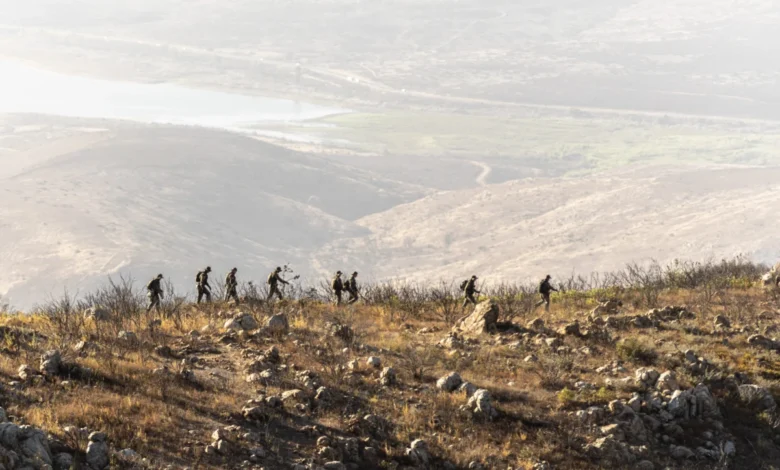
She had only walked for a couple of hours, and already she was lost in a landscape that promised security but delivered only silence. On the afternoon of September 14, 2025, 30-year-old Graciela Gómez Hernández crossed the border from the eastern edge of Tijuana into the rugged terrain of Southern California. For her family in southern Mexico, her departure was a source of profound dread; for the United States government, it was a data point in an increasingly digitized border security apparatus. Despite carrying a smartphone that transmitted her location to smugglers and communicating with her sister, Irma, via WhatsApp, Gómez Hernández would never reach her destination. Two weeks later, her remains were discovered—partially claimed by the earth—in a patch of wilderness that stands as one of the most heavily surveilled strips of land in the world.

Gómez Hernández was not an isolated tragedy, but a statistic in a growing body of evidence suggesting that the billion-dollar technological fortress lining the U.S.-Mexico border may be failing the very people it is designed to monitor. An investigation by the Times of San Diego and MIT Technology Review reveals that between 2022 and 2025, at least 138 individuals died within the operational range of Border Patrol surveillance technology in California alone. Topographical analysis suggests that more than half of these victims were in locations with clear lines of sight to high-resolution, AI-enabled cameras.
A Chronology of a Disappearance
The timeline of the final hours of Graciela Gómez Hernández highlights the harrowing intersection of human desperation and cold, mechanical observation. On September 13, 2025, Gómez Hernández informed her family of her intent to cross the border. Her motivation was purely economic: her husband, who had preceded her to the U.S., had ceased providing financial support for their three children. Faced with a household unable to afford basic necessities like detergent or food, she secured a deal with human smugglers for 20,000 pesos—approximately $1,150. Unlike more expensive "guided" crossings, this arrangement involved a solo trek, with the smugglers providing only a route and a directive to keep her phone active for location tracking.

By 2:00 p.m. the following day, she had successfully breached the border. Her journey began on the hillsides of the Otay Mountain Wilderness, a region characterized by steep ravines, dense manzanita, and deceptive game trails. According to her sister, Gómez Hernández sent a voice message at 2:00 p.m. expressing extreme fatigue. "I can’t do it anymore," she whispered. Her last location was transmitted to her contacts at 4:00 p.m. By the time the search group known as the Armadillos and federal authorities reached the coordinates provided by her family on October 4, 2025, she had been dead for nearly three weeks.
The Myth of Total Situational Awareness
The U.S. government’s commitment to border technology has been aggressive. Since 2011, the deployment of surveillance towers has been a centerpiece of regional strategy. By the middle of 2026, the Border Patrol had deployed 803 towers across the southwestern border, with plans to expand this network to 2,300 by 2034 at a projected cost of $1.4 billion. These towers, manufactured by companies like General Dynamics and Anduril, feature electro-optical and infrared cameras capable of identifying heat signatures and movement from miles away.

John Morris, a Border Patrol sector chief, famously claimed at a 2026 convention that the agency was "dang close to pretty much knowing everything that comes across." However, the proximity of so many deaths to these sensors suggests a profound disconnect between capability and application. Experts argue that the technology is often plagued by maintenance failures and environmental limitations. A 2024 internal memo obtained by NBC News indicated that 30% of older-style towers were effectively non-functional, serving as little more than expensive "scarecrows." Even the newer, AI-integrated models face challenges: in the rugged Otay Mountain range, dust, vegetation, and erratic power supply can render the cameras blind or unreliable.
Official Responses and Technical Vulnerabilities
When pressed on the failure to detect individuals in distress, defense contractors and federal agencies have largely deferred to one another. Anduril, whose towers have been touted as capable of "autonomously identifying hundreds of thousands of border crossings," did not provide specific data regarding the performance of their units in the Otay Mountain terrain. General Dynamics, responsible for the tower closest to the site where Gómez Hernández was found, referred all inquiries to the Border Patrol.

The Border Patrol itself has remained silent on whether their surveillance networks captured evidence of Gómez Hernández’s distress. Advocacy groups, however, offer a grim theory: migrants in distress are often not a priority for agencies focused on high-volume apprehensions. "There’s a million ways that somebody could be already on the verge of death that close to the wall," noted Bryce Peterson of the advocacy group No More Deaths. "If you’re going north and then you decide to go south again because you get lost… the only thing we’re certain of is that she suffered in her last moments."
The "Deterrence" Consequence
The broader implication of this technological saturation is a phenomenon known as "funneling." As surveillance makes traditional crossing points increasingly difficult to traverse, migrants are pushed into more extreme, remote, and deadly environments. The RAND Corporation noted in 2020 that the presence of surveillance towers is often intended as a deterrent, yet this strategy has consistently failed to stop migration; it has merely increased the lethality of the routes taken.

Furthermore, the introduction of AI-based surveillance has altered the behavior of both migrants and smugglers. Recognizing that agents cannot respond to every sensor alert, smugglers now often send individuals across singly or in small groups to overwhelm the monitoring systems. Migrants, in turn, feel the pressure to move at a breakneck pace to reach "safe" zones before a response team can arrive. This frantic, high-speed movement through brutal terrain leaves little room for hydration or rest, directly contributing to the heat-related and exhaustion-linked fatalities now regularly recorded by medical examiners.
A Legacy of Loss
For the family of Graciela Gómez Hernández, the technical explanations and policy debates offer little solace. Her oldest son, age 11, continues to grapple with the loss of his mother, who had promised him a bicycle. Her funeral, held nine months after her death and funded by the sale of family assets and community support, served as a final, quiet act of grief.

Cesar Ortigoza, who leads the Armadillos in their search for the missing, remains a witness to this ongoing humanitarian crisis. He observes that every day brings fresh calls from families seeking loved ones who vanished in the shadow of the towers. "If the riches of the world were distributed more equitably, we wouldn’t have to do things like this to reach a better life," he said.
The surveillance towers continue to stand, their lenses rotating in the dry heat of the California mountains. As the federal government moves forward with the "One Big Beautiful Bill Act" and invests billions more into automated detection, the fundamental tension remains unresolved: the border has become a place where technology is omnipresent, yet human life remains increasingly invisible. The imprint of Gómez Hernández’s body, once visible on the hillside, has been reclaimed by the dust, but the questions regarding the efficacy and morality of a system that watches thousands die in "plain sight" remain unanswered. For the families left behind, the promise of "situational awareness" is a hollow comfort in the face of an enduring, and often silent, tragedy.
Related posts: