Google Play Expands Developer Toolkit with Advanced Monetization, Flexible Billing, and Retention Features for the Next Generation of Apps

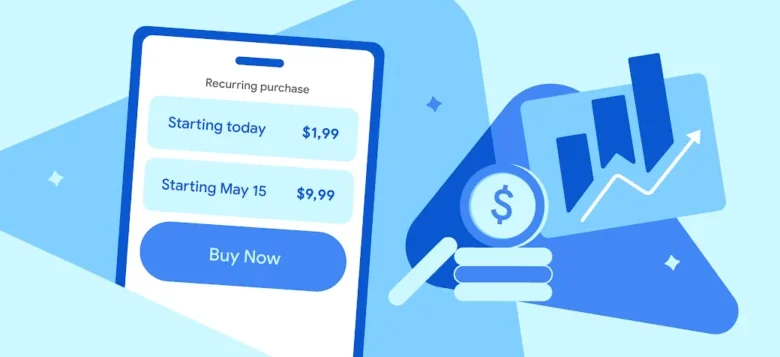
The digital subscription economy is undergoing a profound structural transformation, driven largely by the rapid proliferation of generative artificial intelligence (GenAI), sophisticated multi-user applications, and shifting consumer expectations. In response to these sweeping ecosystem changes, Google Play has announced a robust suite of new monetization, billing, and retention capabilities designed to help developers maximize Customer Lifetime Value (LTV), adapt to intricate business models, and secure predictable recurring revenue.
Announced by Sheenam Mittal, Senior Product Manager at Google Play, the newly introduced features address longstanding friction points in the subscription lifecycle. These tools span flexible packaging options—such as multi-quantity seating and usage-based billing tailored for variable-cost AI applications—alongside advanced cross-app bundling, dynamic grace periods, and streamlined in-app recovery mechanisms. As developers increasingly pivot toward resource-intensive features and collaborative software solutions, Google Play’s expanded framework aims to bridge the gap between complex software architecture and seamless commercial transactions.
The Evolution of the Subscription Economy: Background and Context
Over the past decade, the subscription-as-a-service (SaaS) model has transitioned from a niche preference for media and productivity tools into the dominant revenue engine for mobile applications. However, the advent of generative AI has fundamentally altered the operational economics of app development. Unlike static software that incurs near-zero marginal costs per user, GenAI tools, real-time rendering engines, and cloud-heavy computational services demand continuous server-side processing, introducing significant variable costs for developers.
Historically, rigid recurring subscription models—such as a flat monthly fee—struggled to accommodate these fluctuating operational expenses without either underpricing heavy users or overpricing casual consumers. Furthermore, enterprise and educational software developers frequently encountered architectural limitations within mobile app stores, which were traditionally optimized for individual consumer transactions rather than multi-seat or team-based licensing.
Recognizing these market pressures, Google Play’s latest infrastructure updates reflect an ongoing industry-wide effort to modernize mobile commerce. By providing native support for complex pricing models, Google aims to cement its platform as a viable ecosystem not just for consumer entertainment and gaming, but for enterprise-grade productivity, education, and specialized utility software.
Flexible Monetization Models for GenAI and Collaborative Apps
To accommodate the diverse economic models of modern applications, Google Play is rolling out structural changes designed to capture higher cart values and support diverse user tiers.
Multi-Quantity Subscriptions
Designed explicitly for productivity, educational technology (EdTech), and enterprise-facing GenAI applications, the new Multi-Quantity Subscription Purchase capability allows users to buy multiple subscription licenses in a single transaction. Consumers can seamlessly purchase and assign these licenses as individual seats to students, colleagues, or team members. This removes historical barriers that forced team leaders to execute separate, cumbersome transactions for each individual user, thereby opening mobile platforms to broader B2B and collaborative software adoption.
Usage-Based Billing
Addressing the financial unpredictability of compute-heavy applications, Google Play’s new Usage-Based Billing system introduces prepaid metered billing structures. Users can establish automatic balance top-ups whenever their account credits fall below a predefined threshold. This mechanism protects developer profit margins by ensuring continuous service for high-consumption users—such as those utilizing heavy image-generation or natural language processing tools—while maintaining transparent, uninterrupted access for the consumer.
Innovative Packaging: Mixed Carts and Cross-Developer Bundling
Beyond individual pricing structures, Google Play is altering how complementary products are packaged and presented at checkout, creating fresh avenues for Average Order Value (AOV) expansion.

Mixed Carts
Previously, digital storefront architecture maintained strict segregation between auto-renewing subscriptions and one-time products (OTPs). Consumers wishing to purchase a monthly membership alongside consumable in-app currency or starter packs were forced to complete multiple, disjointed checkout flows. The introduction of Mixed Carts eliminates this friction by enabling developers to process auto-renewing base subscriptions alongside OTPs within a single API call and unified checkout sheet. This integration facilitates targeted bundling discounts, encouraging users to adopt recurring memberships alongside complementary digital goods.
Cross-Developer Bundling
Strategic partnerships have long served as a cornerstone of user acquisition in traditional digital marketing. Google Play’s Cross-Developer Bundling brings this strategy directly into the app catalog by allowing developers to package two or more distinct subscriptions—either from their own internal portfolio or through partnerships with external creators—into a single SKU. For example, a language learning application can now bundle its monthly membership with a travel guide subscription from a partner developer, offering consumers a discounted, multi-service package. This cooperative framework distributes acquisition costs and expands audience reach for all participating parties.
Minimizing Churn and Optimizing the Billing Lifecycle
Acquiring a subscriber represents only the initial phase of long-term application growth; mitigating involuntary and voluntary churn is critical to sustaining recurring revenue. Google Play’s latest feature set introduces intelligent, data-driven interventions designed to retain users throughout the billing lifecycle.
In-App Messaging API
Payment failures and subscription price updates often result in accidental cancellations. The In-App Messaging API enables developers to deliver critical transactional communications directly within the application interface. By addressing account states contextually while the user is actively engaged with the software, developers can resolve billing issues without interrupting the user experience.
Dynamic Grace Period
Involuntary churn caused by expired credit cards or temporary banking declines is traditionally managed via static, uniform grace periods. However, fixed durations force developers to choose between extending adequate recovery time and absorbing the service costs of unpaid usage. Google Play’s Dynamic Grace Period utilizes machine learning and heuristic models to tailor the recovery window for individual subscribers based on their historical likelihood of payment recovery. Subsequent account hold durations are automatically adjusted to match, optimizing the balance between revenue collection and service provisioning without requiring client-side engineering updates.
Retention and Winback Offers
To combat voluntary cancellations, the newly deployed Retention Offers framework presents developer-funded incentives—such as temporary promotional discounts—directly within the Google Play Store cancellation interface. For users who decline promotional pricing, developers can alternatively suggest a Plan Change to a lower-tier subscription, retaining the customer within the ecosystem rather than losing them entirely. Furthermore, Subscription Winback Offers extend re-engagement efforts to lapsed subscribers directly on the Play Store, bypassing traditional communication channels like email or push notifications that frequently fail if the application has been uninstalled.
Behind-the-Scenes Infrastructure and Revenue Protection
In tandem with user-facing tools, Google Play continues to operate an automated optimization engine designed to protect developer revenue without requiring supplementary code implementation. This infrastructure includes smart payment retries, automated cycling through secondary backup payment methods for opted-in users, and contextual reminder systems deployed during grace periods and account holds.
Simultaneously, built-in fraud and abuse prevention protocols actively monitor promotional campaigns to block bad actors from exploiting introductory pricing or manipulating billing cycles. These protective measures ensure that promotional expenditure directly rewards legitimate, high-value consumers, thereby safeguarding developer margins and stabilizing the broader subscription ecosystem.
Timeline and Implementation Outlook
Many of the advanced features announced by Google Play are currently live or rolling out through the platform’s Early Access Program. This phase involves active testing with select development partners to gather technical feedback prior to a wider, general release within the Google Play Console. Developers managing subscriptions or evaluating new monetization models are encouraged to review Google Play’s official billing documentation and coordinate with designated Google Play partner managers to secure early access participation.
Related posts: