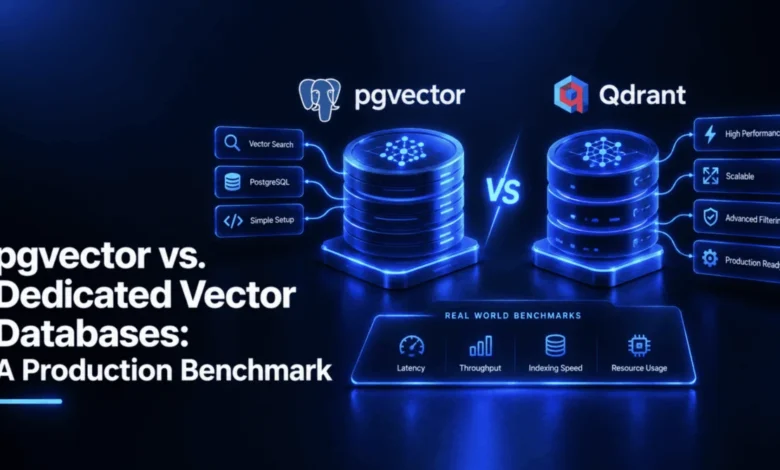
The rapid ascent of Large Language Models (LLMs) and generative AI applications has forced a fundamental shift in how organizations handle data architecture. As developers seek to integrate semantic search and retrieval-augmented generation (RAG) into their production stacks, a central debate has emerged: should vector embeddings reside within a traditional, relational database environment using extensions like pgvector, or should they be offloaded to dedicated, purpose-built vector databases? This decision is rarely academic; it represents a significant commitment of engineering resources, infrastructure budget, and long-term operational strategy.
The Rise of the Vector Search Paradigm
For years, the industry operated under the assumption that relational databases, such as PostgreSQL, were ill-equipped to handle the high-dimensional, mathematical nature of vector embeddings. Traditional databases were optimized for row-based storage and ACID compliance, while vector search requires specialized algorithms—such as Hierarchical Navigable Small Worlds (HNSW) or Inverted File Index (IVF)—to find "nearest neighbors" in multi-dimensional space.
The landscape shifted significantly with the release and subsequent adoption of pgvector. Introduced as an open-source extension, pgvector allows PostgreSQL users to store vector embeddings as native data types and perform similarity searches directly within the database using SQL. This innovation promised a "one-stop-shop" architecture: developers could manage their relational metadata (user IDs, timestamps, text snippets) and their high-dimensional vector representations in the same table, ensuring data consistency and transactional integrity without the overhead of managing a secondary, distributed system.
Comparing Architectural Philosophies
To understand the competition, one must distinguish between the two primary approaches. On one side stands the ecosystem-integrated approach exemplified by pgvector. It treats vectors as a first-class citizen of a general-purpose database, allowing for hybrid search—where a single query can filter by relational criteria (e.g., "only show items from the last 30 days") and then perform a vector similarity search on the remaining subset.
On the other side are dedicated vector databases such as Pinecone, Qdrant, Weaviate, Milvus, and ChromaDB. These systems are designed from the ground up to prioritize vector operations. They often feature specialized storage engines, distributed architectures, and native support for complex AI-specific requirements like multi-tenancy at scale, auto-vectorization, and GPU-accelerated indexing. Proponents of these systems argue that as datasets grow into the tens of millions or billions of vectors, the general-purpose nature of PostgreSQL becomes a bottleneck, both in terms of index construction speed and query latency.
Analyzing Performance at Scale
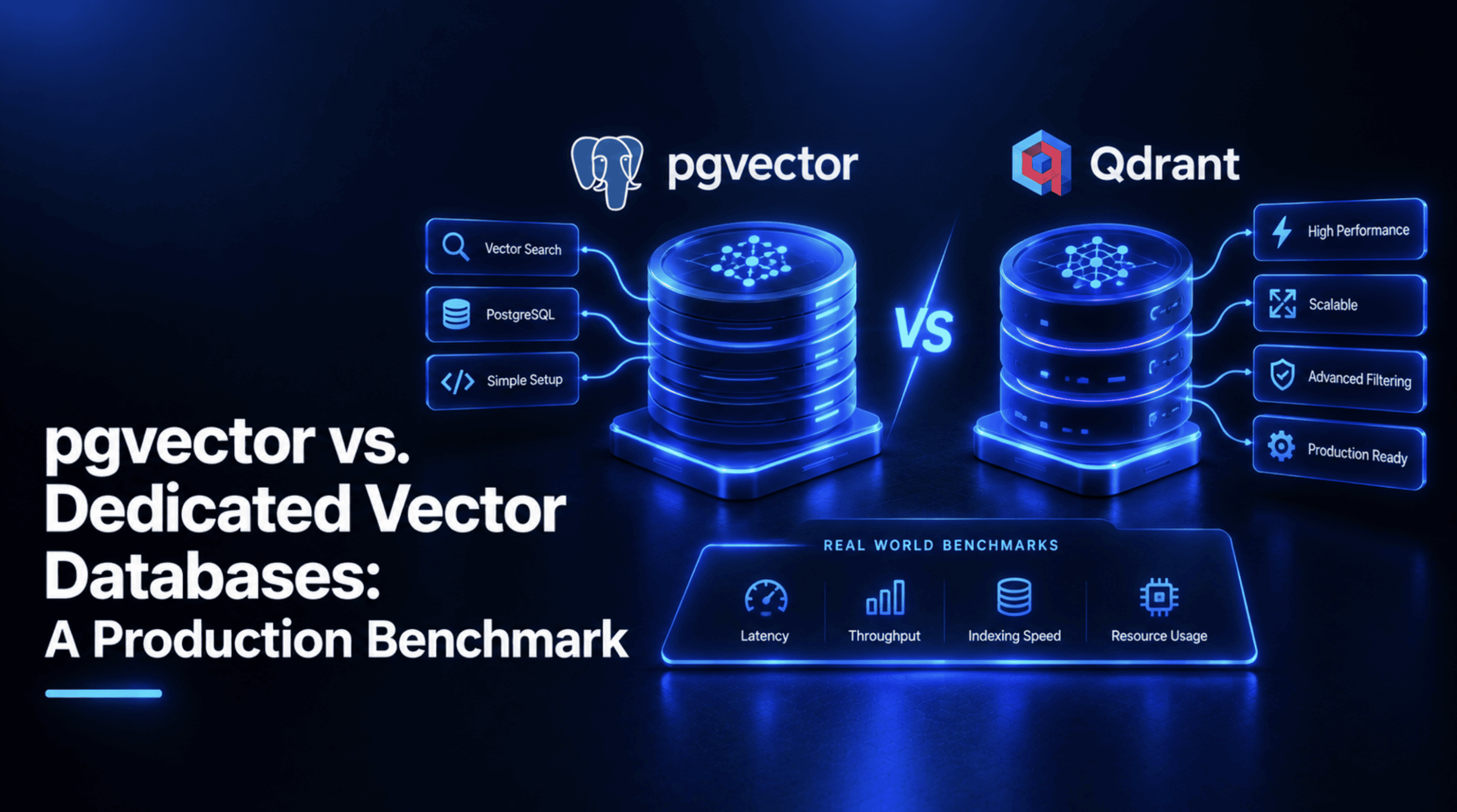
While small-scale testing on local hardware often yields negligible differences between pgvector and dedicated solutions, production-grade workloads demand rigorous benchmarking. A critical study by Tiger Data, which utilized the industry-standard ANN-Benchmarks methodology, provides a window into how these technologies perform under stress.
The study analyzed 50 million Cohere embeddings (768 dimensions) on AWS r6id.4xlarge instances. Notably, the test involved PostgreSQL paired with pgvectorscale, an extension that enhances pgvector’s capabilities with techniques like StreamingDiskANN. The results were revealing:
- Throughput Advantage: At 99% recall, pgvector with pgvectorscale achieved 471.57 queries per second (QPS), significantly outpacing Qdrant’s 41.47 QPS.
- Tail Latency: Qdrant demonstrated superior consistency in tail latency, with a p99 of 38.71ms compared to pgvector’s 74.60ms.
- Index Construction: Dedicated databases often excel in maintenance tasks; Qdrant completed the index build in 3.3 hours, whereas the pgvector-based setup required 11.1 hours.
These figures illustrate that the "better" choice is highly dependent on the application’s specific requirements. If an application demands maximum throughput for moderate-concurrency search, a tuned PostgreSQL instance is highly effective. If an application is latency-sensitive to the extreme—where the 99th percentile query time is a business-critical metric—dedicated vector databases often provide a more predictable performance profile.
The Operational Trade-offs
The decision between these architectures often hinges on the organizational "cost of ownership." Integrating pgvector into an existing PostgreSQL deployment requires minimal operational change. Engineers who are already proficient in managing Postgres can handle the vector workload with existing tooling, monitoring, and backup infrastructure. This "Path of Least Resistance" is often the determining factor for startups and mid-sized teams that lack the headcount to manage a secondary, highly distributed system.
Conversely, dedicated vector databases are designed to reduce the "ops burden" through specialized cloud-native features. Services like Pinecone, for example, offer a fully managed, serverless experience, abstracting away the complexities of sharding, replication, and index optimization. For enterprises operating at a "billion-scale," the specialized distributed architectures of Milvus or Weaviate allow for horizontal scaling that would be significantly more complex to orchestrate within a traditional SQL environment.
Strategic Implications for Data Engineering
Industry observers note that the lines between these categories are blurring. As PostgreSQL extensions continue to evolve, they are incorporating features once reserved for dedicated databases, such as better disk-based indexing and improved parallel processing. Simultaneously, dedicated vector databases are increasingly adding support for relational metadata and hybrid filtering to appeal to developers who want the best of both worlds.
The emergence of these hybrid capabilities suggests that for the vast majority of applications—those operating in the sub-10-million-vector range—the choice is becoming less about performance and more about developer velocity. The overhead of maintaining a separate service, ensuring data synchronization between the primary database and the vector store, and handling cross-service consistency is a non-trivial tax that many organizations now choose to avoid.
Final Considerations for Production Workloads
When deciding which path to pursue, organizations should evaluate their requirements across four dimensions:
- Transactional Integrity: Does the application require that an update to a record and its corresponding vector happen atomically? If so, pgvector’s integration into the relational database is a distinct advantage.
- Scale and Concurrency: Is the workload expected to hit the hundreds of millions of vectors? Are there thousands of concurrent queries per second? These conditions favor the distributed, purpose-built architectures of systems like Milvus or Qdrant.
- Latency SLAs: If the business model relies on sub-40ms p99 latency under heavy load, the architectural stability and specialized indexing of a dedicated database may be necessary to meet those Service Level Agreements.
- Team Expertise: Does the team have existing capacity to manage and tune a complex database, or is there a strong preference for managed services that require zero maintenance?
Ultimately, there is no "silver bullet." The benchmark data confirms that both pgvector and dedicated vector databases are mature enough to handle most modern AI production requirements. The "best" system is the one that aligns with the current operational maturity of the team and the specific performance profile of the application. Developers are encouraged to conduct their own benchmarks using realistic, production-representative datasets rather than relying on generalized marketing claims, as the nuances of index parameters, hardware configurations, and data distribution can significantly alter the performance outcome. In an era of rapid AI deployment, the ability to make an informed, data-driven choice between these two powerful paradigms is perhaps the most important skill an infrastructure engineer can cultivate.