Microsoft Announces Public Preview of Copilot Harness in Foundry Agent Service Alongside General Availability of Long-Running Resilience

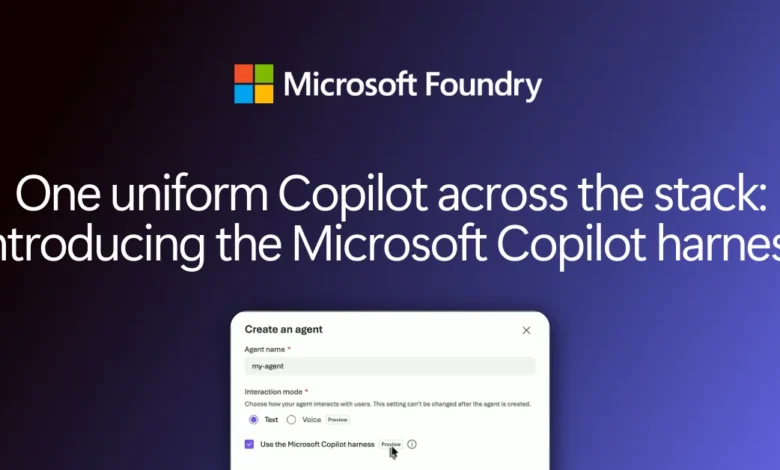
The landscape of enterprise artificial intelligence development shifted significantly as Microsoft Corporation introduced the public preview of the Microsoft Copilot harness within the Foundry Agent Service. Designed to streamline the orchestration of complex artificial intelligence tasks, the newly unveiled harness provides developers with a fully managed execution system capable of handling multi-step agent behaviors, dynamic tool usage, and prolonged workflows. Simultaneously, the technology giant announced the general availability of long-running resilience for hosted agents, an enterprise-grade feature engineered to safeguard autonomous workflows against unexpected interruptions over hours or days of execution.
These simultaneous releases address a persistent engineering bottleneck in the artificial intelligence sector. While foundational large language models have grown exceptionally sophisticated at reasoning through discrete prompts, transitioning an artificial intelligence model into a functional, autonomous agent requires extensive ancillary infrastructure. Development teams have historically been forced to custom-build complex execution machinery, including context managers, execution sandboxes, tool-calling loops, and state-recovery mechanisms. By shifting these standardized architectural requirements into a managed platform, Microsoft aims to liberate engineering teams from undifferentiated infrastructure maintenance, allowing them to focus entirely on domain-specific expertise, data governance, and application outcomes.
The Evolution of Enterprise Agent Architecture
For years, software engineers building autonomous systems faced a steep architectural curve. A model’s ability to reason about a task represents only the initial phase of completion. Successful execution demands the continuous provisioning of context, secure execution environments, file management systems, error-handling protocols, and deterministic controls that coordinate model and tool calls over extended timelines. When multiple teams independently construct these underlying systems, capital and engineering hours are inevitably diverted away from core product differentiation.
The introduction of the Microsoft Copilot harness within Microsoft Foundry directly tackles this redundancy. Operating as an opinionated yet flexible execution framework, the harness takes charge of the agent loop and secure sandboxing. Developers define their agents declaratively, supplying domain-specific knowledge, procedural skills, and authorized tools while leaving the underlying orchestration to Microsoft’s managed infrastructure. This unified harness strategy bridges the gap between raw model capability and reliable enterprise execution, ensuring that customers maintain absolute freedom in choosing supported models without needing to rebuild the surrounding execution stack from scratch.
Core Capabilities and Technical Implementation
The public preview of the Copilot harness introduces a cohesive set of building blocks designed to simplify agent creation. Through declarative configuration files—such as the Azure Developer CLI (azd) surface or the Microsoft Foundry portal—developers can rapidly spin up agents equipped with specialized skills, secure web search utilities, and isolated code interpreters.
To illustrate the practical deployment of this architecture, consider a research-oriented agent designed to analyze supporting data and generate an evidence-backed brief. By defining a reusable procedure within a structured markdown file, developers establish clear methodological boundaries for the agent: confirming parameters, gathering approved public data, citing sources with temporal accuracy, and utilizing code interpretation environments exclusively for calculations or visualizations.
name: research-brief

services:
  ai-project:
    host: azure.ai.project
    endpoint: $FOUNDRY_PROJECT_ENDPOINT

  research-brief-skill:
    host: azure.ai.skill
    uses:
      - ai-project
      - archive: ./skills/research-brief

  research-brief:
    host: azure.ai.agent
    project: .
    uses:
      - ai-project
      - research-brief-skill
    kind: prompt
    name: research-brief
    harness:
      type: microsoft_copilot_preview
    model: $MODEL_DEPLOYMENT_NAME
    skills:
      - research-brief-skill
    instructions: |
      Follow research-brief to answer the user's research question.
      Use web search for public evidence and cite your sources.
      Use Code Interpreter for calculations and charts.
      Clearly separate findings, assumptions, and evidence gaps.
      Do not put confidential information in web queries.
    tools:
      - type: web_search
        name: public-research
      - type: code_interpreter
        name: research-analysis
        container:
          type: auto

infra:
  provider: microsoft.foundry
Once configured, deployment via command-line tooling or integrated development environments like Visual Studio Code enables immediate invocation. This structural standardization ensures that autonomous agents operate within strict guardrails, treating retrieved text strictly as data rather than executable instructions, thereby mitigating potential prompt-injection vulnerabilities while maintaining rigorous separation between facts, assumptions, and analytical gaps.
Ensuring Continuity: Long-Running Resilience for Hosted Agents
While declarative prompt agents managed by the Copilot harness suit many standardized use cases, complex enterprise applications frequently require custom frameworks, specialized middleware, or proprietary runtime behaviors. For these scenarios, Microsoft Foundry provides hosted agents. Complemented by the general availability of long-running resilience features, hosted agents are now equipped to manage tasks that span hours, days, or even weeks without succumbing to transient infrastructure failures.
Autonomous workflows operating over extended periods are inherently vulnerable to network disruptions, compute node recycling, and routine system updates. The newly released resilience framework addresses this vulnerability by systematically monitoring agent execution states. When Foundry detects an interruption, the platform automatically initiates recovery procedures, relaunching the work using its original input parameters.
However, system-level recovery represents only part of the solution. Enterprise application design must also account for state persistence. While Foundry manages execution sandboxes and computational recovery, developers remain responsible for ensuring that their application code preserves intermediate progress checkpoints. Furthermore, in scenarios where an agent interacts with external systems—such as generating a database record or transmitting an invoice—idempotency controls must be implemented to prevent duplicate actions upon recovery. By checking whether a targeted artifact already exists before executing a write operation, developers can safely resume multi-day analytical or operational pipelines without risking data corruption or redundant external API calls.
Industry Reception and Early Deployments
Early enterprise adopters of the Microsoft Foundry Agent Service have reported substantial efficiency gains, citing dramatic reductions in time-to-market for complex artificial intelligence solutions.
Chris Evans, Chief Technology Officer at Confluence Technologies, highlighted the immediate infrastructural relief provided by the new architecture. “With the Microsoft Copilot harness in Foundry Agent Service, we had a solution running in less than a week, allowing us to focus on design and capabilities instead of the infrastructure underneath it,” Evans stated. “That speed will help us bring our vision of AI that runs within and alongside our products to market faster.”
Similarly, Orlando Ribas Fernandes, Chief Executive Officer of Fashable, emphasized how governed agent workflows transform intricate commercial operations. According to Fernandes, the Copilot harness offers a robust foundation for converting complex sourcing processes into measurable, compliant pipelines. “We see the opportunity to generate complete tech packs from our knowledge and templates, while extending our A2A sourcing network beyond digitally connected suppliers through email and voice,” Fernandes explained. Crucially, the architecture preserves human governance: “Most importantly, we can equip brand and manufacturer agents with deeper knowledge and new capabilities to work across sourcing and negotiation without automating away accountability: agents can discover, engage and calculate, while commercially binding decisions remain under human control.”
Strategic Implications and Architectural Choice
As organizations scale their artificial intelligence initiatives, selecting the appropriate level of abstraction becomes critical. Microsoft’s tier-based approach within the Foundry Agent Service allows engineering leaders to allocate resources strategically based on specific operational demands.
| Approach | Ideal Operational Scenario |
|---|---|
| Prompt agents without the Microsoft Copilot harness | When direct instructions and native supported tools are fully sufficient to complete the targeted task. |
| Prompt agents with the Microsoft Copilot harness | When applications require advanced skills, managed execution loops, file management, subagents, and complex tool coordination without the burden of owning the underlying harness infrastructure. |
| Hosted agents | When specific frameworks, custom agent loops, proprietary middleware, specialized dependencies, or unique runtime behaviors are mandatory, while still leveraging Foundry-managed hosting and resilience features. |
This modular philosophy acknowledges that no single architectural pattern fits every enterprise scenario. By offering managed paths alongside flexible, bring-your-own-framework options, Microsoft is positioning its cloud ecosystem as a comprehensive operational foundation for the next generation of autonomous enterprise software.
Commercial Framework and Availability
The public preview of the Microsoft Copilot harness in Foundry Agent Service is immediately accessible to developers utilizing the Microsoft Foundry portal, the Azure Developer CLI, or integrated development environments including Visual Studio Code and the GitHub Copilot app via the Microsoft Foundry plugin.
To facilitate adoption during the evaluation phase, Microsoft has structured a transitional pricing model. Harness runtime usage will remain free of charge through December 1, 2026. During this promotional window, developers can test, evaluate, and scale their agent architectures without incurring infrastructure-level execution fees, though standard model inference costs and separately billed connected services will continue to apply.
Beginning December 1, 2026, consumption-based billing for the Copilot harness sandbox environment will take effect. Pricing has been established at USD $0.0994 per vCPU-hour for compute resources and USD $0.0118 per GiB-hour for memory allocation, with rates subject to regional variations and specific enterprise agreement terms. Existing agents created prior to the public preview milestone remain unaffected, and standard migration paths will be introduced as the feature progresses toward general availability.