Seven Common Token-Waste Patterns in Production AI Agent Systems and the Architectural Fixes That Address Each One


The rapid proliferation of Large Language Model (LLM) applications has shifted the primary engineering challenge from successful model prototyping to the sustainable management of production-scale inference costs. While developers often achieve functional success with AI agents in a sandbox environment within a weekend, the transition to high-volume production frequently reveals significant architectural inefficiencies. At the core of these failures is the conflation of "context"—the ephemeral payload sent during a single inference request—with "state," the durable representation of an agent’s historical progress. When these two concepts are merged, systems often suffer from quadratic increases in latency and linear inflation of token costs, creating a financial burden that can render otherwise sophisticated agents economically non-viable.
The Evolution of Agentic Inference Costs
In the early stages of the generative AI boom, circa 2023, token costs were viewed largely as a fixed operational expense. However, as agentic architectures moved from simple chat interfaces to complex, autonomous reasoning loops, the "append-only" trap became a prevalent systemic issue. By 2025, data from industry benchmarks indicated that over 60% of production-grade agent systems were over-consuming input tokens by at least 40% due to redundant data handling. This inefficiency is not merely a budgetary concern; it represents a fundamental failure to manage the "attention" window, which is the model’s most precious and expensive resource.
1. The Append-Only Trap: Context Window Accumulation
The most pervasive design flaw in autonomous agents is the tendency to treat the message history array as a permanent database. By appending every user input, internal thought process, and tool observation to a growing array, the system forces the model to re-process the entire session history on every subsequent turn. This creates an exponential performance penalty.
The architectural remedy lies in implementing a sliding context window paired with semantic rolling summarization. By retaining only the most recent $N$ turns as raw data and compressing older interactions into a dense, background narrative, engineers can drastically reduce token consumption. For critical historical data—such as specific UUIDs or configuration parameters—developers should implement a key-value lookup mechanism, ensuring the model can retrieve exact strings without cluttering the active context window.
2. Eliminating Verbose Tool Result Ingestion
Modern agents frequently interact with third-party APIs that return massive, machine-optimized JSON payloads. A standard Stripe webhook or a detailed AWS service response can easily exceed several thousand tokens, the vast majority of which provide no utility for the agent’s reasoning process.
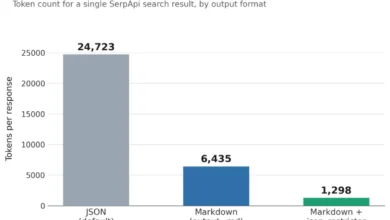
To mitigate this, sophisticated production pipelines now integrate a middleware transformation layer. This layer acts as a filter, stripping non-essential keys, null values, and boilerplate logs before the data is injected into the model. Converting deep JSON structures into dense YAML or Markdown formats further optimizes the token count. However, this process requires careful oversight; aggressive filtering can inadvertently remove essential pagination cursors or metadata, potentially breaking the agent’s ability to interact with the target API.
3. Precision Retrieval: Moving Beyond "Grep-and-Dump"
In the domain of coding assistants and RAG (Retrieval-Augmented Generation) systems, a common, inefficient practice is "Grep-and-Dump" retrieval. In this model, an agent needing information about a single function might receive the entire 4,000-line source file, forcing the LLM to identify the relevant code fragment amidst irrelevant noise.
The industry-standard fix is the transition to Abstract Syntax Tree (AST)-aware retrieval. By parsing code into a structured call graph during the indexing phase, the orchestrator can return only the specific function signature, docstring, and immediate dependencies. This approach can reduce the token overhead of a single code-based query from thousands of tokens to a few hundred. While this requires the maintenance of an asynchronous indexing pipeline, the reduction in hallucination rates—caused by the model attempting to parse irrelevant code—justifies the additional infrastructure.
4. Mitigating Static Tool Schema Bloat
As agent capabilities expand, so does the registry of available tools. Many frameworks inject the full schema definitions for all available tools into the system prompt on every call. For an agent with 50+ tools, this can consume 1,500 tokens of "dead weight" before the actual task begins.
The solution is the implementation of context-aware tool pruning, governed by a finite state machine. By dynamically injecting only the tool definitions relevant to the current operational phase (e.g., "discovery" vs. "execution"), developers can maintain a lean context. While this strategy complicates prompt caching—a critical component of cost reduction—the trade-off is often necessary for agents with large tool registries.
5. Implementing Circuit Breakers for Autonomous Loops
Autonomous agents, by definition, operate in cycles of reasoning and action. If an agent enters a loop where a failed tool call triggers an incorrect retry, the system can consume massive amounts of output tokens—which are typically billed at a higher premium than input tokens—without ever achieving progress.
The implementation of an orchestrator-level circuit breaker is now considered a mandatory guardrail. By enforcing hard limits on retry counts and capping the output token budget per action, developers prevent runaway billing events. If these limits are hit, the orchestrator should trigger a deterministic fallback or escalate to human intervention. This shift in logic acknowledges that the cost of a terminated, incomplete task is significantly lower than the cost of an infinite, expensive loop.
6. Optimizing KV Cache and Prompt Prefixing
The "Key-Value" (KV) cache allows LLM providers to store the computation of prompt prefixes, effectively making those tokens "free" for subsequent requests. However, many agents inadvertently destroy this efficiency by injecting dynamic variables—such as current timestamps or user IDs—at the very beginning of the prompt.
To leverage cache hits, architectures should adopt a "static-to-dynamic" gradient. All static content, such as system instructions and organizational guidelines, must be placed at the beginning of the request, while volatile, dynamic data is relegated to the end. This structure allows the KV cache to remain valid across multiple turns, providing both cost savings and reduced latency.
7. Cascaded Routing: The Right Model for the Task
A final, critical strategy is the adoption of cascaded LLM routing. The use of "frontier" models—such as GPT-4o or Claude 3.5 Sonnet—for simple classification or summarization tasks is an inefficient allocation of resources.
By employing a fast, lower-cost model for intent classification and structural extraction, and reserving frontier models for complex reasoning, companies can achieve significant cost optimization. Libraries such as LiteLLM allow for the seamless integration of these routing layers. The success of this strategy, however, relies on the classification layer’s accuracy; if a simple model misclassifies a complex request, the resulting failure often necessitates a second, more expensive call, effectively doubling the costs.
Implications for Long-Term System Stability
The long-term impact of these optimizations extends beyond simple fiscal responsibility. As production agents age, "memory bloat" becomes a primary driver of data quality degradation. Stale information, outdated API references, and conflicting historical data can lead to chronic hallucinations.
By enforcing strict constraints on the context window, developers not only reduce operational expenses but also define a clearer "failure domain" for their systems. The architectural choices made during the initial development phase are, therefore, fundamental to the longevity and reliability of AI agent systems. As the industry moves toward more autonomous, agentic workflows, the ability to manage token economy will distinguish performant, scalable applications from those burdened by their own architectural debt.
Related posts: