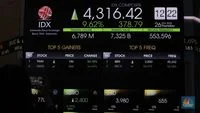
Ancaman Penurunan Kelas MSCI Bayangi Pasar Modal Indonesia di Tengah Potensi Capital Outflow Rp108 Triliun


Global index provider Morgan Stanley Capital International (MSCI) is set to release its highly anticipated November 2026 index rebalancing results this week, capturing the intense focus of domestic and international market participants. The announcement is officially scheduled for release on November 11, 2026, Central European Time, which corresponds to the early hours of November 12, 2026, at 05:00 Western Indonesia Time (WIB). This upcoming evaluation carries profound implications for the structural trajectory of the Indonesian capital market, primarily driven by persistent concerns that the country’s market classification within the emerging market index framework could be downgraded to a standalone market by the second quarter of 2027.
The prospect of a market reclassification has heightened anxiety across financial sectors, with institutional analysts projecting substantial equity sell-offs by foreign investors should the downgrade materialize. The potential departure of international capital poses a significant stress test for the Jakarta Composite Index (IHSG) and the broader Indonesian financial ecosystem, triggering comprehensive evaluations from economists, monetary authorities, and stock exchange officials alike.
Projected Capital Outflows and Structural Fund Dynamics
Bank Danamon Chief Economist Irman Faiz has outlined a severe scenario regarding potential capital flight, estimating that foreign institutional outflows could range between US$2 billion and US$6 billion. Calculated at an assumed exchange rate of Rp18,000 per US dollar, this translates to an astronomical capital contraction of Rp36 trillion to Rp108 trillion.
According to Irman, these anticipated outflows will originate from a dual-source structure comprising both passive funds—institutional investors whose portfolios mechanically track MSCI benchmarks—and active funds, which operate independently of strict index mandates but nonetheless adjust their risk exposure based on structural market classifications.
"We observe that the potential capital exit from the equity market ranges between US$2 billion and US$6 billion, encompassing both active and passive funds," Irman stated during a Bank Indonesia media briefing in Sabang, emphasizing that the capital drain would likely manifest gradually. "This means that the actual outflow will accelerate if and when the downgrade is officially confirmed, creating a lagging effect leading up to the second quarter of 2027."
Despite prevailing macroeconomic indicators pointing toward solid domestic fundamental growth, Irman noted that foreign institutional investors are highly unlikely to increase their equity allocations during the transition window. Instead, market participants are widely expected to adopt a cautious "wait-and-see" approach, holding off on major portfolio additions until local asset valuations reach a cyclical bottom or until regulatory certainties are re-established.
"That is why they do not pull out everything all at once; many are still maintaining their positions," Irman added, explaining the nuanced behavior of institutional capital under regulatory duress.
Currency Resilience and Limited Direct FX Pass-Through
A critical dimension of the ongoing MSCI discourse involves the potential contagion effect on the Indonesian rupiah against the US dollar. While equity outflows typically raise alarms regarding macroeconomic stability, Irman emphasized that foreign capital flight from the stock market does not serve as a primary fundamental driver for rupiah depreciation.
Empirical findings from Irman’s internal study indicate a remarkably muted sensitivity between equity capital outflows and currency depreciation. Specifically, every US$100 million in foreign capital exiting the domestic stock market historically results in a marginal depreciation of merely Rp11 to Rp12 against previous exchange rate levels.
Furthermore, capital leaving equities does not automatically constitute an immediate repatriation or complete capital flight from Indonesia as a sovereign jurisdiction. Foreign institutional investors frequently execute asset rotation strategies, temporarily shifting liquidity into alternative, lower-risk domestic financial instruments within the local monetary ecosystem before making definitive cross-border exit decisions.
"In the equity market, they can execute asset rotation first before completely pulling out, which dampens the sensitivity of our rupiah. This means that if we analyze the direct channels of outflows originating solely from the stock market, the broader macroeconomic impact on the currency should remain relatively contained," Irman explained.
Recent Market Performance and Trading Statistics
The overarching anxiety surrounding the MSCI rebalancing has already begun to manifest visibly in recent trading metrics published by the Indonesia Stock Exchange (IDX). Data covering the trading week of November 2 to November 6, 2026, highlights a contraction across nearly all major liquidity and capitalization indicators.
During this weekly observation window, the total market capitalization of the IDX contracted by 1.34%, slipping from Rp8,862 trillion in the preceding week down to Rp8,744 trillion. Trading activity similarly decelerated, with the average daily trading volume dropping by 3.50% to 31.29 billion shares, compared to 32.43 billion shares previously.
Frequency metrics registered an even sharper decline. The average daily transaction frequency plummeted by 16.44%, falling from 1.54 million trades down to 1.29 million trades per day. Concurrently, the average daily transaction value contracted by 23%, dropping significantly from Rp14.34 trillion to Rp11.04 trillion week-on-week.
Trading activity on Friday, November 6, 2026, demonstrated a brief reprieve as foreign investors recorded a net buy value of Rp328.20 billion. However, this marginal inflow fails to offset the broader structural trend observed throughout the year. On a cumulative basis spanning the entirety of 2026, foreign investors have maintained a substantial net sell position, totaling Rp98.08 trillion.
IDX Regulatory Response and Market Reforms
In response to mounting structural pressures and the imminent MSCI index evaluation, the leadership of the Indonesia Stock Exchange has stepped forward to reassure market participants. IDX management has explicitly stated that regulatory priorities are currently centered on enhancing transparency, boosting market liquidity, and strengthening institutional surveillance to align with global index provider expectations.
IDX President Director Jeffrey outlined the exchange’s proactive measures, highlighting transparency as the foundational pillar of the current reform agenda. Jeffrey noted that recent enhancements include expanding mandatory corporate disclosures. Specifically, public reports detailing share ownership exceeding 1% have been upgraded to incorporate comprehensive disclosures regarding affiliated parties. He affirmed that the exchange will continue to advance similar transparency initiatives to elevate the overall governance standards of Indonesia’s capital market.
In addition to transparency enhancements, Jeffrey pointed out that structural reforms targeting market liquidity are actively underway. Concurrently, surveillance mechanisms are being tightened to safeguard market integrity against excessive volatility. While specific operational details regarding the liquidity and surveillance overhauls were not exhaustively enumerated, the official stance underscores an institutional commitment to addressing the core qualitative criteria monitored by global rating and index agencies.
Broader Implications and Outlook for Investors
The intersection of the upcoming MSCI index rebalancing and structural market reforms represents a critical juncture for the Indonesian financial landscape. The potential transition of Indonesia’s market classification underscores the ongoing challenges emerging economies face in satisfying rigorous, evolving international standards concerning free-float availability, foreign ownership limits, liquidity depth, and regulatory transparency.
For domestic retail and institutional investors, the weeks leading up to the November announcement and the subsequent transition path toward mid-2027 demand heightened vigilance. While systemic macroeconomic fundamentals—such as GDP growth, inflation control, and fiscal stability—remain robust, structural technical pressures stemming from passive fund reallocations can introduce localized volatility, particularly among large-cap index heavyweights.
As market participants await the formal release from MSCI, the combined efforts of regulatory bodies, monetary authorities, and exchange operators to improve market depth and information disclosure will be critical in mitigating sentiment-driven capital flight. Ultimately, the resilience of the Indonesian capital market will depend heavily on its ability to demonstrate structural maturity, regulatory adaptability, and enduring appeal to global capital allocators over the long term.
Related posts: