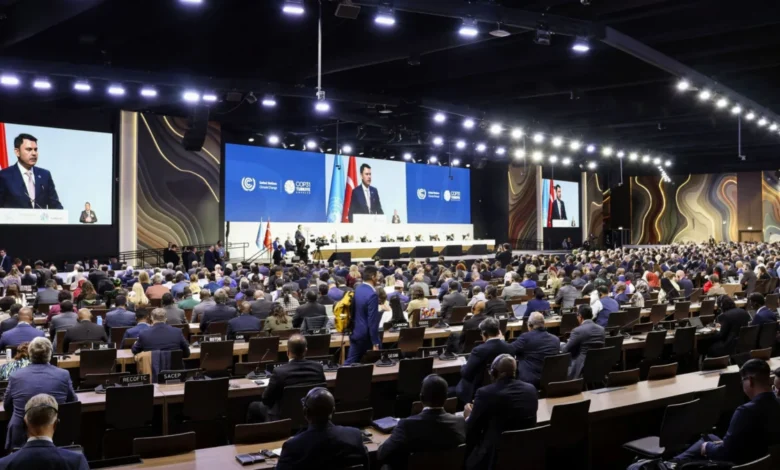
As thousands of diplomats, climate scientists, industry lobbyists, and environmental advocates descend upon Antalya, Turkey, the global community faces a critical juncture in the history of international climate governance. COP31, the 31st Conference of the Parties to the United Nations Framework Convention on Climate Change (UNFCCC), officially commenced on November 8, setting the stage for nearly two weeks of high-stakes negotiations scheduled to conclude on November 20. Co-hosted by Turkey and Australia, this year’s summit arrives at a moment of profound geopolitical volatility and scientific urgency, with the primary objectives centering on the mechanics of climate finance and the contentious future of fossil fuel consumption.
The Geopolitical Landscape and the Absence of the United States
The atmosphere surrounding COP31 is markedly different from its predecessors, shaped heavily by shifting geopolitical alliances and the withdrawal of the United States from the international climate framework. This marks the second consecutive year that the U.S.—historically a central player in climate negotiations—has remained on the sidelines following President Donald Trump’s formal exit from the Paris Agreement and the subsequent move to withdraw from the UNFCCC treaty entirely.
The absence of the world’s second-largest emitter creates a significant vacuum in leadership and funding. Without U.S. participation, the burden of steering global climate policy falls heavily on the European Union, China, and a coalition of emerging economies. Furthermore, the ongoing war in Iran has cast a long shadow over the proceedings, contributing to a global energy crisis characterized by price volatility and supply chain disruptions. As nations struggle to balance energy security with the necessity of decarbonization, the geopolitical tension has dampened optimism regarding aggressive, binding emission reduction targets.
The Looming Breach of the 1.5°C Threshold
The primary objective of the 2015 Paris Agreement—limiting global average temperature increases to 1.5°C above pre-industrial levels—is increasingly viewed by the scientific community as an elusive goal. In a sobering report published this past September, the United Nations Environment Program (UNEP) stated that the world is currently on a trajectory to overshoot this threshold within the next few years.
This reality has shifted the focus of COP31 from aspirational long-term goals to the immediate, desperate need for structural adaptation and mitigation. The discourse in Antalya reflects a transition from "climate ambition" to "climate survival," as delegates confront the physical evidence of a warming planet.
The Financial Chasm: Scaling Climate Finance
A central point of contention in Antalya is the "finance gap." During the COP29 talks two years ago, the international community pledged to mobilize $300 billion annually by 2035 to assist developing nations in transitioning to green energy and building climate-resilient infrastructure. While the Organization for Economic Cooperation and Development (OECD) reported that developed nations provided approximately $136.7 billion in 2024—a figure that exceeded the long-standing $100 billion goal for the third consecutive year—this remains a fraction of what is required to address the compounding effects of the climate crisis.
The urgency of this funding was underscored by the catastrophic glacial collapse in the Himalayas earlier this year. The resulting flooding in Nepal caused an estimated $5 billion in damages, claimed 1,500 lives, and left thousands missing. In response, the UN’s Loss and Damage Fund allocated $20 million to assist with recovery efforts—an amount widely criticized by NGOs and local leaders as woefully inadequate, representing less than 1% of the total economic loss. This disparity between committed funds and real-world costs is expected to be a dominant theme in the upcoming negotiations, with developing nations likely to demand more robust and predictable financial mechanisms.
The Fossil Fuel Debate: A Stalled Consensus
The trajectory of fossil fuel regulation at COP summits has been erratic. Three years ago, the Glasgow summit concluded with an explicit, landmark commitment to "transition away" from fossil fuels. However, last year’s agreement was criticized for its lack of substantive language, failing to even mention the term "fossil fuels."
The selection of Turkey and Australia as co-hosts has intensified the scrutiny surrounding this issue. Australia remains one of the world’s largest exporters of coal and liquefied natural gas (LNG), while Turkey’s national energy grid relies heavily on coal-fired power plants. Critics argue that these national economic interests may hinder the ambition of the final text. Observers are closely watching to see whether the host nations can facilitate a meaningful consensus or if the final agreement will once again retreat into vague, non-binding terminology.
Informal Initiatives: AI and Electrification
Beyond the formal negotiation tracks, COP31 President Murat Kurum, serving as Turkey’s Environment Minister, has launched several side initiatives designed to encourage voluntary commitments. While these measures fall outside the official legal scope of the UNFCCC, they provide insight into the priorities of the current leadership.
One such initiative is a pledge to promote "sustainable AI." As the energy demand for data centers and large language models skyrockets, the initiative seeks to align the growth of the artificial intelligence sector with global climate goals. However, the proposal has faced skepticism; the current draft includes specific language ensuring that the pledge creates no legal obligations for signatory nations, leading critics to label it "performative."
A second initiative focuses on the electrification of energy systems. Globally, only 23% of energy consumption is currently derived from electricity, with the remainder coming from direct fossil fuel combustion for heating, transportation, and industrial processes. The COP31 leadership has proposed a target of increasing the electricity share of global energy consumption to 35% by 2035. If successful, this shift would allow for a more efficient integration of renewable energy sources such as wind, solar, and nuclear power into the global grid.
Implications and the "Implementation COP"
The branding of COP31 as an "implementation COP" reflects a broader desire to move away from the cycle of pledging and toward the reality of enforcement and execution. Yet, the history of these summits suggests that turning rhetoric into action is a difficult task.
The lack of U.S. engagement creates a vacuum that necessitates a more collaborative approach from the remaining G20 nations. Should the summit fail to produce a concrete plan for scaling climate finance, the trust between the Global North and Global South will likely erode further, potentially destabilizing the international climate architecture established over the past decade.
Looking Ahead
As the conference progresses toward its November 20 conclusion, the global community will be watching for three key indicators of success:
- Financial Certainty: Whether donor nations move beyond vague promises and establish a firm, transparent mechanism to meet the $300 billion annual target.
- Fossil Fuel Language: Whether the final agreement includes explicit, actionable timelines for phasing down coal, oil, and gas production, or if the text reverts to the ambiguity seen in previous years.
- Loss and Damage Scaling: Whether the UN and its partners can reform the Loss and Damage Fund to respond more rapidly and effectively to climate-related disasters in the developing world.
The results of COP31 will not only shape the trajectory of global decarbonization but will also define the role of international diplomacy in an era of fractured alliances. Whether the meeting serves as a turning point toward tangible action or a reminder of the limitations of multilateralism remains to be seen. What is certain, however, is that the window to stabilize the global climate is narrowing, and the decisions made in Antalya will carry significant weight for the remainder of the decade.