Spanyol faces a profound socio-economic standoff as trade unions across the country launched a massive 24-hour national general strike. The sweeping industrial action, which brought critical infrastructure and distribution hubs to a temporary halt, was orchestrated to protest an escalating housing crisis that has left millions of working-class citizens priced out of the property market. Driven by skyrocketing rents and property values that far outpace wage growth, labor organizations are forcefully demanding systemic policy reforms and significant wage increases to guarantee the fundamental right to adequate shelter.
The nationwide mobilization highlights the growing friction between corporate compensation structures, real estate inflation, and the livelihood of ordinary workers. Against the backdrop of an impending political milestone—specifically, the snap general election scheduled for late November 2026—this labor strike serves as a powerful political statement, compelling national leaders to place housing affordability at the absolute forefront of the legislative agenda.

The Epicenter of Unrest: Pickets at Mercamadrid and Nationwide Disruptions
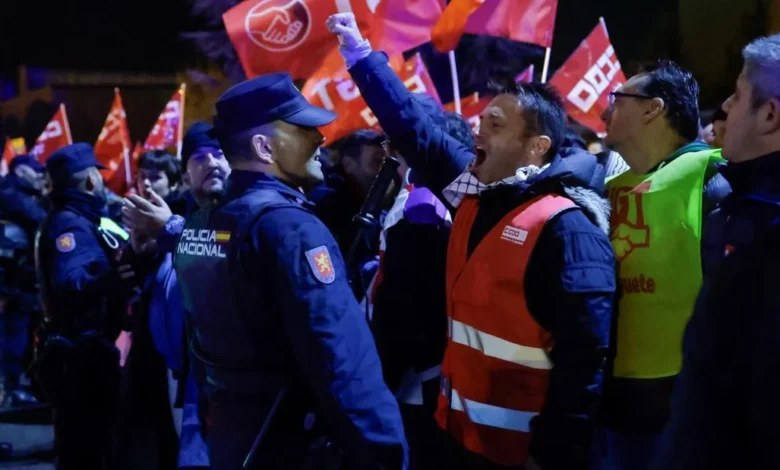
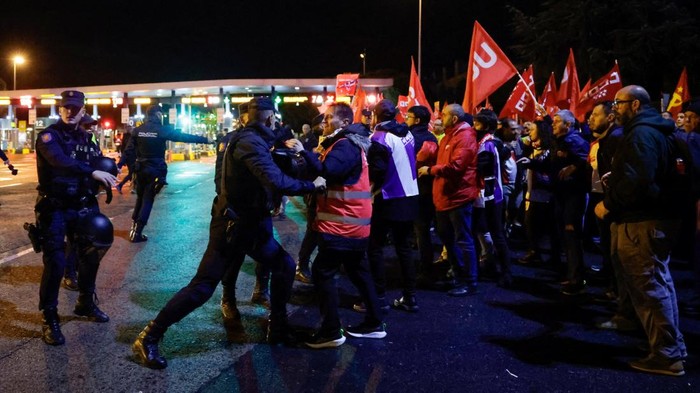
The gravity of the nationwide strike was vividly illustrated in Madrid, where fierce picketing and demonstrations materialized at the entrance of Mercamadrid, the sprawling primary wholesale market responsible for supplying fresh produce to vast regions of Spain. Members of various labor syndicates gathered in the early hours, locking arms and blocking access points to draw immediate attention to their plight.
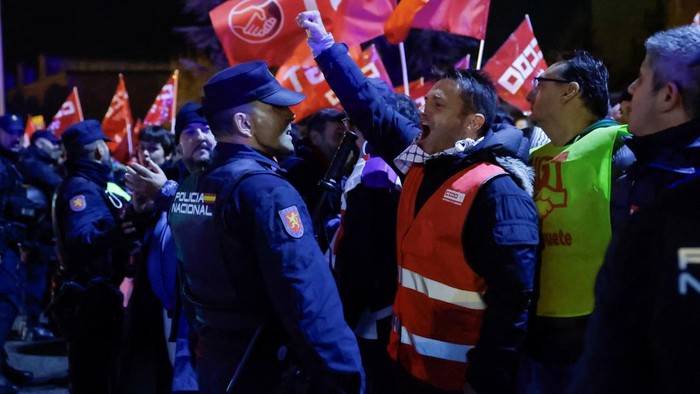
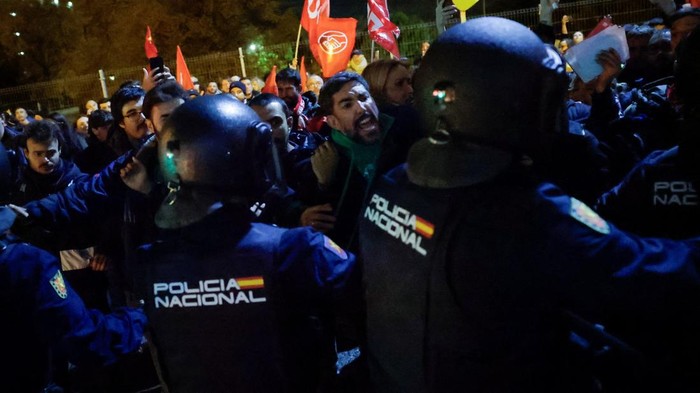
While the strike was intended to be peaceful, the high-stakes atmosphere occasionally boiled over into localized friction. Tension filled the air at the Mercamadrid gates as union members engaged in heated verbal debates with heavily armored law enforcement officers deployed to maintain public order. Police forces remained stationed in high numbers across strategic commercial and transit zones to prevent major infrastructural sabotage, yet demonstrators stood resolute. Banners reading slogans that linked stagnant wages directly to the housing emergency were prominently displayed, capturing the core grievance of a workforce struggling to maintain a basic standard of living.
Similar scenes echoed across other major economic hubs, including Barcelona, Valencia, and Seville, where public transport workers, industrial laborers, and service sector employees either walked off the job or participated in coordinated solidarity rallies. The disruption underscored the deep-seated frustration of a labor force that feels systematically abandoned by both private employers and public policymakers.
Background Context: Anatomy of Spain’s Housing Crisis
To fully comprehend the catalysts behind the November 2026 strike, one must examine the multi-layered deterioration of Spain’s housing sector over the preceding decade. The crisis is not merely a byproduct of transient market fluctuations; rather, it stems from a toxic confluence of rapid urbanization, the proliferation of unregulated short-term holiday rentals, foreign speculative real estate investments, and a stark deficit in public social housing construction.
In major metropolitan areas like Madrid and Barcelona, average rental prices have surged to historic highs, routinely consuming upwards of 50% to 60% of a standard worker’s monthly income. Concurrently, purchasing a residential property has transitioned from an achievable milestone for the middle and lower classes into an unattainable luxury. While nominal wages have experienced marginal adjustments, they have failed dismally to keep pace with the exponential compounding of housing and living costs.
Economists and housing rights advocates point out that Spain’s labor market has long suffered from structural vulnerabilities, including high rates of temporary employment contracts and persistent youth unemployment. These precarious employment conditions make it exceedingly difficult for workers to secure long-term mortgages or sign reliable rental leases, trapping them in an endless cycle of financial insecurity. Consequently, the demand for higher wages is viewed by labor leaders not as a luxury, but as an absolute economic prerequisite for survival.
Chronology of Events Leading to the General Strike
The trajectory toward the 24-hour national stoppage was marked by months of escalating tensions, failed negotiations, and localized demonstrations that ultimately culminated in the events of Wednesday, November 11, 2026.
The timeline of the movement unfolded through several critical phases:
- Early 2026: Grassroots tenant unions and labor syndicates begin reporting unprecedented surges in eviction rates and rental defaults across urban centers, prompting localized protests.
- August–September 2026: Major labor federations formally petition both government officials and employer associations for emergency wage interventions tied directly to regional housing inflation indices, which receive minimal traction.
- October 2026: Following the sudden announcement of a snap general election set for November 29, 2026, labor coalitions recognize a strategic window to leverage political urgency. Plans for a unified national general strike are officially ratified and announced to the public.
- Early November 2026: Preparatory meetings, union briefings, and informational campaigns rally workers across manufacturing, logistics, and service sectors to prepare for the 24-hour work stoppage.
- November 11, 2026: The national general strike officially commences at midnight. Widespread pickets paralyze distribution centers like Mercamadrid, and thousands of workers take to the streets demanding immediate policy action and wage remediation.
Official Responses and Political Implications
The timing of the strike—occurring merely weeks before the scheduled snap general election on November 29, 2026—has injected an intense wave of urgency into the national political discourse. Political parties across the ideological spectrum have been forced to hastily recalibrate their electoral manifestos to address the surging public outrage over housing affordability.

Incumbent government officials have defended their previous legislative packages, pointing to minor rent-control experiments and subsidies aimed at vulnerable youth. However, critics and opposition figures argue that these measures are superficial band-aids applied to a hemorrhage. Opposition leaders have seized upon the general strike as empirical evidence of administrative failure, promising sweeping structural reforms, massive public housing development initiatives, and stricter enforcement of rent caps should they secure victory at the ballot box.
Meanwhile, representatives of business associations and corporate employers have expressed deep concern over the economic fallout of the 24-hour strike. Industry groups warned that halting supply chains and logistics networks—such as the vital operations at Mercamadrid—inflicts unnecessary financial damage on small and medium-sized enterprises already navigating a fragile macroeconomic environment. Business leaders maintain that while the affordability of housing is a legitimate societal concern, forcing arbitrary wage hikes through industrial coercion could trigger inflationary spirals and corporate downsizing.
Broader Economic Implications and Outlook
The 24-hour general strike in Spain serves as a bellwether for a broader, continent-wide socio-economic phenomenon. Across major European urban centers, the commodification of housing has collided head-on with stagnant wage growth, sparking civil unrest that transcends traditional labor disputes.
The implications of the November 11 mobilization extend far beyond the immediate electoral cycle. If Spanish policymakers fail to enact comprehensive, structural solutions that reconcile the disparity between wages and housing costs, labor organizations have vowed to escalate their campaigns with prolonged strikes and civil disobedience.
Ultimately, the events in Spain crystallize a fundamental challenge for modern market economies: ensuring that the foundational right to shelter is not entirely eroded by speculative wealth accumulation. As the nation marches toward the critical November 29 general election, the voices of the striking workers—echoed loudly through the barricades of Mercamadrid and streets nationwide—will unquestionably dictate the future trajectory of Spain’s economic and social policy.