Tractor Supply Co. Expands Rural Delivery Reach Through Nationwide Partnership with Uber

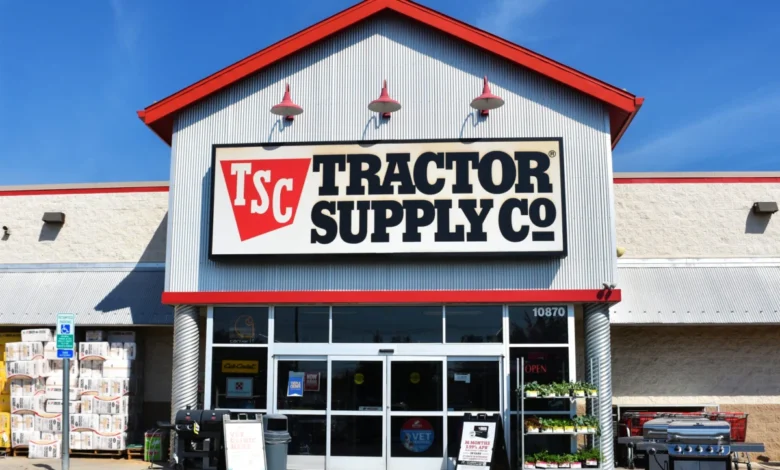
Tractor Supply Co., the largest operator of rural lifestyle retail stores in the United States, has announced a nationwide delivery partnership with ride-sharing and delivery giant Uber. The agreement, formally unveiled on November 12, integrates Tractor Supply’s extensive inventory of pet food, animal care essentials, lawn and garden supplies, tools, and outdoor gear directly into the Uber, Uber Eats, and Postmates consumer applications.
This strategic alliance represents a major milestone for both companies. By leveraging Uber’s ubiquitous logistics framework, Tractor Supply aims to bridge the convenience gap for consumers living outside major metropolitan centers. Meanwhile, Uber gains deeper access to suburban, exurban, and rural markets, areas traditionally less saturated by conventional on-demand delivery services.
Bridging the Rural Convenience Gap
For Uber, the partnership highlights an intentional geographic pivot. While food and retail delivery apps have historically concentrated their operational footprints in densely populated urban environments, platforms are increasingly looking outward to capture untapped demand. Tractor Supply’s brick-and-mortar footprint—comprising 2,486 stores across 49 states as of late September—is heavily skewed toward rural and semi-rural regions.
“The need for convenience doesn’t stop at the city limits,” said Nathan Bernheim, Uber’s head of retail partnerships, emphasizing the strategic alignment of the two networks.
From Tractor Supply’s perspective, the collaboration is designed to scale digital engagement and expose the brand to millions of active Uber platform users who may not have previously frequented its stores. Matthew Rubin, Tractor Supply’s senior vice president and president of digital and e-commerce, noted that the partnership serves as a vehicle to make the retailer’s signature "Life Out Here" ethos increasingly convenient for consumers.
To incentivize early adoption, Uber rolled out a targeted promotional campaign alongside the launch, offering customers a $20 discount on Tractor Supply purchases totaling $60 or more, subject to standard terms and regional fees. While neither company disclosed specific pricing metrics regarding delivery fees or average fulfillment speeds, the user journey mirrors standard app-based ordering: customers navigate to the retail section within Uber, Uber Eats, or Postmates, select a local storefront, assemble their carts, and monitor fulfillment in real time.
A Layered Strategy: Navigating the Delivery Ecosystem
The Uber integration is not an isolated move for Tractor Supply; rather, it represents the latest chapter in a broader, aggressive expansion of the retailer’s third-party delivery ecosystem. The company has methodically woven multiple platforms into its operational fabric to maximize customer touchpoints.
In July, Tractor Supply announced it had joined the Instacart Marketplace, a prominent competitor to Uber, to facilitate same-day delivery for rural shoppers. Furthermore, the agricultural and home improvement retailer has maintained an active delivery partnership with DoorDash since 2022.
However, the third-party delivery landscape is undergoing seismic shifts that could reshape how these partnerships function in the coming years. On October 29, DoorDash announced a definitive agreement to acquire Instacart in a massive transaction valued at $17 billion. Because the proposed mega-merger requires rigorous regulatory scrutiny and approval from Instacart shareholders, the transaction is not expected to close until late 2027 or the first half of 2028.
Until regulatory hurdles are cleared, Instacart will continue to operate as an independent entity. DoorDash has publicly indicated its intention to preserve the Instacart brand, consumer-facing application, and underlying enterprise technology products post-acquisition. For merchants like Tractor Supply, these unfolding consolidations underscore the necessity of maintaining a diversified portfolio of delivery partners rather than relying on a single logistical channel.
Internal Infrastructure and "Final Mile" Innovations
While third-party aggregators like Uber and Instacart broaden Tractor Supply’s top-of-funnel reach, the company has simultaneously poured significant capital into fortifying its proprietary supply chain and internal delivery networks over the past year and a half.
According to Tractor Supply CEO Hal Lawton, the retailer has spent upwards of five to six years refining its in-house store-based delivery mechanisms, which range from same-day drop-offs to standard two- to three-day fulfillment. More recently, the company rolled out a sophisticated "Final Mile" system designed to optimize inventory routing. This initiative establishes a hub-and-spoke model linking every three to four stores together, allowing a single designated hub store to service surrounding spokes efficiently.
The payoff has been tangible. Tractor Supply executed as many last-mile deliveries during the first half of 2026 as it did through the entirety of 2025. This robust performance from store-level fulfillment powered double-digit digital sales growth during fiscal Q2, providing a crucial operational cushion during a challenging macroeconomic period that saw comparable store sales dip by 1.5%.
Complementing these retail delivery hubs is a steadily expanding physical supply chain. In September, Tractor Supply officially opened its 11th major distribution center in Nampa, Idaho. Spanning an impressive 865,000 square feet, the facility was engineered to support approximately 123 stores across nine states in its initial phase, with a long-term capacity designed to service more than 200 locations as regional demand scales.
Market Positioning and Industry Standing
Tractor Supply’s aggressive omnichannel maneuvers reflect its status as a mature, digitally integrated retail leader. Within the e-commerce landscape, the company holds the No. 83 position in Digital Commerce 360’s Top 1000 Database, an annual ranking of North America’s largest online retailers based on annual e-commerce revenue. Additionally, the retailer ranks No. 225 in Digital Commerce 360 and ReFiBuy’s specialized AI Commerce Rankings, signaling an early and concerted embrace of automated and artificial intelligence applications within its digital infrastructure.
Analysis of Implications
The integration of Uber into Tractor Supply’s delivery matrix carries significant implications for the broader rural retail and logistics sectors. For consumers, the partnership eliminates historical barriers to convenience, allowing residents in exurban and agricultural communities to secure heavy, bulky, or time-sensitive items—such as livestock feed, emergency hardware, or seasonal gardening supplies—on demand without making a physical trip to the store.
For Uber, partnering with a retail giant heavily embedded in non-urban zip codes serves as a proof-of-concept for the viability of delivery economics outside major metropolitan nodes. If successful, it could pave the way for additional niche retailers with rural footprints to adopt similar aggregation models.
At the same time, Tractor Supply’s simultaneous reliance on Uber, Instacart, and DoorDash highlights a calculated risk-hedging strategy. As delivery platforms consolidate—typified by the pending DoorDash-Instacart merger—retailers that diversify their digital channels insulate themselves from sudden shifts in market power, fee structures, or platform exclusivity terms.
By marrying its rapidly modernizing internal distribution network—anchored by facilities like the new Nampa distribution center and the hub-and-spoke final mile system—with the massive consumer reach of third-party giants, Tractor Supply is constructing a resilient, multi-layered fulfillment apparatus. As e-commerce expectations continue to evolve in rural markets, these strategic alignments position the retailer to capture sustained digital growth well into the future.