Decoding the Mechanics of Large Language Models through Information Entropy and Cross-Entropy Loss

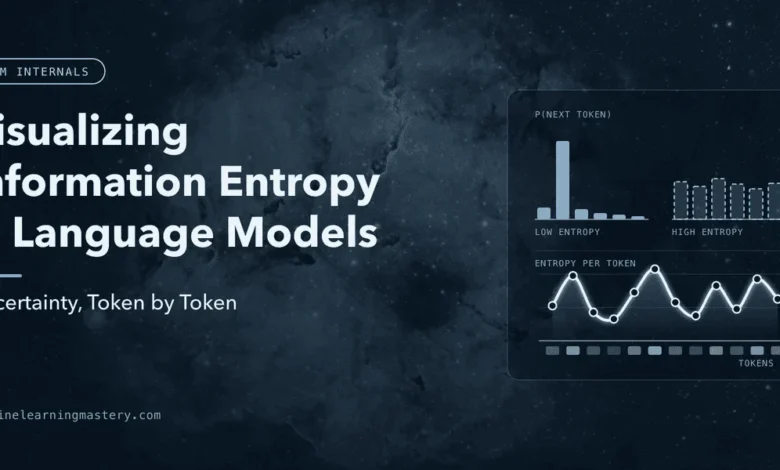
The rapid ascent of generative artificial intelligence has fundamentally altered the technological landscape, turning systems like GPT-4, Llama 3, and Gemini into household names. While these models appear to possess a near-human capability for reasoning and linguistic nuance, their underlying architecture relies on a foundation of rigorous mathematical principles that date back to the mid-20th century. Central to the training of these massive neural networks is the concept of information entropy—a metric for uncertainty—and its practical application in the form of cross-entropy loss. By examining these concepts, one can uncover how modern AI systems are essentially calibrated to minimize their own "surprise" when predicting the next token in a sequence.
The Historical Genesis of Information Theory
To understand how modern artificial intelligence functions, one must look back to 1948, when Claude Shannon, an American mathematician and engineer, published his seminal paper, "A Mathematical Theory of Communication." Shannon, working at Bell Labs, sought to quantify the fundamental limits of signal processing and data transmission. His most enduring contribution was the definition of information entropy, a statistical measure that quantifies the average level of "surprise" or uncertainty inherent in a variable’s possible outcomes.
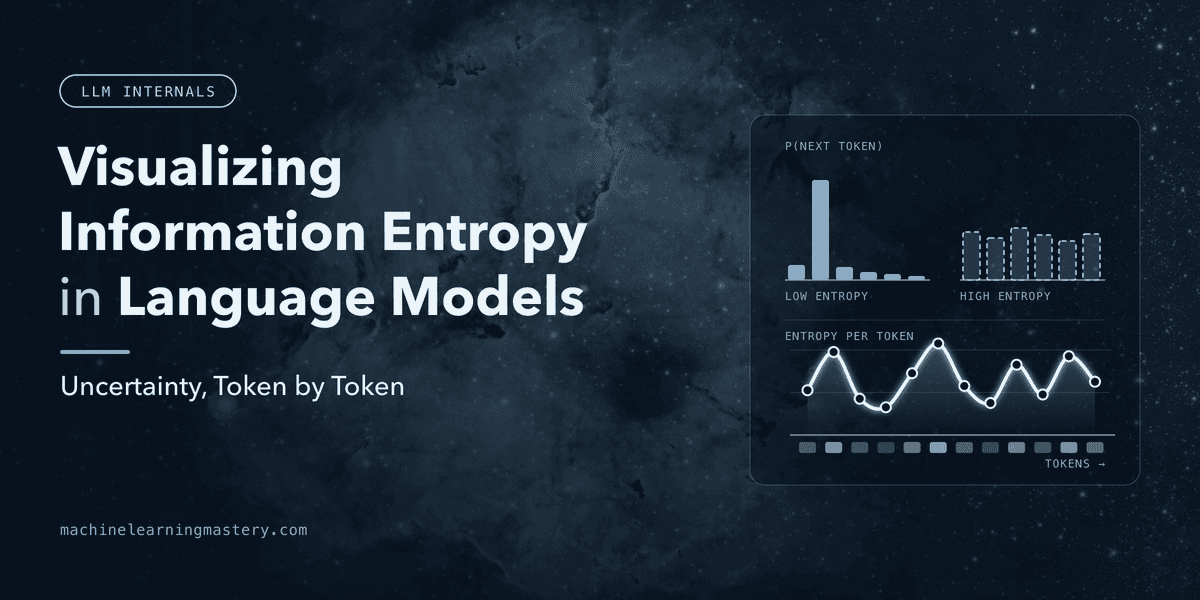
In Shannon’s framework, an event with a high probability of occurring carries very little information because its outcome is expected. Conversely, an event with a low probability carries high information content because its occurrence is "surprising." When applied to a probability distribution, the entropy $H$—expressed as $H(P) = – sum P(x) log_2 P(x)$—reaches its maximum value when all possible outcomes are equally likely. This principle provides the bedrock for modern data compression and, by extension, the training regimes of contemporary large language models (LLMs).
The Evolution of Neural Network Training
For decades, neural networks were limited in scope, used primarily for narrow tasks like digit recognition or basic classification. The shift toward modern LLMs began in earnest around 2017 with the introduction of the Transformer architecture by researchers at Google. This architecture allowed models to process data in parallel, enabling them to ingest massive datasets—essentially the breadth of the public internet—and learn the statistical structure of human language.
The training process for these models is fundamentally iterative. An LLM operates as an "uncertainty engine," processing a sequence of tokens and outputting a probability distribution over its entire vocabulary for the next word. The goal of the training phase is to refine the model’s internal weights so that its predicted distribution aligns as closely as possible with the actual next token found in its training corpus. This is where cross-entropy loss becomes the primary instrument for progress.
Cross-Entropy: The Compass of AI Optimization
Cross-entropy loss is the metric used to calculate the distance between two probability distributions: the "ground truth" (the actual next word) and the model’s prediction. In a typical training scenario, the ground truth is represented as a "one-hot" vector, where the probability of the correct word is 1.0, and all other words are 0.0.
If a model predicts that the word "cat" has a 10% probability, but the actual word is "cat," the cross-entropy loss will be high, signaling to the model’s optimization algorithm (typically a variant of stochastic gradient descent) that it must adjust its internal parameters. By minimizing this loss over trillions of tokens, the model gradually increases the probability assigned to the correct token. This shift from a high-entropy state—where the model is "unsure" and spreads its probability mass across many words—to a low-entropy state, where the model demonstrates high confidence in the correct word, constitutes the "learning" process of modern AI.
Quantitative Analysis and Practical Application
To illustrate this mechanism, researchers often utilize synthetic datasets with limited vocabularies. Consider a five-word vocabulary: apple, banana, cat, dog, elephant. If the target word is "cat," a perfectly trained model would assign a probability of 1.0 to "cat" and 0.0 to others, resulting in zero cross-entropy loss.
In practice, models operate on a spectrum of confidence:
- Confident and Correct: The model assigns a high probability (e.g., 0.90) to the correct target, resulting in low cross-entropy loss.
- Confident and Wrong: The model assigns a high probability (e.g., 0.80) to an incorrect token. This yields a very high cross-entropy loss, which forces a significant adjustment of the model’s weights during the next training iteration.
- Uncertain (Flat): The model assigns an equal probability (0.20) to all words. This represents high entropy and high uncertainty, indicating that the model has not yet learned the statistical patterns of the sequence.
Data from recent machine learning benchmarks indicate that as models scale in size, their ability to reduce this cross-entropy loss improves, leading to a noticeable decrease in perplexity—a metric derived from cross-entropy that measures how well a probability model predicts a sample. Lower perplexity generally correlates with more coherent, grammatically accurate, and contextually relevant text generation.
Official Perspectives and Technical Implications
Industry leaders and researchers from organizations such as OpenAI, Anthropic, and Google DeepMind frequently emphasize that while cross-entropy is the "engine" of training, it is only part of the solution. Post-training processes, such as Reinforcement Learning from Human Feedback (RLHF), are necessary to align these statistically optimized models with human intent and safety guidelines.
"Cross-entropy is the bedrock of our initial pre-training phase," noted a senior researcher at a major AI lab, speaking on condition of anonymity. "However, it is a purely statistical endeavor. It doesn’t inherently understand ‘truth’ or ‘ethics’; it simply minimizes the divergence between the model’s prediction and the training data. The subsequent alignment phases are what translate that mathematical precision into a product that feels intuitive to a human user."
The Broader Impact on AI Development
The implications of this reliance on entropy-based optimization are profound. Firstly, it highlights that LLMs are not "thinking" in a traditional sense; they are performing high-dimensional probabilistic inference. This explains why these models are prone to "hallucinations"—when the model assigns a high probability to a sequence of words that is statistically likely but factually incorrect. Because the loss function is calculated against the statistical structure of the training data rather than a database of objective facts, the model prioritizes linguistic plausibility over veracity.
Secondly, the compute requirements for minimizing cross-entropy over ever-larger datasets have triggered a massive investment cycle in high-performance computing hardware, particularly GPUs. As models move toward trillion-parameter scales, the energy consumption associated with the millions of iterations required to minimize loss has become a significant environmental and economic consideration.
Conclusion: A Foundation of Uncertainty
In summary, the transition from classical information theory to the modern era of generative AI is a testament to the power of mathematical abstraction. Claude Shannon’s 1948 exploration of uncertainty remains the silent architect behind the text-generation capabilities of today’s most advanced systems. By viewing cross-entropy loss as the mathematical manifestation of learning, we can better understand both the extraordinary capabilities and the inherent limitations of the artificial intelligence systems that are currently reshaping the global digital infrastructure. As research continues, the goal remains clear: to refine the optimization of these models, pushing the boundaries of what is possible when we treat the complexity of human language as a problem of statistical uncertainty.
Related posts: