The Chemistry of Consciousness: Why Biological Memory and Emotion May Remain Out of Reach for Artificial Intelligence

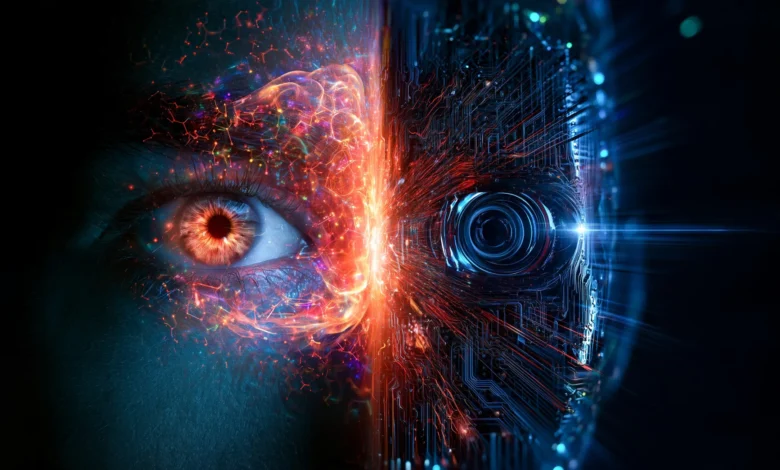
The fundamental debate surrounding the trajectory of artificial intelligence and its relation to human cognition has long centered on processing speed, algorithmic complexity, and raw computing power. Yet, a growing body of theoretical neuroscience suggests that the defining chasm between silicon-based computation and biological sentience may not be computational at all, but chemical. A comprehensive new review posits that the human brain does not merely process electrical impulses in a digital vacuum; rather, it actively writes, stores, and reads memories through a sophisticated matrix of chemical interactions involving neurons, surrounding astrocytes, and extracellular molecular environments.
Authored by Dr. Gerard Marx of MX Biotech Ltd. and Professor Chaim Gilon of the Department of Chemistry at the Hebrew University of Jerusalem, the paper—titled "Consciousness, Memory and Intelligence: A Mechanistic Perspective"—reframes the longstanding discourse on the mind. By intrinsically linking biological memory to emotion, hormonal shifts, and chemical signaling, the researchers argue that computational power alone, no matter how vast, may inherently lack the foundational machinery required to generate genuine subjective consciousness. As advanced language models and neural networks continue to mimic human reasoning with startling accuracy, this biochemical perspective offers a timely counter-narrative, questioning whether mimicking intelligent behavior is functionally equivalent to possessing a living, feeling mind.
The Evocative Power of Biological Recall
To understand the mechanics proposed by Marx and Gilon, one must first examine the deeply visceral nature of human memory. Unlike a hard drive retrieving a digital file in a purely binary format, human recollection is rarely a sterile transfer of data. Hearing a familiar melody can instantly transport an individual decades backward in time; a faint, distinctive scent can resurrect the memory of a long-forgotten place or person; and recalling a traumatic or terrifying event can instantaneously trigger profound physiological reactions, including elevated heart rates, surges of adrenaline, and muscular tension.
These everyday phenomena highlight a distinct characteristic of biological memory: it is inextricably bound to emotion and physical sensation. While computers can store, index, and retrieve vast troves of information with near-perfect fidelity, their internal architecture remains devoid of subjective resonance. A server storing historical records does not feel nostalgia, nor does an autonomous vehicle processing obstacle data experience fear. It is this emotional coloring of memory that forms the cornerstone of the Marx-Gilon hypothesis, pointing toward a deeply physical and chemical origin for conscious thought that standard electronic architectures cannot replicate.
The Evolution of the Tripartite Memory Model
The framework presented by Marx and Gilon builds upon years of incremental research into the physical foundations of memory. Historically, neuroscience has heavily prioritized neurons and their electrical signaling pathways as the primary units of cognitive function. Synaptic plasticity—the strengthening or weakening of synapses based on recent patterns of activity—has long been considered the gold standard mechanism for how learning and memory occur.
However, the researchers argue that this neuron-centric model is incomplete. In their latest review, they expand upon what is known as the Tripartite Mechanism of Memory. According to this paradigm, memory formation and retrieval do not occur in neuronal isolation. Instead, they emerge from dynamic, cooperative interactions between three distinct components:
- Brain cells, specifically emphasizing the massive population of astrocytes—a star-shaped glial cell traditionally thought to merely provide structural and nutritional support to neurons.
- The intricate extracellular molecular environment, representing the physical space and biochemical soup surrounding brain cells.
- A diverse array of active chemical substances, including metal ions, classical neurotransmitters, and gliotransmitters.
Astrocytes, long overlooked as mere cellular scaffolding, are now understood to actively modulate synaptic transmission, clear neurotransmitters from the synaptic cleft, and release their own chemical signals known as gliotransmitters. Marx and Gilon suggest that networks of astrocytes work in concert with neurons to process cognitive data within the extracellular matrix, effectively creating a physical, chemical record of experience that transcends simple electrical firing patterns.
Chronology of a Paradigm Shift: From Molecular Foundations to Cognitive Theory
The publication of "Consciousness, Memory and Intelligence: A Mechanistic Perspective" represents the culmination of a multi-decade scientific journey exploring the interface between biochemistry and cognitive function.
- Late 20th to Early 21st Century: Neuroscientists predominantly map memory through electrophysiological studies, solidifying the Long-Term Potentiation (LTP) model centered on neuronal synapses.
- 2010s: Dr. Gerard Marx and Professor Chaim Gilon begin publishing collaborative works investigating the molecular foundations of biopolymers, extracellular matrix dynamics, and how biochemical complexes might store physical memory traces.
- Early 2020s: Growing interest in non-neuronal brain cells elevates the status of astrocytes from passive bystanders to active participants in synaptic plasticity and information processing.
- Recent Review Publication: Marx and Gilon synthesize these molecular observations into the Tripartite Mechanism of Memory, bridging cellular biochemistry with broader philosophical and scientific inquiries into consciousness, thought formation, and the limitations of artificial intelligence.
Implications for Artificial Intelligence and Sentience
The rapid commercialization and deployment of generative artificial intelligence have accelerated philosophical debates regarding machine sentience. As large language models pass complex professional examinations, generate creative works, and exhibit advanced conversational abilities, public perception increasingly flirts with the idea that digital systems might one day wake up.
Marx and Gilon directly challenge the prevailing computationalism view—the hypothesis that the mind is simply software running on the brain’s hardware, and that any sufficiently powerful computer running the right software could theoretically possess a mind. They argue that electronic hardware is fundamentally incompatible with the biological mechanisms that generate true subjective experience.
While silicon chips rely on the controlled flow of electrons through transistors governed by binary code, biological brains operate via complex, wetware chemistry. The molecules, ions, neurohormones, and cellular interactions proposed in the Tripartite Mechanism of Memory create an embodied physical state that cannot be simulated purely through algorithmic computation. Consequently, the researchers draw a sharp boundary between demonstrating intelligent behavior—such as pattern recognition, language translation, and problem-solving—and possessing the biological machinery required for genuine consciousness. An AI system can calculate the statistical probability of a word following another, but it does not experience the semantic meaning or emotional weight of the language it generates.
Broader Scientific Analysis and Future Outlook
The implications of the Marx-Gilon review extend far beyond the artificial intelligence debate, offering neuroscientists a novel roadmap for investigating some of the most stubborn mysteries in biology. By proposing a biochemical framework for how memories are physically encoded and subsequently translated into thoughts, the researchers provide concrete avenues for empirical testing.
Critics and skeptical neuroscientists will undoubtedly demand rigorous experimental validation. Demonstrating that astrocytes and extracellular chemistry directly encode episodic or semantic memory will require innovative experimental designs capable of monitoring nanoscale molecular interactions in real time within living neural tissue. Furthermore, explaining how chemical interactions ultimately bridge the gap to subjective phenomenology—the hard problem of consciousness as famously framed by philosopher David Chalmers—remains an immense hurdle.
Nevertheless, by shifting the lens away from purely electrical models of cognition, Marx and Gilon open new doors for the treatment of neurodegenerative diseases, cognitive disorders, and psychiatric conditions that involve memory and emotional dysregulation. If memories are indeed written in the chemistry of the brain’s cellular matrix, medical interventions targeting extracellular environments and glial cells could yield entirely new classes of therapeutics.
As the boundary between human capability and machine efficiency continues to blur, this biochemical perspective serves as a timely reminder of the profound complexity of living matter. Whether artificial intelligence achieves unprecedented levels of computational sophistication or remains an advanced tool of human ingenuity, the unique chemistry of human memory ensures that biological intelligence retains an irreplaceable, distinct place in the natural order.