React Native 0.86 Official Release Brings Edge-to-Edge Android Support and Foundation Transition

React Native 0.86 has officially entered the stable release cycle, marking a significant milestone for the cross-platform development framework by delivering comprehensive Android 15 edge-to-edge compatibility and critical refinements to the developer experience. This release is particularly notable for its adherence to the project’s evolving stability goals, as it introduces no user-facing breaking changes for the second consecutive time. By prioritizing backward compatibility and structural reliability, the React Native core team aims to mitigate the "upgrade fatigue" that has historically plagued large-scale mobile projects.
The Migration to the React Foundation
A pivotal component of the 0.86 release cycle is the formal transition of the React Native repository and its associated projects—including React, Metro, and Yoga—from the Meta (formerly Facebook) GitHub organization to the dedicated react organization. This move is not merely administrative; it signifies the formal integration of the ecosystem into the newly established React Foundation. The foundation, an independent entity, has been chartered to ensure the long-term stewardship, sustainability, and open-source governance of the React ecosystem.
By decentralizing ownership, the project aims to foster a more inclusive development model that is less tethered to the strategic priorities of a single corporation. For the developer community, this transition is seamless. GitHub’s infrastructure will automatically reroute existing URLs, pull requests, and issue trackers to the new organization, ensuring that no immediate manual intervention is required for ongoing projects. This shift represents the culmination of a multi-year effort to modernize the governance structure of one of the world’s most widely used mobile frameworks.
Advancing Android 15 Integration
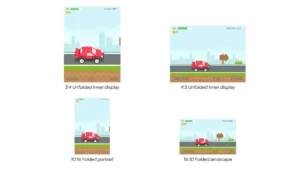
The mobile landscape is currently undergoing a paradigm shift toward "edge-to-edge" display designs, where applications are expected to draw content behind the system status bars and navigation bars to provide a more immersive user experience. With the release of Android 15, Google has tightened its enforcement of these design standards. React Native 0.86 addresses these requirements head-on, providing a robust solution for developers.
Previously, developers had to manually manage edge-to-edge configurations, often leading to inconsistent UI states or clipping issues when the operating system enforced strict display boundaries. The 0.86 update introduces comprehensive fixes that ensure consistency even when the edgeToEdgeEnabled Gradle property is not explicitly toggled by the developer. This proactive approach by the core team ensures that React Native applications remain compliant with modern Android design language (Material 3) without requiring deep, manual refactoring of existing navigation stacks. The result is a smoother transition for apps targeting the latest Android API levels, reducing the likelihood of UI bugs during the critical Android 15 adoption phase.
Enhancements in React Native DevTools
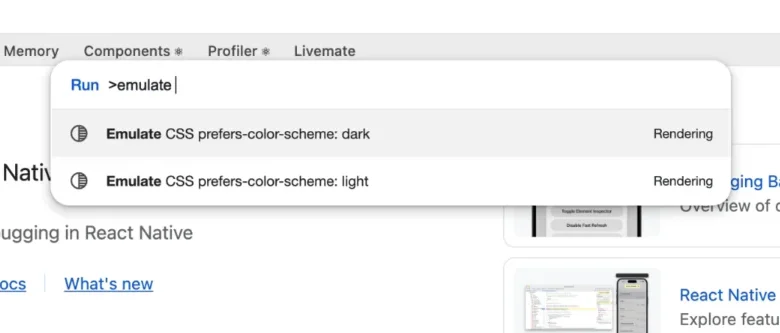
The developer experience has been further bolstered by significant upgrades to React Native DevTools. A primary addition is the new light/dark mode emulation feature, accessible via the Emulation.setEmulatedMedia command or the DevTools Command Palette (using cmd or ctrl + shift + P).
In previous versions, verifying how an application handled appearance modes required toggling the physical device or emulator settings—a tedious process that often involved navigating deep into system menus. By allowing developers to force light or dark media queries directly from the debug console, the team has effectively brought parity between mobile debugging and web-based browser dev tools. This temporary state reset mechanism ensures that once the developer disconnects from the session, the device reverts to its native settings, preventing accidental state pollution during testing.
Analyzing the "Zero Breaking Changes" Strategy
Perhaps the most impactful aspect of version 0.86 is its status as a non-breaking release. In the context of software engineering, a breaking change is defined as any modification that forces a user to alter their existing source code to accommodate a new version. In the past, React Native upgrades were notoriously complex, often requiring developers to dedicate entire "sprint cycles" to dependency updates and API refactoring.

The 0.86 release, following the success of version 0.83, confirms that the core team’s new versioning and deprecation policies are yielding results. By strictly adhering to a roadmap that emphasizes predictable, incremental updates, the team is successfully reducing the total cost of ownership for mobile applications. Data from the React Native community suggests that companies maintaining large-scale apps are now able to perform upgrades significantly faster, moving from weeks of preparation to mere hours of testing and validation.
Technical Deep Dive: Infrastructure and Performance
Beyond the visible UI and tooling improvements, version 0.86 contains over 596 individual commits, reflecting a high level of collaborative intensity from 97 unique contributors. Significant effort has been directed toward the JSI (JavaScript Interface), which serves as the bridge between JavaScript and the native C++ layer. New API additions in this release empower developers to create more performant native modules, allowing for deeper interaction between the JS engine and native platform capabilities without incurring the performance overhead traditionally associated with the "bridge" architecture.
Furthermore, the update includes optimizations in the rendering, layout, and animation pipelines. By aligning the runtime more closely with modern web specifications, the framework continues to shrink the gap between mobile-web performance and native execution. Improvements in accessibility—an area that has seen increased regulatory and ethical focus—ensure that the framework’s core components are better equipped to interface with screen readers and other assistive technologies out of the box.
Broader Implications and Community Impact
The release of version 0.86 is a testament to the maturation of the React Native ecosystem. What began as an experimental project at a single company has evolved into an industry-standard framework. The move to the React Foundation provides a level of institutional permanence that reassures enterprise stakeholders who rely on React Native for mission-critical applications.
From a market perspective, this update reinforces the competitiveness of cross-platform development. As native platform requirements (such as Android’s edge-to-edge mandate) become more complex, the burden of keeping pace with these changes shifts from the individual developer to the framework maintainers. By abstracting away these complexities, React Native allows businesses to focus on product features rather than platform-specific maintenance.
Upgrade Path and Adoption
For teams currently running version 0.85, the upgrade to 0.86 is designed to be trivial. The core team recommends utilizing the React Native Upgrade Helper, a community-maintained tool that provides a side-by-side comparison of the code changes required between specific versions. For projects leveraging the Expo framework, support for 0.86 is being integrated into the expo@canary channel, providing a controlled path for early adopters to begin testing before a full rollout.
As of this release, version 0.83.x has officially moved to the "unsupported" status, marking the end of its life cycle. Organizations are urged to prioritize the transition to 0.86 to ensure continued access to security patches, bug fixes, and new performance optimizations.
Conclusion
React Native 0.86 stands as a high-water mark for the framework’s recent history. By balancing the technical necessity of supporting Android’s newest OS features with a strict, disciplined approach to breaking changes, the core team has delivered a release that is both powerful and remarkably accessible. As the project settles into its new home under the React Foundation, the focus remains clear: providing a sustainable, high-performance, and developer-friendly environment for building the next generation of mobile applications. The success of this release, backed by nearly 600 commits and a diverse group of nearly 100 contributors, signals a bright, stable future for the framework as it continues to define the landscape of cross-platform mobile development.
Related posts: