Unlocking the Quantum Frontier: New Computational Breakthrough at PPPL Accelerates Diamond Qubit Discovery for Next-Generation Computing

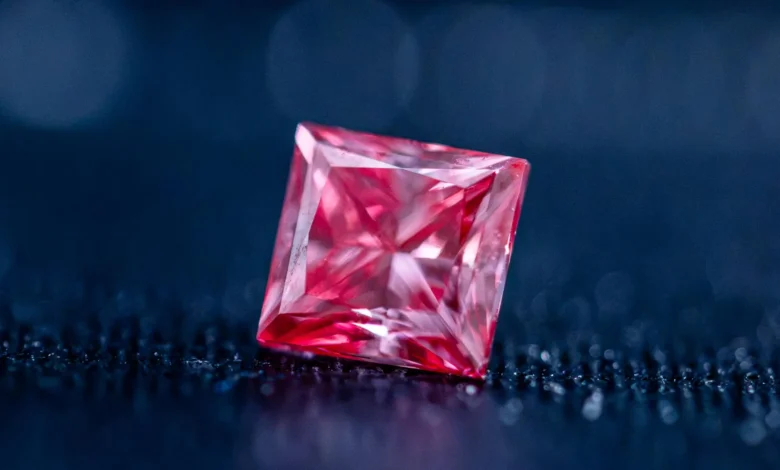
A groundbreaking computational technique developed at the U.S. Department of Energy’s Princeton Plasma Physics Laboratory (PPPL) is poised to fundamentally accelerate the search for advanced diamond materials capable of powering the next generation of quantum computers and ultra-sensitive sensors. The novel methodology, which bridges the traditional gap between solid-state physics and molecular chemistry, dramatically slashes the time and computational resources required to evaluate promising quantum defects within diamond crystal lattices. Published recently in the peer-reviewed journal ACS Central Science, this innovation has already successfully identified novel candidate materials—specifically involving boron and oxygen—that exhibit unique optical and quantum properties. As researchers worldwide race to overcome the formidable engineering hurdles of quantum scalability, this discovery offers a streamlined, highly accurate pathway toward practical, room-temperature quantum applications.
The Material Bottleneck in Quantum Development
To understand the gravity of the PPPL breakthrough, one must examine the core challenges currently facing the quantum technology sector. Quantum computers promise to revolutionize industries by solving extraordinarily complex computational problems—ranging from molecular modeling to cryptography—exponentially faster than the most advanced classical supercomputers in existence today. Similarly, quantum sensors offer unprecedented levels of sensitivity and precision, opening new horizons in navigation, medical diagnostics, and fundamental physics research.
However, the realization of these technologies has been severely bottlenecked by material constraints. The fundamental units of quantum information, known as qubits, are notoriously fragile. Most physical systems investigated for quantum computing require extreme cryogenic environments—temperatures near absolute zero—to maintain the delicate quantum coherence necessary for calculations. Maintaining such extreme operating conditions requires massive, expensive cooling infrastructure, severely limiting the practical deployment of quantum systems outside of specialized laboratory settings.
Diamonds have long held a unique position of promise in this landscape because certain quantum properties embedded within their crystal structures can remain stable and functional even at room temperature. Yet, finding and optimizing these ideal diamond-based configurations has historically been a slow, computationally punishing endeavor.
The Paradox of Perfection: Why Imperfect Diamonds Drive Quantum Innovation
Paradoxically, the ideal material for quantum computing is not a flawless gem. A chemically pure, structurally perfect diamond made exclusively of carbon atoms is fundamentally inert in terms of quantum computing utility. The true engine of a diamond-based qubit lies in structural imperfections, or defects, within the crystal lattice.
These defects occur naturally or are artificially induced when a carbon atom is missing from its normal lattice site (a vacancy), when a foreign element substitutes for a carbon atom, or through a combination of both anomalies. The electronic and atomic environment surrounding these point defects can trap electrons, creating localized quantum states that behave as qubits.
For decades, the gold standard in this field has been the nitrogen-vacancy (NV) center, a defect formed when a nitrogen atom substitutes for a carbon atom adjacent to an empty lattice site. Under laser illumination, NV centers emit distinct red light, allowing researchers to optically initialize, manipulate, and read out their quantum states. While the NV center has served as a foundational workhorse for quantum sensing and memory experiments, relying on a single type of defect severely restricts the architecture of complex quantum devices.
Expanding the catalog of viable defects has been stifled by computational limitations. Accurately modeling the quantum mechanical behavior of a defect embedded within a vast diamond lattice traditionally requires immense supercomputing power. Simulating how thousands of surrounding carbon atoms interact with a single impurity demands staggering amounts of processing time, rendering high-throughput screening of potential new qubit candidates virtually impossible.
A Molecular Approach to Solid-State Physics
Mark Martirez, a staff research scientist at PPPL, recognized that breaking this computational bottleneck required changing how scientists model the problem. Instead of attempting to simulate a massive, continuous diamond lattice to understand a localized defect, Martirez developed an approach that isolates a tiny region consisting of just 16 to 30 atoms surrounding the imperfection.
By conceptually "carving out" this microscopic atomic cluster and treating it mathematically as an independent molecule, Martirez unlocked the ability to deploy powerful, highly refined computational methods that quantum chemists have spent decades perfecting. These established molecular chemistry techniques evaluate quantum states with exceptional mathematical rigor while dramatically reducing computational overhead.
"Because we’re treating the qubits as molecules, the cost of calculating these defects is equivalent to the cost of just modeling a simple molecule," Martirez explained regarding the breakthrough. "This method really opened the floodgates" in terms of assessing thousands of potential configurations that were previously ignored due to resource constraints.
By streamlining these calculations, the PPPL technique allows researchers to model how various defect candidates respond to laser light and microwave pulses in a fraction of the time previously required. Using this streamlined methodology, the research team successfully identified promising new defect configurations involving boron and oxygen atoms, establishing that alternative impurities can serve as viable quantum building blocks.
A Spectrum of Quantum Colors and Multi-Qubit Architectures
The discovery of boron- and oxygen-based defects introduces a critical advantage to quantum device design: optical diversity. While nitrogen-vacancy centers emit red light, the newly investigated oxygen defects produce blue light, and boron-associated defects emit ultraviolet light.
This optical differentiation introduces the potential for multi-color quantum architectures. In future quantum devices, researchers could theoretically integrate several distinct types of qubits onto a single diamond chip. Because each defect type responds exclusively to specific wavelengths of light and microwave frequencies, scientists could selectively probe, manipulate, and read out one group of qubits without disturbing neighboring quantum states—a capability known as addressability.
"One could imagine, then, combining different qubits of different responses, so you can basically probe one qubit but not the other," Martirez noted, highlighting the architectural flexibility enabled by the new computational screening tool.
Bridging Disciplines: Chemistry Meets Solid-State Physics
Beyond discovering specific material candidates, the PPPL research signals a broader philosophical shift in how the scientific community approaches quantum materials development. Historically, the study of solid-state qubits has been dominated by physicists and materials scientists. Martirez argues that incorporating the deep, intuitive methodologies of quantum chemistry is essential for accelerating future progress.
Chemists have spent generations mastering the art of designing molecules for specific functional outcomes, an expertise routinely applied in pharmaceuticals and advanced polymer chemistry. Martirez envisions a future where quantum defects are engineered from the ground up, tailored atom-by-atom to perform precise quantum operations using chemical design principles.
Furthermore, this interdisciplinary feedback loop creates an intriguing recursive possibility: the advancement of quantum computing could ultimately revolutionize the field of chemistry itself. Practical, multi-qubit quantum systems will eventually possess the computational capacity to model molecular behavior with absolute quantum-mechanical accuracy. This capability would allow researchers to simulate complex biological macromolecules, enzymes, and pharmaceutical compounds in ways that classical computers can only approximate.
Such a leap forward would directly benefit chemical-adjacent industries, transforming drug discovery, accelerating materials science, and deepening humanity’s fundamental understanding of molecular interactions. In essence, quantum chemistry tools could soon refine the very quantum hardware required to propel chemical research into a new era.
Broader Implications and Future Outlook
The development and validation of this computational technique come at a critical juncture for national research priorities emphasizing quantum information science. With funding provided through PPPL’s Laboratory Directed Research and Development program and the U.S. Department of Energy’s Office of Science, Office of Fusion Energy Sciences, the research underscores the vital role of national laboratories in fostering cross-disciplinary innovation.
As the global scientific community continues its aggressive pursuit of scalable quantum infrastructure, tools that reduce development costs and accelerate material discovery will prove indispensable. By demonstrating that molecular chemistry techniques can be successfully translated to solid-state lattice defects, PPPL has expanded the toolkit available to quantum engineers.
Ultimately, bridging the gap between physics and chemistry may prove to be the catalyst that transforms diamond from a gemstone of traditional value into the cornerstone of the quantum computing revolution. As researchers begin synthesizing and testing the boron and oxygen defects identified by Martirez’s model, the pathway toward versatile, room-temperature, multi-color quantum devices grows distinctly clearer.
Related posts: