Microsoft Edge Update Triggers Widespread Right-Click Paste Failure in Microsoft Teams Chats

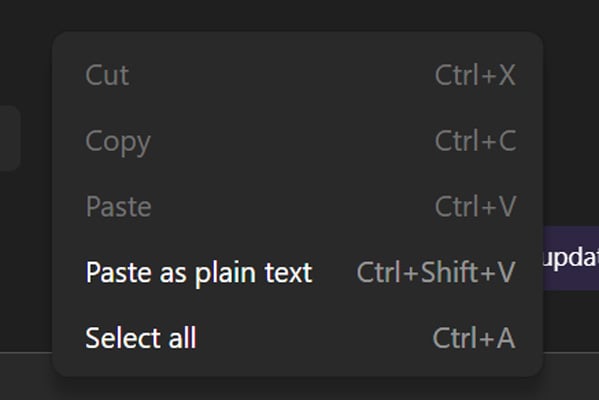
A recent update to the Microsoft Edge browser has inadvertently introduced a significant bug that is preventing users from utilizing the right-click paste functionality within Microsoft Teams desktop client chats. The issue, first flagged by Microsoft on April 14th, has left many users unable to paste URLs, text, or images into their conversations through the conventional context menu, with the "Paste" option appearing greyed out. This disruption, stemming from a code regression within Edge that impacts Teams’ reliance on the browser for certain features, has prompted widespread discussion and concern across user forums and professional networks.
The Unfolding Issue: From User Reports to Official Acknowledgment
The problem surfaced as users began experiencing a frustrating anomaly: the seemingly straightforward act of right-clicking and selecting "Paste" was rendered inoperable within Teams. Instead of the familiar paste option, users encountered a disabled menu item, forcing them to find alternative methods for transferring information. The immediate impact was a significant slowdown in communication workflows, particularly for those who frequently share links, code snippets, or visual content within their Teams discussions.
Microsoft, in an advisory released on April 14th, confirmed the widespread nature of the reports. The company stated, "Impacted users report that they are unable to copy and paste URLs, text, and images in Microsoft Teams desktop client chats, as the paste option appears greyed out when using the right-click dropdown menu method." This official acknowledgment validated the experiences of countless individuals who had taken to platforms like Reddit and Microsoft’s own forums to voice their concerns.

One user, an administrator on the Microsoft Forums, shared their experience, noting, "I have multiple users on version 26072.519.4556.7438 experiencing this issue, including myself. Cannot right-click Paste, but CTRL+V and paste as text are allowed." This comment highlights a critical detail: while the right-click method was broken, the core copy-paste functionality via keyboard shortcuts remained intact for many.
A Code Regression: The Technical Underpinning of the Bug
The root cause of this disruptive bug has been identified by Microsoft as a "code regression" introduced in a recent Microsoft Edge browser update. Microsoft Teams, while a standalone application, integrates components of the Edge browser for rendering certain web-based functionalities, including aspects of its chat interface. When this underlying browser component is affected by a regression, it can cascade into unexpected behavior within the application that relies on it.
A code regression occurs when a recent change or update to software introduces new errors or causes previously functional features to stop working correctly. In this instance, the specific update to Edge contained code that conflicted with how Teams handled context menu operations, specifically the paste command. This underscores the intricate dependencies that modern software applications often have on one another, particularly when leveraging shared underlying technologies like web browser engines.
Workarounds and User Frustration
While Microsoft acknowledged the issue promptly, the immediate solution for affected users was to rely on keyboard shortcuts. The company advised, "To bypass impact, we recommended that users attempt to copy the intended URLs, text, and images using Ctrl + C and paste using Ctrl + V for Windows, and corresponding Cmd + C and Cmd + V for Mac." This workaround, while functional, presented a less intuitive and often slower method for users accustomed to the convenience of the right-click context menu.

The frustration among users was palpable. On Reddit, a thread titled "Seriously Microsoft, now copypaste doesn’t work?" garnered significant attention, with users sharing their exasperation and seeking solutions. The sentiment was that such a fundamental functionality being broken was a significant inconvenience, especially in professional environments where efficient communication is paramount. Many users also reported that standard troubleshooting steps, such as reinstalling Teams or clearing its cache, did not resolve the problem, further emphasizing the bug’s origin within the underlying browser integration.
Timeline of the Incident
- Pre-April 14, 2024: Users begin experiencing the right-click paste failure in Microsoft Teams desktop client chats. Reports begin to surface on community forums.
- April 14, 2024: Microsoft issues an official advisory acknowledging the bug, confirming it’s related to a recent Microsoft Edge browser update, and providing keyboard shortcut workarounds.
- April 16, 2024 (Latest Update): Microsoft indicates that a fix is being rolled out in stages, with ongoing monitoring of telemetry to confirm system recovery. No exact timeline for full resolution is provided.
This timeline highlights Microsoft’s relatively swift acknowledgment of the issue, a crucial step in managing user confidence. However, the absence of a definitive timeline for the full resolution leaves a degree of uncertainty for affected organizations.
Broader Implications and Analysis
The incident, while seemingly minor to an external observer, has several broader implications for users and organizations relying on Microsoft’s productivity suite:
- Interdependence of Software: This bug serves as a stark reminder of how interconnected modern software ecosystems are. A seemingly small update to a browser can have significant downstream effects on other applications, even those from the same vendor. This necessitates robust testing protocols from software providers to catch such regressions before they impact a wide user base.
- Impact on Productivity: For businesses and individuals who use Teams extensively for collaboration and communication, the inability to perform a simple copy-paste operation can lead to tangible productivity losses. The workaround, while functional, adds extra steps and cognitive load, especially for high-volume users.
- User Trust and Reliability: Frequent or prolonged disruptions, even if eventually resolved, can erode user trust in the reliability of software platforms. Users expect core functionalities to work seamlessly, and when they don’t, it can lead to a perception of instability.
- Importance of Communication Channels: The quick dissemination of information through Microsoft’s advisory and the active engagement on community forums like Reddit and Microsoft’s own support pages are crucial in mitigating panic and providing users with immediate guidance. This highlights the importance of transparent and timely communication from vendors during technical incidents.
- Edge’s Role in Microsoft Ecosystem: The incident underscores the increasingly central role of Microsoft Edge as a foundational technology within the Microsoft ecosystem, powering features across Windows, Microsoft 365 applications, and other services. This reliance means that any instability within Edge can have far-reaching consequences.
Microsoft’s Response and Path Forward
Microsoft has stated that it has identified the cause of the bug and is actively working on a solution. The company has confirmed that it is "rolling out a fix in stages while monitoring telemetry to confirm that systems are recovering." This phased rollout approach is common for software updates, allowing Microsoft to test the fix on a subset of users before a full deployment, thereby minimizing the risk of introducing new issues.
However, as of the latest update on April 16th, an exact timeline for when the fix will be universally applied has not been provided. This can be a point of contention for IT administrators managing large deployments who need to plan for potential downtime or communicate remediation efforts to their users.
The company’s commitment to monitoring telemetry is a positive sign, indicating a data-driven approach to ensuring the stability and effectiveness of the fix. Telemetry allows Microsoft to gather real-time data on system performance and error rates, helping them to quickly identify and address any residual problems.
Conclusion
The Microsoft Edge update-induced bug in Microsoft Teams’ right-click paste functionality serves as a practical illustration of the complexities inherent in modern software development and deployment. While the issue has caused immediate inconvenience and frustration, Microsoft’s prompt acknowledgment and ongoing efforts to deploy a fix demonstrate a commitment to resolving the problem. Users are advised to continue utilizing keyboard shortcuts as a workaround and to stay updated on official Microsoft communications for news regarding the complete resolution of this disruptive bug. The incident also underscores the critical need for rigorous testing and robust inter-application compatibility checks within the software industry to prevent similar occurrences in the future, ensuring a seamless and productive user experience across all platforms.