Prabowo Administration Sets 2028 Deadline to Resolve Indonesia Waste Crisis with Danantara at the Helm

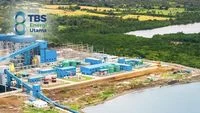
The Indonesian government under the leadership of President Prabowo Subianto has set an ambitious target to resolve the longstanding waste management crisis across the archipelago by the year 2028. To achieve this definitive milestone, the newly established state investment management body, the Badan Pengelola Investasi Daya Anagata Nusantara (Danantara), has been officially mandated to spearhead waste processing initiatives, which include the rapid development and deployment of advanced waste-to-energy technologies.
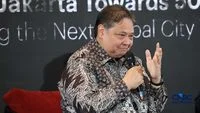
The announcement was formally made by the Coordinating Minister for Economic Affairs, Airlangga Hartarto, during his keynote address at the prestigious Kearney 100 Years of Impact event held in Jakarta. The forum, themed Jakarta Towards 500: Shaping the Next Global City Together, underscored the critical infrastructural milestones Indonesia must achieve as its capital and economic epicenter transitions into a globally competitive metropolitan hub. Addressing the chronic issue of solid waste is viewed by economic planners not merely as an environmental necessity, but as a foundational prerequisite for transforming Jakarta and surrounding urban centers into sustainable global cities capable of attracting international capital, tourism, and talent.
According to Minister Airlangga, tackling the waste crisis represents one of the most pressing homework assignments for the national and regional governments. The administration has bypassed traditional bureaucratic delays by accelerating preparations, including the completion of technological tenders necessary to execute large-scale processing plants. "The waste problem is the President’s commitment to resolve all waste by 2028. Danantara has been given the task. Technology tenders have already been conducted," Airlangga stated during the high-profile discussion.
Strategic Vision and Holistic Infrastructure Development
The government’s overarching strategy emphasizes that resolving the complex dynamics of urban waste requires much more than simply constructing physical processing facilities. Minister Airlangga elaborated that sustainable infrastructure projects must be approached comprehensively, ensuring that every link in the operational chain—from technological readiness and supply chain logistics to the guaranteed off-take of generated end-products—is meticulously planned and secured prior to execution.
Drawing parallels from other critical sectors, Airlangga highlighted past infrastructural bottlenecks in Indonesia, pointing to water management projects in the eastern regions of the country. He cautioned that multi-billion-dollar infrastructure developments can ultimately falter if the resulting services or commodities lack guaranteed consumers or fail to integrate smoothly into local economic systems. "If we build infrastructure, it must be complete," he stressed, emphasizing a holistic lifecycle approach to public works that prioritizes long-term economic viability and community integration over temporary bureaucratic milestones.
In addition to solid waste management, Airlangga explicitly linked the resolution of chronic urban flooding and the universal provision of clean water as inseparable components of Jakarta’s urban renewal agenda. Without solving these interlocking environmental challenges, the city’s aspirations to solidify its standing as a premier Southeast Asian center for commerce, financial services, and innovation will face severe systemic constraints.
Danantara and the Push for Waste-to-Energy Solutions
The integration of Danantara into the national waste management framework marks a strategic shift in how Indonesia finances and executes major public-interest infrastructure. Danantara, conceived as a sovereign wealth and investment management agency designed to optimize state-owned enterprise assets and attract foreign direct investment, provides the financial muscle and corporate agility required to fast-track capital-intensive environmental projects.
This institutional backing aligns directly with the government’s flagship waste-to-energy initiative, legally categorized under national regulations as Pengolahan Sampah menjadi Energi Listrik (PSEL). The PSEL framework is designed to address two critical national priorities simultaneously: mitigating the mounting environmental and health hazards associated with massive open landfills, and augmenting the national power grid with renewable, localized energy sources derived from municipal solid waste.
As part of the initial rollout, the Indonesian government has formally designated three major PSEL facilities as National Strategic Projects (Proyek Strategis Nasional or PSN). These priority locations encompass the Bekasi facility in West Java, the Bogor Raya facility serving the greater Bogor region, and the Denpasar Raya facility in Bali. By granting these projects PSN status, the central government ensures accelerated land acquisition, streamlined regulatory approvals, prioritized bureaucratic coordination, and enhanced protection against localized administrative bottlenecks. This status signals to domestic and international investors that waste-to-energy conversion is an immutable priority on the national agenda, backed by the highest levels of executive authority.
The Chronology of Indonesia’s Waste and Energy Policy Evolution
To understand the weight of the Prabowo administration’s 2028 target, it is necessary to examine the chronological evolution of Indonesia’s waste-to-energy policy framework over the past decade. For years, municipal waste management was viewed primarily through a localized, sanitary landfill lens—an approach that proved catastrophically inadequate for a nation generating tens of millions of tons of waste annually.
The legal foundation for waste-to-energy began taking structured shape under Presidential Regulation No. 18 of 2016, which initially mandated the acceleration of waste power plant development in several major cities. However, progress was chronically hindered by financial viability issues, high tipping fees, unclear regulatory sharing mechanisms between local governments and state electricity monopolies, and community resistance.
Subsequent policy iterations sought to refine these financial models, culminating in the strengthening of the PSEL pipeline. The transition gained significant momentum with the consolidation of state assets and strategic investment vehicles. The formation and empowerment of Danantara represent the current apex of this chronological evolution, shifting the paradigm from fragmented regional budgeting toward centralized, investment-grade project execution supported by sovereign-level guarantees. The targeting of 2028 as the completion horizon compresses decades of delayed municipal reform into a tightly managed four-year execution window.
Economic, Environmental, and Social Implications
The implications of successfully executing the Prabowo administration’s waste mandate are profound across economic, environmental, and social dimensions. From an environmental perspective, Indonesia is among the world’s largest contributors to marine and terrestrial plastic pollution. Metropolitan areas like Greater Jakarta produce thousands of tons of waste daily, much of which overwhelms existing disposal sites such as the infamous Bantargebang landfill. Transforming this refuse into energy through advanced thermal and biological processing units will drastically reduce greenhouse gas methane emissions associated with open dumping, while simultaneously reclaiming valuable land currently consumed by expanding garbage mountains.
Economically, the mobilization of Danantara to manage infrastructure tenders introduces rigorous corporate governance and institutional capital structuring to a sector historically plagued by fiscal inefficiencies. By commercializing waste through electricity generation, municipalities can potentially offset traditional waste management expenditures with power purchase agreements (PPAs) tied to the state electricity company, PT PLN (Persero). Furthermore, the injection of capital into domestic PSEL projects stimulates local manufacturing, engineering services, and technological transfer, creating thousands of specialized green-collar jobs.
Socially, resolving the urban waste crisis directly impacts public health and urban livability. Improper waste disposal breeds vector-borne diseases, contaminates local aquifers, and lowers the quality of life for millions of urban dwellers residing near inadequate disposal sites. A modernized waste management ecosystem fosters civic pride and transforms urban centers into cleaner, more attractive environments for global commerce.
Challenges on the Road to 2028
Despite the high-level political will and the financial backing of Danantara, industry experts and environmental analysts point out that achieving the 2028 target is fraught with substantial operational challenges. Regulatory harmonization between central ministries, provincial governments, and municipal administrations remains a complex hurdle. Land acquisition, often the most contentious aspect of infrastructure development in densely populated Indonesian urban centers, requires delicate social mitigation strategies to prevent public pushback.
Moreover, the technical complexity of operating waste-to-energy plants requires continuous adherence to stringent environmental standards, particularly concerning flue-gas emissions and toxic ash disposal. Ensuring that local operators possess the long-term technical and financial capacity to maintain these high-tech facilities without relying indefinitely on state subsidies is another critical factor that planners must address.
The integration of waste sorting at the household and municipal levels is equally vital. Advanced PSEL facilities require a consistent, calorically viable volume of waste to operate efficiently. Without robust public awareness campaigns and enforced waste-separation mandates at the source, the incoming stream of refuse may contain high moisture content, which diminishes combustion efficiency and increases operational wear and tear on specialized machinery.
Outlook for Jakarta and Indonesia’s Global Ambitions
As Jakarta looks toward its quincentennial milestone and its ongoing evolution into a recognized global city, the success of the 2028 waste resolution target will serve as a definitive litmus test for Indonesia’s governance capacity. The convergence of presidential commitment, strategic institutional mandates assigned to Danantara, and the legal acceleration provided by National Strategic Project designations create a uniquely formidable framework for action.
If executed according to plan, the initiative will not only clear the physical debris choking Indonesia’s metropolitan landscapes but will also establish a scalable, exportable model for sustainable urban infrastructure development across the developing world. The coming years will require unwavering administrative discipline, transparent public-private partnerships, and strict adherence to the holistic infrastructural principles outlined by economic leadership. For now, all eyes remain fixed on Danantara and the unfolding implementation of the nation’s most ambitious environmental overhaul to date.
Related posts: