Danantara Issues Strict Code of Conduct for State-Owned Enterprises Executives Restricting Social Media Activity and Excessive Privileges

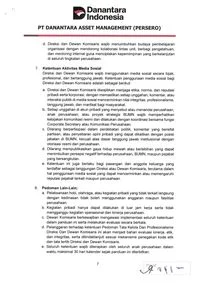
The Badan Pengelola Investasi Daya Anagata Nusantara (Danantara) has formally instituted a comprehensive regulatory framework designed to enforce strict standards of behavior, professionalism, and ethical conduct among the boards of directors and commissioners of Indonesia’s state-owned enterprises (SOEs). This pivotal regulatory move is encapsulated in Circular Letter Number SE/002/DI-DAM/DO/2025, titled Guidelines for the Behavior and Professionalism of Directors and Boards of Commissioners of State-Owned Enterprises. The issuance of this directive marks a substantial shift in corporate governance within the public sector, aiming to eradicate practices perceived as aloof or ostentatious while reinforcing the fundamental accountability of state enterprise leaders to the general public.
At the core of the new circular is a meticulous five-point provision that specifically governs the digital footprint and social media engagements of top-tier executives. This regulatory clampdown reflects a growing recognition by oversight bodies that the personal and professional digital communications of public enterprise leaders directly influence public trust, corporate reputation, and government credibility. By addressing a long-standing grey area regarding the boundary between private expression and institutional representation, Danantara seeks to establish a uniform standard of digital hygiene across the entire portfolio of state-owned corporations.
Detailed Social Media Guidelines for SOE Leadership
The newly enacted framework outlines explicit behavioral boundaries across five distinct pillars of social media interaction. These provisions are designed to mitigate reputational risks and ensure that corporate leadership aligns with public service values.
First, the regulations mandate that all directors and commissioners must proactively uphold ethics, social norms, and both personal and corporate reputation. Every digital artifact—including posts, comments, remarks, and public interactions on social media platforms—must transparently reflect core values such as integrity, professionalism, accountability, and tangible public utility. Executives are essentially reminded that their digital personas are inextricably linked to the state entities they serve.
Second, the guidelines establish strict protocols for personal social media accounts that reference or tag the parent company, its subsidiaries, or designated strategic SOE projects. Any such online publication must strictly adhere to official corporate communication policies. Furthermore, these activities require advance coordination and authorization from the corporate secretary or the corporate communications department to prevent messaging fragmentation or inadvertent leaks of sensitive corporate information.
Third, the regulatory framework imposes a blanket prohibition on executive participation in political debates, partisan commentaries, or the dissemination of personal opinions tied to their official state enterprise titles. The only exemption to this rule applies to authorized institutional communications executed in direct fulfillment of official corporate responsibilities and backed by formal company clearance. This provision aims to safeguard SOEs from political entanglement and maintain political neutrality across the corporate landscape.
Fourth, the circular explicitly bans the digital publication or flaunting of luxurious lifestyles or excessive displays of wealth. Regulators noted that such behavior generates severe negative public perception, undermining the credibility of the enterprise, the broader SOE ecosystem, and the individual officials involved. In an economic climate striving for social equity, ostentatious displays by stewards of public assets are viewed as counterproductive to national development goals.
Fifth, the regulatory net extends beyond the executives themselves to include their immediate families. The restrictions explicitly apply to spouses and dependent family members registered as dependents of the directors or commissioners. This extension addresses instances where family members’ social media usage could inadvertently reflect upon, damage, or influence the corporate reputation of the official and the company they represent.
Strategic Background and Corporate Culture Transformation
The promulgation of these sweeping regulations does not occur in a vacuum; it forms a critical component of a broader, systemic human resources overhaul and corporate culture transformation initiated by Danantara’s leadership. Chief Operating Officer Dony Oskaria previously outlined the strategic trajectory of the investment agency, emphasizing that the systematic restructuring of state enterprises must inherently encompass institutional culture and personnel standards.
During a strategic address at the Fairmont Hotel, Dony highlighted that the agency’s operational roadmap systematically prioritizes talent optimization and cultural realignment. The overarching objective is to instill a disciplined, service-oriented mindset among corporate leadership, ensuring that individuals appointed to lead state firms operate with a clear understanding of their institutional identity as public servants rather than corporate elites.
As part of this cultural paradigm shift, Danantara has actively moved to dismantle structural trappings of excessive executive privilege that have historically characterized top management positions within Indonesian state enterprises. Notably, the agency has initiated rigorous curtailment policies regarding the deployment of excessive aides, personal assistants, and high-profile security details, including the use of police patrol and escort vehicles—commonly known as patwal—for routine executive transit.
Reining in Excessive Privileges and Reaffirming Public Service Ethos
The systematic reduction of institutional perks represents a direct challenge to the legacy culture of entitlement within various state-owned sectors. According to senior leadership at Danantara, the era of leveraging state enterprise leadership roles for outsized personal convenience and unwarranted operational buffers is drawing to a close.
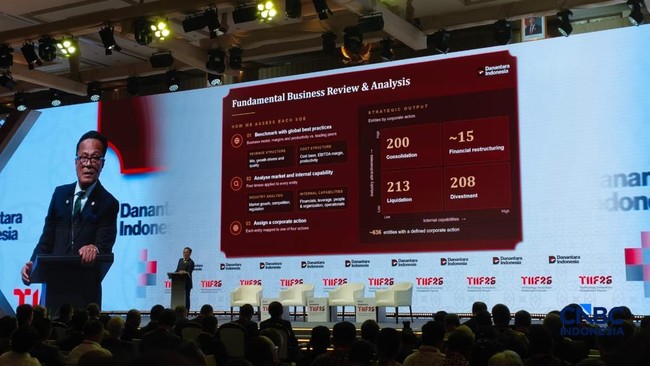
Reflecting on these progressive changes, Dony Oskaria remarked that external observers might not immediately perceive the subtle yet profound administrative shifts occurring within the inner machinery of SOE management. The deliberate suppression of superfluous auxiliary personnel and the strict prohibition of unwarranted traffic escorts serve as visible manifestations of this reform agenda. By stripping away these superfluous privileges, the oversight body seeks to recalibrate the psychological contract between management and the public.
Management personnel within state enterprises are explicitly categorized as government employees entrusted with public capital. Consequently, they are expected to maintain operational efficiency and personal humility, eschewing the trappings of corporate luxury funded directly or indirectly by state-derived resources. The regulatory net governing these behavioral expectations spans multiple operational facets, encompassing not only ground transportation and security details but also corporate travel policies, including stringent guidelines on commercial flight class utilization and accommodation standards.
Chronology of Regulatory Implementation
The rollout of Danantara’s governance framework follows a structured timeline aimed at systematic institutional stabilization and modernization. Following the operational establishment of the investment agency, initial phases focused on portfolio consolidation and asset management audits.
By late 2025, the strategic focus decisively pivoted toward human capital governance and corporate cultural engineering. The issuance of Circular Letter SE/002/DI-DAM/DO/2025 in early 2025 established the legal and administrative baseline for managerial conduct. Concurrently, phased enforcement mechanisms regarding auxiliary privileges—such as the restriction of patwal and excessive executive aides—began rolling out across major state enterprises throughout the subsequent quarters. This sequential approach ensures that administrative adjustments are embedded systematically rather than abruptly, allowing corporate boards adequate time to internalize compliance benchmarks.
Implications for SOE Governance and Corporate Performance
The introduction of these stringent behavioral and lifestyle guidelines carries profound implications for the operational landscape of Indonesia’s state-owned sector. From a governance perspective, the measures address agency problems by aligning executive incentives and public expectations more closely. By removing distractions related to ostentatious displays and political posturing, leaders are structurally encouraged to dedicate their primary intellectual and professional energies toward core enterprise value creation, operational efficiency, and strategic national infrastructure delivery.
Furthermore, these regulations significantly mitigate enterprise risk profile exposure. In an era where digital missteps by corporate executives can rapidly translate into severe public relations crises, boycotts, or regulatory scrutiny, the enforcement of strict social media protocols acts as a vital corporate shield. Safeguarding corporate reputation directly preserves brand equity and stakeholder trust, which are essential for state enterprises engaging in domestic capital markets, international partnerships, and sovereign-backed financing arrangements.
Critics and industry observers, however, note that the ultimate success of these guidelines will depend heavily on consistent, transparent enforcement and the proactive monitoring capabilities of Danantara’s compliance infrastructure. Clear mechanisms for reporting violations, coupled with decisive punitive actions for non-compliance, will be necessary to ensure that the circular letter functions as an active governance instrument rather than merely a symbolic statement of intent.
Broader Economic and Societal Context
The broader socio-economic context of Indonesia heavily favors regulatory interventions that promote fiscal prudence and egalitarian corporate leadership. State-owned enterprises manage a massive share of the nation’s strategic assets, controlling critical sectors ranging from energy, telecommunications, and banking to transportation and logistics. Given their systemic importance to the national economy, public scrutiny regarding the ethical standards and lifestyle choices of SOE leadership has historically been intense.
By proactively addressing public sensitivities regarding executive excess, Danantara demonstrates a heightened awareness of the socio-political contract underpinning state capitalism. When citizens observe that stewards of public wealth are held to standards of modesty, accountability, and professional restraint, public confidence in state institutions is reinforced. This alignment is particularly crucial as Indonesia navigates complex macroeconomic headwinds and pursues ambitious long-term developmental targets that require robust public-private trust.
Conclusion and Future Outlook
The comprehensive regulatory framework introduced by Danantara via Circular Letter Number SE/002/DI-DAM/DO/2025 represents a milestone in the ongoing evolution of Indonesia’s state-owned enterprise governance. By codifying strict boundaries for social media conduct, curtailing extravagant executive privileges, and instilling a disciplined public service ethos, the investment agency is fundamentally reshaping the corporate culture of the nation’s premier business institutions.
As these guidelines take full effect across the SOE ecosystem, the transformation is expected to yield more transparent, accountable, and socially responsible corporate leadership. The initiative underscores a definitive transition away from legacy corporate excess toward a modernized, integrity-driven management paradigm designed to protect public capital, enhance corporate reputation, and deliver sustainable value to the Indonesian state and its citizens.