Zalando Bolsters E-commerce Logistics Automation with Strategic Investment in German Robotics Startup Sereact

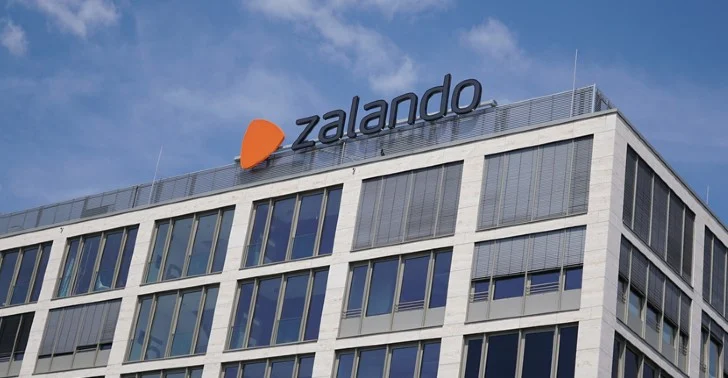
Zalando, the Berlin-based e-commerce giant and a dominant force in European fashion retail, has officially announced a strategic investment in Sereact, a Stuttgart-based robotics firm specializing in artificial intelligence-powered automation solutions. This capital injection is specifically targeted at accelerating the automation of logistics within the e-commerce sector, with a primary focus on the complex and labor-intensive process of handling product returns. The investment comes at a pivotal moment for Zalando as it prepares for further geographic expansion, including a highly anticipated launch in Bulgaria, which is expected to increase the volume of goods moving through its fulfillment network. By integrating Sereact’s advanced "Physical AI" technology, Zalando aims to optimize its reverse logistics, reduce operational costs, and improve the speed at which returned items are made available for resale.
The financial commitment from Zalando is part of a broader Series B funding round for Sereact, which has now reached a total of $116 million (approximately 101.6 million euros). This brings the total capital raised by the robotics company to over $145 million since its inception. The funding round signifies a growing confidence in the intersection of robotics and generative AI within the warehouse environment, a field often referred to as "Physical AI." As labor shortages persist across the European logistics sector and consumer expectations for fast, seamless service continue to rise, the partnership between one of the continent’s largest retailers and a leading-edge robotics developer highlights a significant shift toward fully autonomous supply chain management.
The Technological Foundation: Sereact and the Cortex Platform
At the heart of Sereact’s value proposition is its proprietary "Cortex" platform. Unlike traditional industrial robots that operate on rigid, pre-programmed instructions, Sereact’s systems are driven by artificial intelligence that allows them to perceive, reason, and act in dynamic environments. The Cortex platform serves as a centralized "brain" for various robotic hardware, enabling multiple systems to learn from real-world operational data in real-time. This capability is essential in a warehouse setting where the variety of products—ranging from delicate silk blouses to heavy winter coats—requires a level of dexterity and adaptability that was previously only possible through human intervention.
The platform utilizes advanced computer vision and machine learning algorithms to identify objects, determine the optimal way to grasp them, and execute movements with high precision. In the context of e-commerce, this means robots can handle "singulation"—the process of picking individual items from a bulk container—with a high degree of reliability. Furthermore, the system’s ability to learn from data means that as it processes more items, its efficiency and accuracy improve, creating a flywheel effect of operational optimization. For Zalando, the appeal of Sereact lies in this ability to handle the high variability inherent in fashion logistics, where seasonal changes and shifting trends constantly introduce new packaging types and fabric textures into the fulfillment stream.
Addressing the "Returns Crisis" in Fashion E-commerce
The decision to focus this investment on the returns process addresses one of the most significant pain points in the fashion industry. Fashion e-commerce is characterized by exceptionally high return rates, often reaching between 30% and 50% in European markets. This phenomenon, driven by "wardrobing" (where customers order multiple sizes or styles with the intent of returning most of them), creates a massive logistical burden known as reverse logistics.
Currently, the processing of returns is a bottleneck for most retailers. When a package arrives back at a fulfillment center, it must undergo a rigorous manual inspection. Workers must check for signs of wear, stains, or damage, ensure the correct tags are attached, and then re-fold or re-package the item before it can be restocked. This manual workflow is not only expensive and slow but also difficult to scale during peak seasons like Black Friday or the post-holiday period.
Sereact’s robotics solutions are designed to automate these specific tasks. By using high-resolution sensors and AI-driven inspection protocols, the robots can detect defects and categorize the condition of returned items automatically. Once an item is cleared, the robotic systems can facilitate the restocking process, moving the product back into the inventory pool far faster than a manual system could. This reduction in "cycle time"—the time it takes for a returned item to become available for sale again—is a critical metric for Zalando, as it minimizes the amount of capital tied up in returned inventory and reduces the need for heavy discounting on out-of-season items.
Chronology of Zalando’s Logistics Evolution and Sereact’s Growth
The partnership between Zalando and Sereact is the result of several years of development within both companies. Sereact, founded in Stuttgart, emerged as a spin-off from the University of Stuttgart and the Fraunhofer Institute for Manufacturing Engineering and Automation (IPA). The company quickly gained traction by solving the "picking" problem in logistics, eventually attracting significant venture capital interest.
Zalando’s journey toward automation has been equally deliberate. Over the past decade, the company has transitioned from a pure-play online retailer to a sophisticated logistics provider, offering its "Zalando Fulfillment Solutions" (ZFS) to partner brands.
- 2011-2015: Zalando builds its first large-scale self-operated fulfillment centers in Germany, focusing on manual labor supported by conveyor systems.
- 2016-2020: The company begins experimenting with mobile robots (such as those from Magazino) to assist workers in picking shoe boxes.
- 2021-2023: Zalando intensifies its focus on AI and data science to predict return rates and optimize warehouse routing.
- 2024: The investment in Sereact marks a shift toward "Physical AI," where the software intelligence is directly integrated into the mechanical handling of goods.
This timeline coincides with Zalando’s geographic expansion. The company’s planned entry into the Bulgarian market this summer represents its continued push into Eastern and Southeastern Europe. Each new market adds complexity to the network, requiring more robust and scalable solutions to handle the cross-border movement of goods and the inevitable return flows associated with new customer bases.
Financial Context and Industry Implications
The $116 million Series B round is a notable achievement in a venture capital climate that has become increasingly selective, particularly for hardware-heavy startups. The participation of Zalando as a strategic investor, alongside other institutional backers, underscores the industry’s belief that AI-driven robotics is no longer an experimental field but a commercial necessity.
For Zalando, the investment is not merely a financial play but a strategic move to secure a competitive advantage. By being an early adopter and backer of Sereact’s technology, Zalando gains a front-row seat to the development of the Cortex platform, potentially allowing for customized features that cater specifically to Zalando’s unique operational requirements.
In the broader context of the e-commerce industry, this move places Zalando in direct competition with Amazon’s robotics division. Amazon has long been the leader in warehouse automation, having acquired Kiva Systems in 2012. However, while Amazon’s focus has largely been on mobile robots for moving shelves, Sereact and Zalando are targeting the more complex task of robotic manipulation—the "hand-eye coordination" required to pick and pack varied items. If successful, this technology could set a new standard for European e-commerce efficiency.
Official Responses and Strategic Outlook
Following the announcement, representatives from Sereact expressed a high degree of optimism regarding the partnership. In a statement shared on social media, the company highlighted the value of having a partner that operates at the scale of Zalando. "Zalando is one of Europe’s leading e-commerce platforms, built on operational excellence at real scale," the company noted. "Their decision to back Sereact is a strong signal of confidence in physical AI for the warehouse—and in the technology we are building together in Europe."
Sereact further emphasized that the capital and the partnership would allow them to scale the Cortex platform and enter new markets. Working with a partner who "understands fulfillment from the inside" provides Sereact with a massive laboratory of real-world data to refine its algorithms, ensuring that the robots can handle the unpredictable nature of global retail logistics.
From Zalando’s perspective, the investment aligns with its broader goal of becoming the "Starting Point for Fashion" in Europe. To achieve this, the company must maintain a high level of customer satisfaction, which is heavily dependent on the speed and accuracy of the delivery and returns experience. Automation is the primary lever Zalando has to maintain its margins while offering competitive services like free returns and fast shipping.
Analysis: The Future of Autonomous Logistics
The implications of this investment extend beyond the immediate financial returns. It signals a maturation of the European robotics ecosystem. For years, European tech companies have struggled to compete with the massive R&D budgets of US and Chinese firms. However, by leveraging Germany’s historical strength in engineering and combining it with modern AI research, companies like Sereact are carving out a niche in high-precision industrial automation.
Furthermore, the focus on returns automation suggests that the "circular economy" and sustainability are becoming operational priorities. Efficiently processing returns is the first step in ensuring that clothes stay in the commerce cycle and out of landfills. As regulations regarding waste and textile recycling become stricter in the European Union, having an automated system to grade and re-process items will be essential for compliance.
As Zalando moves forward with its expansion into Bulgaria and other European territories, the integration of Sereact’s technology will likely serve as a blueprint for its future fulfillment centers. The industry will be watching closely to see how quickly "Physical AI" can be deployed at scale and whether it can truly solve the multi-billion-euro problem of e-commerce returns. For now, the partnership represents a significant bet on a future where the warehouse is not just automated, but truly intelligent.