Amazon EKS Introduces Kubernetes Version Rollback, Enhancing Control Plane Stability and Operational Agility

Amazon Web Services (AWS) has unveiled a significant enhancement for its managed Kubernetes service, Amazon Elastic Kubernetes Service (Amazon EKS), introducing a much-anticipated version rollback capability for Kubernetes control planes. This new feature addresses a long-standing challenge in Kubernetes cluster management, providing a critical safety net for organizations navigating the complexities of cluster upgrades. Previously, upgrading a Kubernetes control plane was a definitive, one-way operation, lacking a built-in mechanism to revert to a prior stable state. The introduction of this rollback functionality promises to reduce operational risk, accelerate adoption of newer Kubernetes versions, and bolster the overall stability of cloud-native deployments.
The inherent immutability of Kubernetes control plane upgrades has historically compelled organizations to implement intricate and often resource-intensive workarounds. These strategies typically involved elaborate compensating mechanisms such as extended bake periods, staggered deployment groups, automated sign-off workflows, and protracted upgrade cycles that could span months. The cadence of Kubernetes releases, with three minor versions introduced annually, further exacerbates this challenge, particularly for large enterprises managing hundreds or even thousands of clusters. In regulated industries or environments demanding stringent security postures, the fear of an unsuccessful upgrade – and the inability to easily recover – often led to a reluctance to upgrade, leaving clusters running on older, potentially vulnerable versions and risking extended support deadlines.
The newly launched Amazon EKS version rollback feature directly tackles this operational hurdle. It empowers cluster administrators with the ability to reverse a Kubernetes version upgrade within a seven-day window, effectively returning a cluster to its previous, functional state if any issues arise post-upgrade. This functionality offers a crucial layer of confidence for teams undertaking critical infrastructure updates.
A Deeper Dive into the Rollback Mechanism
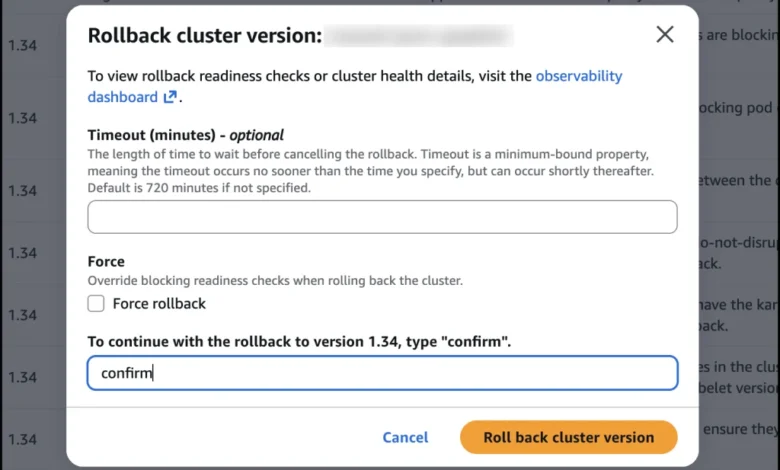
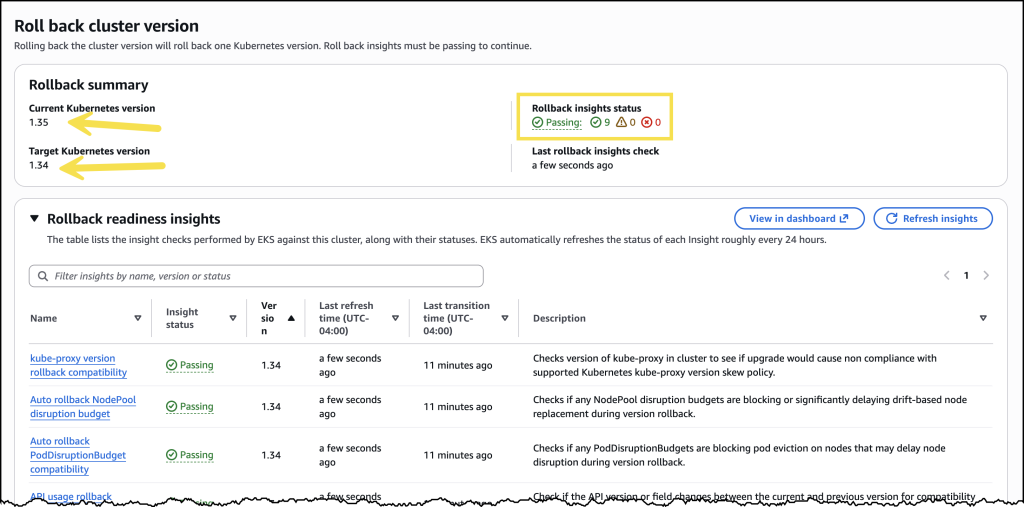
Unlike theoretical approaches that might maintain a cluster in a transitional or emulated state, the EKS version rollback reinstates the cluster to a fully validated previous version that was demonstrably running in production. For instance, if an organization upgrades a cluster from Kubernetes 1.34 to 1.35 and encounters unforeseen compatibility issues with applications or add-ons, they can now seamlessly roll back to 1.34 within the seven-day window. This eliminates the need for disruptive cluster rebuilds or the high-pressure troubleshooting that often accompanies critical failures. The feature is being likened by many in the industry to an "undo button" for Kubernetes version upgrades, a metaphor that underscores its intuitive and restorative nature.
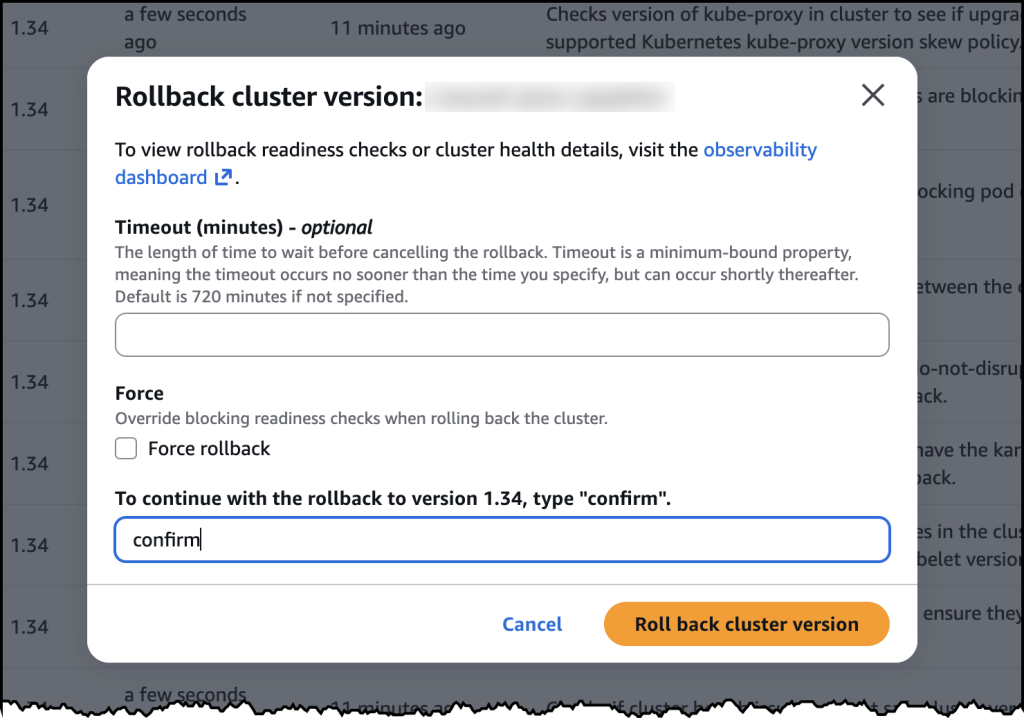
The rollback process is designed to be incremental, mirroring the one-minor-version-at-a-time approach that EKS employs for upgrades. This measured progression helps ensure stability and manageability. To facilitate safe rollbacks, Amazon EKS proactively assesses a cluster’s readiness through its integrated Cluster Insights feature. Before an upgrade is finalized, EKS evaluates potential rollback impediments, such as node version compatibility or add-on dependencies, flagging any issues that require attention. While this provides a vital safety check, administrators who have thoroughly assessed their environment and wish to proceed with urgency can utilize a --force flag to bypass these pre-rollback checks. This flexibility caters to diverse operational needs and risk appetites. The rollback capability extends to all EKS clusters, irrespective of whether customers manage their own worker nodes or opt for AWS-managed node groups.
Enhanced Rollback for EKS Auto Mode

For customers leveraging EKS Auto Mode, a feature designed for one-click deployment of production-ready Kubernetes clusters by automating compute, networking, and storage management, the rollback process is further refined. EKS Auto Mode necessitates a synchronized rollback of both the control plane and its associated managed nodes. Recognizing that node rollbacks, which respect customer-defined pod disruption budgets, can be time-consuming, EKS Auto Mode introduces a new cancel API. This API grants administrators granular control over the rollback process, allowing them to halt a node rollback at any stage. If the rollback is taking longer than anticipated or if operational priorities shift, administrators can cancel the process, adjust their disruption budgets to accelerate subsequent attempts, or pivot to an alternative strategy.
AWS emphasizes that by default, EKS prioritizes workload stability and will not bypass pod disruption budgets during a rollback. This commitment to maintaining application uptime is a cornerstone of the EKS service. However, administrators retain the flexibility to modify or remove these budgets themselves if accelerated rollback is a critical requirement.
A Practical Look: The Rollback in Action
To demonstrate the functionality, an example scenario illustrates the user experience. An administrator navigated to the Amazon EKS console and selected a cluster that had undergone a recent upgrade. From the cluster’s configuration page, the option to initiate a version rollback was readily apparent, alongside information detailing the current rollback window.
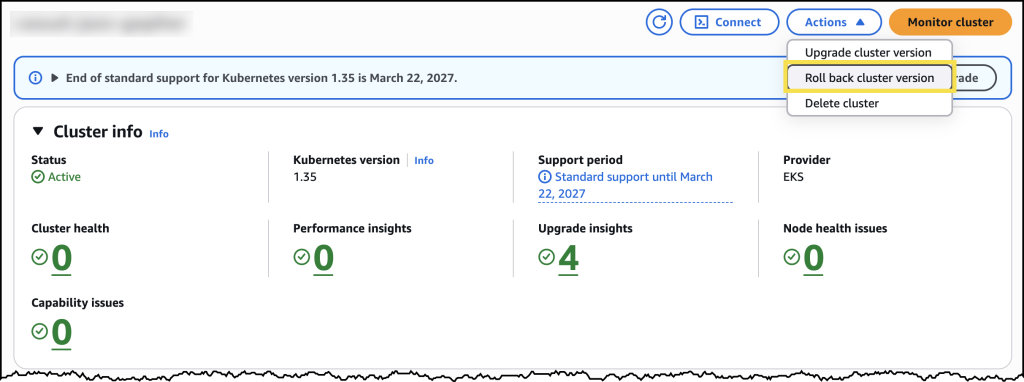
Before commencing the rollback, the administrator reviewed the rollback insights. This diagnostic report provided a clear overview of the cluster’s node status and highlighted any potential issues that warranted attention before proceeding. Upon confirmation, the rollback process was initiated. Crucially, the cluster remained operational throughout the entire procedure. The control plane rollback itself was completed in approximately 20 minutes, a timeframe comparable to a standard upgrade. For the EKS Auto Mode cluster, the managed nodes rolled back gracefully, adhering to the configured disruption budget settings. Upon completion, the cluster was successfully reverted to its previous Kubernetes version and resumed normal operation.
Availability and Implications
Kubernetes version rollbacks for Amazon EKS are available immediately at no additional cost across all commercial AWS Regions where Amazon EKS is offered. Customers will continue to incur only the standard EKS and compute costs associated with their usage, with no extra charges for leveraging this new rollback capability.
The control plane rollback feature is applicable to all EKS clusters. Node rollbacks are specifically available for clusters operating in EKS Auto Mode. The version rollback functionality supports clusters running Kubernetes versions that fall within EKS’s standard and extended support lifecycles.
Broader Industry Impact and Analysis
The introduction of a robust, built-in rollback mechanism for Kubernetes control plane upgrades represents a significant step forward for cloud-native operations. Historically, the lack of such a feature has been a substantial barrier to rapid adoption of new Kubernetes versions, particularly for large enterprises with complex, mission-critical workloads. The ability to confidently upgrade, knowing that a straightforward recovery path exists, is expected to:
- Accelerate Kubernetes Version Adoption: Organizations will likely be more inclined to upgrade to the latest stable Kubernetes versions, thereby gaining access to new features, performance improvements, and crucial security patches more readily. This can reduce the risk associated with running outdated software.
- Enhance Operational Agility: The reduction in the perceived risk of upgrades allows operational teams to be more agile in their deployment and maintenance strategies. This can lead to faster iteration cycles and quicker delivery of value from cloud-native applications.
- Improve Stability and Reduce Downtime: By providing an "undo" option, the feature significantly mitigates the risk of prolonged downtime or complex disaster recovery scenarios that could arise from a failed upgrade. This directly contributes to higher application availability.
- Lower Operational Burden: The elaborate compensating mechanisms previously required for managing upgrade risks can now be simplified or eliminated, freeing up valuable engineering resources to focus on application development and innovation.
- Strengthen Security Posture: Easier and more confident upgrades mean that security vulnerabilities discovered in newer Kubernetes versions can be patched and deployed more rapidly across a wider range of clusters.
Expert Commentary and Future Outlook
Industry analysts have largely welcomed this announcement. "The immutability of Kubernetes control plane upgrades has been a persistent pain point for many organizations, especially those operating at scale or in highly regulated sectors," commented [Fictional Analyst Name], Senior Cloud Infrastructure Analyst at [Fictional Research Firm]. "The introduction of a native rollback feature in Amazon EKS directly addresses this by providing a critical safety net. This is not just a convenience; it’s a fundamental improvement in operational resilience and a catalyst for faster adoption of modern Kubernetes practices."
The move by Amazon EKS aligns with a broader industry trend towards making complex cloud-native technologies more accessible and manageable for a wider range of users. As Kubernetes continues to be the de facto standard for container orchestration, features that simplify its operation and reduce risk are essential for its continued growth and widespread adoption. The EKS version rollback is a testament to AWS’s commitment to addressing key customer pain points and evolving its managed Kubernetes offering to meet the dynamic demands of the cloud-native landscape.
For organizations looking to implement this new capability, comprehensive documentation is available on the Amazon EKS website, and the feature can be accessed directly through the Amazon EKS console. The ability to confidently manage Kubernetes lifecycle, backed by a robust rollback mechanism, is poised to become a standard expectation for managed Kubernetes services.