React Native 0.82 Release Marks Transition to New Architecture as the Sole Standard for Mobile Development


The Meta-backed React Native team has officially released version 0.82, a milestone that signals the most significant structural shift in the framework’s history. This version is the first to run exclusively on the New Architecture, effectively deprecating the legacy system that has powered the framework since its inception. By making the New Architecture mandatory, React Native 0.82 sets the stage for a more streamlined codebase, reduced application install sizes, and a modernized development experience that aligns more closely with web standards.
In addition to the architectural overhaul, the 0.82 release introduces an experimental opt-in for Hermes V1, updates the core React dependency to version 19.1.1, and implements DOM Node APIs to provide a more consistent interface for developers working across platforms. These changes represent a concerted effort to resolve long-standing performance bottlenecks and to unify the mental models of web and mobile development.
The New Architecture: A Mandatory Shift
The transition to the New Architecture has been a multi-year journey for the React Native ecosystem. Initially announced as the default in version 0.76, the New Architecture replaces the aging "Bridge"—the asynchronous communication layer between JavaScript and Native code—with a more efficient system built on the JavaScript Interface (JSI).
With the release of version 0.82, the ability to opt out of this new system has been removed. Developers attempting to disable the New Architecture via newArchEnabled=false on Android or RCT_NEW_ARCH_ENABLED=0 on iOS will find these flags ignored. The framework will now prioritize the Fabric renderer and TurboModules as the exclusive methods for UI rendering and native module communication.
The primary objective of this enforcement is to allow the core team to begin stripping legacy code from the React Native repository. Removing the redundant logic required to support two simultaneous architectures is expected to significantly reduce the binary size of the React Native engine. While version 0.82 retains legacy APIs to maintain backward compatibility through interop layers, the team has confirmed that the removal of these classes will commence in subsequent versions.
Chronology of the React Native Architectural Evolution
To understand the weight of the 0.82 release, one must look at the timeline of the framework’s re-engineering efforts:
- 2018: The Announcement: Meta (then Facebook) announced a large-scale re-architecture of React Native to address fundamental performance issues related to the Bridge.
- 2022: Fabric and TurboModules: The community began testing "Fabric" (the new rendering system) and "TurboModules" (the new native module system) in experimental capacities.
- October 2024 (Version 0.76): The New Architecture became the default for all new projects, though legacy support remained accessible for existing applications.
- Early 2025 (Version 0.81): This version served as the final "bridge" release, providing warnings and performance improvements designed to assist developers in their final migration steps.
- Current (Version 0.82): The New Architecture becomes the only supported architecture, ending the era of the Legacy Bridge.
Experimental Hermes V1: Performance Benchmarks
A major technical highlight of version 0.82 is the introduction of an experimental opt-in for Hermes V1. Hermes, the JavaScript engine optimized specifically for running React Native, has undergone extensive internal testing at Meta. The V1 iteration introduces significant improvements to both the compiler and the virtual machine (VM), resulting in faster execution and reduced memory overhead.
Data provided by the development team, specifically from real-world testing on the Expensify application, demonstrates tangible gains. On low-end Android devices, bundle loading times improved by approximately 3.2%, while total Time to Interactive (TTI) saw a 7.6% boost. The improvements were even more pronounced on iOS, where bundle load times were slashed by 9% and Content TTI improved by 7.5%.
For developers, TTI is a critical metric. Total TTI measures the duration from the start of bundle loading until the first screen is both rendered and interactive. Content TTI focuses on the responsiveness of individual components once they begin rendering. By optimizing these phases, Hermes V1 addresses one of the most common complaints regarding cross-platform frameworks: the perceived "sluggishness" during app startup.
Currently, enabling Hermes V1 requires building React Native from source, a restriction that will be lifted once the engine reaches a stable release status. It is important to note that this version does not yet include "Static Hermes" (JS-to-native compilation) or JIT compilation, features that remain in active development.
Integration with React 19.1.1 and Owner Stacks
React Native 0.82 upgrades its core dependency to React 19.1.1. This alignment brings several sophisticated React features to the mobile environment. Most notably, this release enables "owner stacks" for all users. Previously, in version 0.80, owner stacks were restricted for those using specific Babel plugins. Version 0.82 lifts these limitations, providing more accurate and useful stack traces that identify the "owner" component responsible for a render, rather than just the component where an error occurred.

Furthermore, React 19.1.1 improves the reliability of useDeferredValue and startTransition within Suspense boundaries. On previous versions of React Native, these hooks occasionally triggered fallback components incorrectly. The updated version ensures that React Native’s behavior matches that of the web, allowing developers to build more responsive interfaces that prioritize user input without flickering or unnecessary loading states.
Unifying the Web and Native: DOM Node APIs
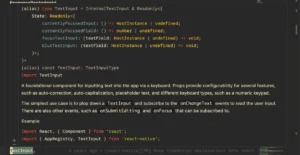
In a move that further blurs the line between web and mobile development, React Native 0.82 introduces support for DOM Node APIs. Native components will now provide DOM-like nodes via refs, implementing a subset of the standard DOM API used in web browsers.
Historically, React Native refs provided a limited set of methods, such as measure and setNativeProps. With the new update, developers can use standard properties and methods like parentNode, childNodes, and getBoundingClientRect(). This change is fully backward compatible, as the new nodes continue to support legacy methods. By adopting these standards, React Native makes it easier for library authors to create cross-platform tools that work seamlessly on both React (Web) and React Native.
Android Development Optimizations: The debugOptimized Build
For Android developers, version 0.82 introduces a new build variant: debugOptimized. Traditionally, Android developers had to choose between a standard "debug" build (which allows for C++ debugging but is slow) and a "release" build (which is fast but lacks debugging tools).
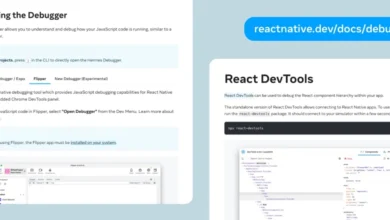
The debugOptimized mode offers a middle ground. It enables C++ optimizations that significantly increase the frame rate of animations and re-renders—often jumping from 20 FPS in standard debug mode to a smooth 60 FPS—while still allowing developers to use React Native DevTools for JavaScript debugging. This is particularly beneficial for developers working on UI-intensive applications where performance testing is required during the active development phase.
Breaking Changes and Technical Implications
As with any major version shift, React Native 0.82 introduces several breaking changes that require developer attention. A significant change in error reporting involves uncaught promise rejections. In previous versions, a bug caused many uncaught promises to be silently swallowed. Version 0.82 corrects this, ensuring that these rejections now raise a console.error. While this improves app stability by surfacing hidden bugs, developers may see a surge in error reports in their telemetry tools as pre-existing issues are finally caught.
Other technical shifts include:
- iOS Requirements: The minimum supported version for iOS is now 15.1, and Xcode 16.1 is required for builds.
- Android Requirements: Support for Android 6 (API 23) has been dropped, with the new minimum being Android 7 (API 24). Additionally, the project now requires NDK 27 and Gradle 8.8.
- C++ Updates: Several legacy headers and functions have been removed or relocated, affecting developers who write custom native C++ code.
Analysis of Ecosystem Impact
The decision to move exclusively to the New Architecture is a "burn the ships" moment for Meta and the React Native community. By removing the safety net of the Legacy Architecture, Meta is forcing the ecosystem to modernize. This has profound implications for third-party library maintainers. While interop layers exist to help older libraries function, the long-term health of an app will now depend on its dependencies being fully compatible with TurboModules and Fabric.
From a competitive standpoint, this move narrows the performance gap between React Native and its primary rival, Flutter. By moving away from the serialized Bridge and toward the synchronous JSI, React Native can now handle complex, high-frequency interactions (such as gesture-based animations) with native-level fluidness.
The industry reaction has been largely positive, with major players like Expo already preparing for the transition. Expo SDK 54 was designed to be the final transition point, and Expo SDK 55 is expected to fully embrace the 0.82/0.83 cycle. For enterprise users, the recommendation is clear: migrate to 0.81 immediately to resolve warnings, then move to 0.82 to reap the benefits of a leaner, faster, and more standardized framework.
As React Native 0.82 becomes the stable standard, the focus shifts to the future removal of the interop layers. The community is encouraged to report bugs through the official issue tracker and to work closely with library maintainers to ensure the transition is seamless. This release does not just represent an update; it represents the beginning of React Native’s second act.
Related posts: